
supta virasana
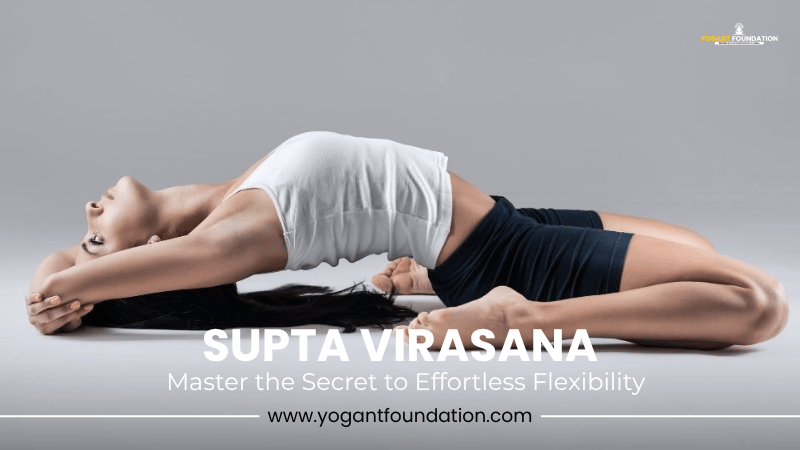
Supta Virasana, the Reclining Hero Pose! This therapeutic posture of yoga is fabulous to calm deeply stressed areas of the body. This guide will help you identify the benefits of Supta Virasana and describe the steps in detail to help you do Supta Virasana the right way, whether you are a beginner or more advanced in your yoga practice.
Enter Supta Virasana (Reclining Hero Pose), a yoga posture deceptively simple but which provides stunning releases. This guide will touch on all things supta virasana, from the supta virasana benefits, clear steps for how to do supta virasana safely to supta virasana for beginners, intermediate and advanced yogis, expert adjustments, common mistakes, and a completeHindi version (हिन्दी अनुवाद) to make the information available to Hindi speaking readers. Let’s begin your journey into this queen of hip-openers.
What Is Supta Virasana?
Supta Virasana (Reclining Hero Pose) is a deep-seated backbend and hip opener in yoga where you sit in Virasana (Hero Pose) and then recline the torso backward until the back rests on the floor, or on props. The pose intensely stretches the quadriceps, hip flexors, ankles, and abdomen while gently opening the chest and shoulders. It’s popular because of its digestive improvement, lower back pain relief, and calming of the nervous system. This poses frequent inclusion in restorative and therapeutic yoga sequences.
In Hindi: सुप्त वीरासन एक गहरा पीछे की ओर झुकने वाला और कूल्हे खोलने वाला योगासन है, जिसमें आप वीरासन में बैठकर धीरे-धीरे पीठ के बल लेटते हैं। यह जांघों, हिप फ्लेक्सर्स और पेट को गहरा खिंचाव देता है और पाचन, पीठ दर्द और तनाव में आराम पहुंचाता है।
Top 7 Supta Virasana Benefits
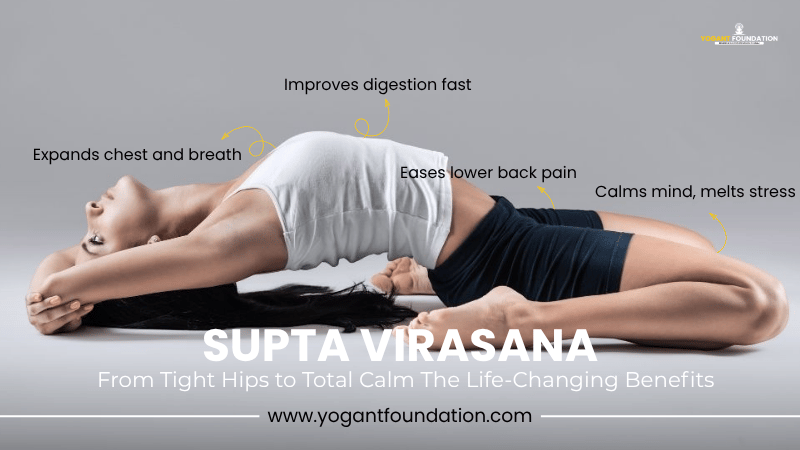
Forget surface-level stretching. Supta Virasana works on multiple layers—physical, physiological, and energetic. Here’s exactly what consistent practice brings you:
1. Deep Release for Quadriceps and Hip Flexors
If you sit for hours, your quads and hip flexors shorten. Supta Virasana lengthens the rectus femoris and iliopsoas muscles like no other pose. This can relieve anterior pelvic tilt, improve posture, and free up your walking stride. For runners and cyclists, this is a game-changer.
2. Natural Relief from Lower Back Pain
Tight hip flexors cause anterior pelvic tilt and lumbar compression. The reclining hero pose gently reestablishes pelvic alignment while creating disc space in the lumbar region. The backbend offers short term relief while effectively targeting the erector spinae for contraction strength in support of the lower back.
3. Improves Digestion and Reduces Bloating
The stretching of the abdomen during this position encourages and aids movement in the digestive system. If this position is practiced regularly after meals (with a wait of at least two hours), it alleviates the heaviness associated with bloating and acidity. Yoga therapists frequently recommend this position for individuals suffering with IBS and sluggish digestion.
4. Opens the Chest and Enhances Breathing
Stretching the rib cage while reclining aids the diaphragm and breathing and thus enhances lung capacity. It may also ease mild asthma and anxiety, both of which may be caused by shallow breathing.
5. Relaxes the Nervous System and Eases Anxiety
Gently opening the heart center while you are reclining activates the parasympathetic nervous system. the pose is held with continued slow breathing to communicate a state of calm to the body. This lowers cortisol levels and encourages a meditative state, making it perfect for after a long, stressful day.
6. Helpful for Menstrual Cramps and Menopause
For many women, Supta Virasana helps manage menstrual cramps by increasing blood flow to the pelvis while releasing tension in the abdomen. It also helps manage hormonal mood fluctuations and hot flashes caused by peri-menapause when practiced gently with support.
7. Prepares the Body for Deeper Back Bends and Meditation
For the advanced practitioner, this posture facilitates Ustrasana (Camel), Supta Vajrasana, and even Padmasana (Lotus) over the long term. This posture creates the necessary flexibility in the knees, ankles, and spine as well as the ability to surrender for prolonged periods of seated meditation.
How to Do Supta Virasana: Step-by-Step Guide (Perfect for All Levels)
Follow these instructions carefully, especially if you’re a beginner. Never force; let gravity and breath do the work.
Step 1: Start in Virasana (Hero Pose)
Kneel on your mat with knees together and feet slightly wider than your hips. The tops of your feet should press down, toes pointing straight back. Sit between your heels. If your sit bones don’t reach the floor or your knees feel painful, immediately sit on a yoga block or folded blanket placed between your feet. This is non-negotiable for safety.
Step 2: Check Knee and Ankle Alignment
Ensure the inner arches of your feet hug the outer hips. The feet should not splay outward. Knees remain close together but not forcefully squeezed. You should feel a moderate stretch in the fronts of the ankles and shins—no sharp knee pain.
Step 3: Begin Reclining Backward
Place your hands on the floor behind you, fingertips pointing away. Slowly lean back, bending the elbows. Start by coming onto your forearms. Stay here for a few breaths if the quad stretch is intense. Keep the thighs pressing down actively; don’t let the knees lift off the floor.
Step 4: Full Recline (Use Props Generously)
If your lower back and quads allow, gently lower all the way onto your back. Your head and spine should rest fully on the floor. If your lower back arches too much or your knees lift, you’re not ready—elevate your back with a bolster or folded blankets. The head can also be supported so the forehead is slightly higher than the chin, keeping the neck neutral.
Step 5: Arm Positioning and Breath
Extend your arms overhead and hold opposite elbows, or rest your arms alongside your body with palms up. Close your eyes. Breathe deeply into the belly, feeling it stretch on the inhale, softening on the exhale. Stay for 5–10 slow breaths initially, gradually increasing to 1–2 minutes.
Step 6: Exiting the Pose Mindfully
Never jerk out. Bring the arms down, press your elbows into the floor, and slowly lift the torso back up to Virasana. Then lean forward onto all fours for a few breaths before coming to staff pose (Dandasana) to release the knees.
Essential Modifications and Props for a Safe, Pain-Free Experience
Yoga is never about forcing. These variations ensure you get all the supta virasana benefits without risking injury.
| Challenge | Solution |
|---|---|
| Tight quads / knees don’t reach floor | Sit on a high block or two folded blankets in Virasana. For reclining, place a bolster lengthwise under your back, from sacrum to head. |
| Lower back arches excessively | Place a thick rolled blanket under the lower back or recline on a bolster only until the low back feels supported. Better yet, keep forearms down. |
| Ankle or foot cramping | Interlace fingers under the foot and pull gently forward, or place a small rolled cloth under the ankles before sitting. |
| Knee pain (inside or outside) | Separate knees slightly, but keep them hip-width. Use a strap around the mid-thighs to keep engagement without compression. If pain persists, skip the pose. |
| Neck strain | Support your head on a block or folded blanket. Ensure the throat is soft and the chin is not jutting up. |
| Difficulty lowering | Practice with a chair: sit in Virasana, place a chair behind you, and recline onto the chair seat with a bolster on it. |
Common Mistakes That Sabotage Your Practice (And How to Fix Them)
Even experienced yogis fall into these traps. Protect your joints with these adjustments.
Mistake #1: Letting the Knees Lift Off the Floor
This indicates tight quads and overambition. Solution: Support your back higher on bolsters. Keep the knees grounded by actively pressing the thighs down. If they still lift, don’t go fully down—stay on forearms.
Mistake #2: Splaying the Feet Outward
Feet turning out twists the knees. Keep the toes pointing directly back, with the inner arches touching the hips. Place a block between the feet and hips to keep alignment if needed.
Mistake #3: Holding the Breath or Clenching the Jaw
Tension in the face or breath-holding signals you’ve gone too deep. Back off slightly, sigh out audibly, and breathe into the belly. The pose is a breathing practice as much as a stretch.
Mistake #4: Forcing the Head to the Floor Before the Spine Is Ready
Never crane your neck to touch the head down. The whole spine must rest evenly. If the head doesn’t reach, use a cushion. Cranking the neck can compress cervical vertebrae.
Mistake #5: Coming Out Too Fast
Rushing out can spasm the lower back. Roll to one side first, then slowly press up. Give your knees a shake-out or move into Child’s Pose before standing up.
Supta Virasana vs. Other Hip Openers: When to Choose It
| Pose | Primary Focus | Best For | When to Avoid |
|---|---|---|---|
| Supta Virasana | Quads, hip flexors, abdomen, chest | Tight psoas, lower back relief, digestion, anxiety | Acute knee injury, severe low back issues without props |
| Baddha Konasana (Bound Angle) | Inner thighs, groin, hips | Menstruation, bladder health, meditation | Knee or groin injury, sciatica |
| Upavistha Konasana (Wide-angle seated forward fold) | Hamstrings, adductors, spine | Sciatica, tight hamstrings, calming | Hamstring tear, disc herniation without guidance |
| Anjaneyasana (Low Lunge) | Hip flexors, quads, chest (dynamic) | Warming up, building strength and flexibility | Knee pain in kneeling, balance issues |
| Supta Baddha Konasana (Reclining Bound Angle) | Inner thighs, groin, relaxation | Restorative, menstrual comfort, stress | Groin injury, lower back sensitivity |
Supta Virasana uniquely targets the front-body chain while allowing full spinal support from the floor, making it more passive and deeply relaxing than lunges, yet more intense in quad opening than bound angle.
Advanced Insights and Pro Tips (For Seasoned Practitioners)
Once you can comfortably rest with your back flat for 3–5 minutes, explore these refinements to deepen energetic and physical release:
- Energetic Lock (Mula Bandha): Engage the pelvic floor gently on exhale to stabilize and direct prana upward. This transforms the pose into a seated meditation.
- Adding a Gentle Twist: After reclining, bring arms to a T, drop both knees to one side while keeping shoulders down, for a reclined spinal twist variation that releases the psoas asymmetrically.
- Progressive Overload with Ankle Weights: For extremely open practitioners, placing light sandbags on the thighs can increase the stretch, but only under expert supervision.
- Breath of Fire (Kapalabhati): Once stable, practice rapid diaphragmatic breathing to stimulate digestive fire. Stop if dizzy.
- Long Holds with Guided Yoga Nidra: Use Supta Virasana as the base for a 20-minute Yoga Nidra session to deeply reprogram the nervous system. Ensure ample padding.
Frequently Asked Questions (FAQs) on Supta Virasana
Q1: Can I do Supta Virasana if I have knee pain?
A: Only if the pain is mild and you can practice without worsening it. Always use props—sit on a high enough support to eliminate any knee sensation. If sharp or stabbing pain occurs, stop immediately. Strengthen the quadriceps first with straight-leg exercises and consult a yoga therapist.
Q2: How long should I hold Supta Virasana to see benefits?
A: Beginners can start with 30 seconds to 1 minute. Build up to 3–5 minutes. For digestive benefits, 2–3 minutes after meals (wait 2 hours) works well. For nervous system reset, hold 5–10 minutes with full support. Avoid overstretching by letting sensation be moderate, never sharp.
Q3: Is Supta Virasana safe during pregnancy?
A: After the first trimester, lying flat on the back is generally not recommended due to vena cava pressure. However, a supported, elevated version on a bolster at a 45-degree incline can be safe with your doctor’s approval. Avoid deep backbending and focus on a gentle chest opener.
Q4: What should I do if I cannot lie down fully even with props?
A: That’s perfectly fine! Stay on your forearms with your back supported on a bolster. You’ll still receive quadriceps stretching, chest opening, and calming effects. Flexibility will come over time. Never sacrifice knee and lower back integrity.
Q5: How does Supta Virasana help with sciatica?
A: It indirectly helps by releasing the hip flexors and quadriceps that, when tight, tilt the pelvis and compress the sciatic nerve. However, if you have acute disc issues, avoid the full backbend and try a supported, semi-reclined version with knees apart. Always consult a medical professional first.
Your Actionable Conclusion: Roll Out Your Mat and Transform Your Tightness into Tranquility
Supta Virasana isn’t about achieving a picture-perfect backbend—it’s about cultivating patience, listening to your body, and allowing gravity to release what no amount of forced stretching can. The supta virasana benefits ripple into your posture, digestion, emotional state, and even your sleep quality. Whether you need a simple tool to undo the damage of sitting or a gateway to deeper meditative states, this reclining hero holds the key.
Start tonight: place a folded blanket near your mat, sit in Virasana, and gently lower onto your forearms for five deep breaths. Notice the calmness that follows. Then, as you build consistency, explore the full posture with courage and kindness. Your body will thank you with every pain-free step and every peaceful breath.
Ready to deepen your practice? Subscribe to our newsletter for weekly yoga breakdowns, guided sequences, and exclusive restorative yoga videos—or share this guide with a friend who needs a hip-opening breakthrough.
हिन्दी संस्करण (Hindi Version) – सुप्त वीरासन: लाभ, विधि और सावधानियां
परिचय: क्या आपके कूल्हे और जांघें जकड़न से परेशान हैं?
क्या आप पूरे दिन डेस्क पर बैठने के बाद उठते हैं तो कमर, कूल्हे और घुटने अकड़े हुए महसूस होते हैं? यह जकड़न सिर्फ शरीर में ही नहीं, बल्कि मन और भावनाओं में भी तनाव भर देती है। सुप्त वीरासन (Reclining Hero Pose) एक ऐसा योगासन है जो आपको गहरा आराम, खिंचाव और मानसिक शांति प्रदान कर सकता है। चाहे आप शुरुआती हों, मध्यवर्ती अभ्यासी हों या विशेषज्ञ, यह आसन आपके शरीर को बिना किसी बल प्रयोग के खोलने में मदद करता है। आइए विस्तार से जानते हैं सुप्त वीरासन के फायदे, सुप्त वीरासन कैसे करें, और ज़रूरी सावधानियां।
सुप्त वीरासन क्या है? (परिभाषा)
सुप्त वीरासन, वीरासन (Hero Pose) में बैठकर पीछे की ओर लेटने का अभ्यास है। यह जांघों की अगली मांसपेशियों (क्वाड्रिसेप्स), कूल्हे के लचीलेपन, पेट और छाती को गहरा खिंचाव देता है। यह पाचन सुधारने, कमर दर्द दूर करने और तंत्रिका तंत्र को शांत करने के लिए जाना जाता है। इसे सही तरीके से करने पर यह आसन चिकित्सकीय योग की श्रेणी में आता है।
सुप्त वीरासन के जबरदस्त फायदे (Supta Virasana Ke Fayde)
- जांघों और कूल्हे के लचीलेपन में सुधार: लगातार बैठे रहने से छोटी हुई मांसपेशियां खुलती हैं, मुद्रा बेहतर होती है।
- पीठ के निचले हिस्से का दर्द दूर करे: हिप फ्लेक्सर्स के तनाव से रीढ़ पर पड़ने वाला दबाव कम होता है।
- पाचन क्रिया तेज़ करे और गैस से राहत: पेट का खिंचाव आंतों की गति बढ़ाता है, कब्ज और एसिडिटी में आराम देता है।
- श्वसन क्षमता बढ़ाए: छाती खुलने से गहरी साँस आती है, फेफड़ों की क्षमता बढ़ती है।
- मानसिक शांति और तनाव में कमी: हृदय केंद्र का खुलना पैरासिम्पेथेटिक तंत्रिका तंत्र को सक्रिय कर चिंता घटाता है।
- मासिक धर्म और रजोनिवृत्ति में आराम: पेल्विक क्षेत्र में रक्त प्रवाह सुधरता है, ऐंठन और मूड स्विंग कम होते हैं।
- गहरे ध्यान और अन्य आसनों की तैयारी: कूल्हों, घुटनों और रीढ़ को साधने के लिए उत्तम।
सुप्त वीरासन कैसे करें – स्टेप बाय स्टेप गाइड
चरण 1: वीरासन में बैठें
घुटनों के बल बैठें, पैर कूल्हों से थोड़े चौड़े रखें। पैरों के तलवे ऊपर की ओर, एड़ियाँ बाहर की तरफ। नितम्बों को एड़ियों के बीच ज़मीन पर टिकाएं। यदि नितम्ब ज़मीन पर नहीं पहुँचते या घुटनों में दर्द हो, तो तुरंत एक ब्लॉक या कम्बल पर बैठें।
चरण 2: संतुलन और आराम की जाँच
पैरों की भीतरी एड़ी कूल्हों को छूती रहे। घुटने आपस में सटे रहें लेकिन बहुत ज़्यादा ज़ोर न लगाएं। टखनों और पिंडलियों में हल्का खिंचाव महसूस होना चाहिए, तेज़ दर्द नहीं।
चरण 3: धीरे-धीरे पीछे की ओर झुकें
हाथों को पीछे ज़मीन पर रखें, उंगलियाँ पीछे की तरफ। पहले कोहनियों पर आ जाएं। जाँघों को ज़मीन से सटाकर रखें, घुटनों को ऊपर न उठने दें। कुछ साँस यहीं रुकें।
चरण 4: पूरी तरह लेटना (प्रॉप्स का इस्तेमाल करें)
यदि आराम से हो सके तो रीढ़ और सिर को ज़मीन पर टिका दें। यदि कमर बहुत उठ रही है या घुटने ऊपर उठ रहे हैं, तो पीठ के नीचे बोल्स्टर या मोटा कम्बल रखें। सिर के नीचे तकिया रख सकते हैं ताकि ठुड्डी ऊपर न उठे।
चरण 5: भुजाओं की स्थिति और श्वास
दोनों हाथों को सिर के ऊपर ले जाकर विपरीत कोहनियों को पकड़ें या हाथों को शरीर के बगल में हथेलियाँ ऊपर रखें। आँखें बंद करें। पेट में गहरी साँस लें और धीरे-धीरे छोड़ें। 5-10 साँस तक रुकें, फिर समय बढ़ाएं।
चरण 6: आसन से बाहर आना
हाथों को पास लाएँ, कोहनियों के सहारे धीरे-धीरे उठें और वीरासन में आ जाएं। फिर घुटनों को आराम देने के लिए आगे झुककर बालासन करें या पैर सीधे कर दंडासन में बैठें।
विशेषज्ञ सुझाव और गहन अभ्यास
यदि आप सहजता से 3-5 मिनट तक लेट पाते हैं तो मूल बंध का हल्का अभ्यास करें, या घुटनों को एक ओर झुकाकर रीढ़ को ट्विस्ट दें। लंबे समय तक योग निद्रा के लिए इस आसन का प्रयोग करें। पर्याप्त गद्दी ज़रूर रखें।
अक्सर पूछे जाने वाले सवाल (FAQs)
प्रश्न: क्या घुटने में दर्द हो तो सुप्त वीरासन करें?
उत्तर: अगर हल्का दर्द है तो ऊँचे सहारे के साथ करें, लेकिन तेज़ दर्द में बिल्कुल न करें। योग चिकित्सक से सलाह लें।
प्रश्न: कितनी देर रोज़ करना चाहिए?
उत्तर: शुरुआत 30 सेकंड से, फिर 2-3 मिनट और अंततः 5-10 मिनट तक करें। खिंचाव हल्का रखें।
प्रश्न: गर्भावस्था में सुरक्षित है?
उत्तर: पहली तिमाही के बाद पीठ के बल बिल्कुल न लेटें, लेकिन 45 डिग्री झुकाव पर बोल्स्टर के सहारे कर सकती हैं, डॉक्टर की अनुमति ज़रूरी है।
प्रश्न: अगर पूरा न लेट पाएं तो क्या करें?
उत्तर: कोहनियों के बल रुकें, यही बहुत लाभदायक है। लचीलापन धीरे-धीरे आएगा।
प्रश्न: साइटिका में कैसे मदद करता है?
उत्तर: यह हिप फ्लेक्सर्स को ढीला करके पेल्विक संतुलन ठीक करता है, लेकिन गंभीर डिस्क समस्या में डॉक्टर की सलाह के बिना न करें।
निष्कर्ष: आज से शुरू करें, अपनी जकड़न को शांति में बदलें
सुप्त वीरासन का उद्देश्य बिल्कुल सही मुद्रा बनाना नहीं, बल्कि अपने शरीर को सुनना और गुरुत्वाकर्षण को अपना काम करने देना है। इससे मिलने वाला शारीरिक और मानसिक आराम आपके पूरे दिन को बदल सकता है। आज रात, एक कम्बल बिछाएं, वीरासन में बैठें, और पाँच गहरी साँसों के लिए धीरे से पीछे झुकें। उस शांति को महसूस करें जो आपके भीतर पहले से मौजूद है।
क्या आप नियमित योग का गहरा अनुभव चाहते हैं? हमारे न्यूज़लेटर से जुड़ें और नि:शुल्क योग क्रम, सुझाव और मार्गदर्शित अभ्यास वीडियो प्राप्त करें। इस गाइड को उस दोस्त के साथ साझा करें जिसे कूल्हों के खिंचाव की ज़रूरत है।