
You’ve put on your favorite black shirt, and you catch a glimpse of white flakes on your shoulders. You brush them off and hope nobody saw. Then the itch starts again in the middle of a meeting. If you’ve ever typed “permanent solution for dandruff at home” into Google at midnight, you’re in good company. Most of us have tried shampoo after shampoo, only to have the flakes come back a few weeks later.
Here’s what actually works. Once you understand what’s happening on your scalp, controlling dandruff gets a lot easier.
Quick Answer: How do you get rid of dandruff?
To get rid of dandruff, use an anti-dandruff shampoo with ketoconazole, zinc pyrithione, or selenium sulfide 2–3 times a week. Leave it on your scalp for 5 minutes before rinsing. Wash regularly, cut back on heavy styling products, and manage stress. Dandruff can’t be cured permanently, but most people keep it fully under control with a consistent routine.
Key takeaways
- Dandruff is mostly caused by an overgrowth of a yeast called Malassezia, not by poor hygiene.
- Oily scalps tend to get more dandruff than dry ones.
- Medicated shampoos are the first line of treatment. Give one at least 4 weeks to work.
- Stress makes flare-ups worse, which is why yoga and breathwork can be part of your routine.
- See a dermatologist if nothing improves after a month.
What Is Dandruff?
Dandruff is a scalp condition. Your scalp produces more dead skin than the rest of your body. This usually accompanies an itchy scalp and the skin can either be oily or dry.
Doctors consider dandruff a mild form of seborrheic dermatitis. It isn’t contagious, and it isn’t a sign that you’re unclean.
Why Your Scalp Health Matters More Than You Think
Dandruff isn’t only about how you look. Research links chronic dandruff to lower quality of life and to more self-consciousness about appearance. Constant scratching can leave your scalp sore and red, and the itch can even disturb your sleep.
Treating the flakes alone is like mopping a floor while the tap is still running. When you know why your scalp is flaking, you can build a routine that targets the cause.
What Causes Dandruff? The 5 Real Culprits
1. Malassezia Yeast Overgrowth
Everyone has a yeast called Malassezia living on their scalp. Most of the time it’s harmless. It feeds on sebum, the natural oil your scalp makes, and breaks it down into fatty acids. Some people’s skin reacts to those byproducts. The scalp gets irritated and speeds up skin cell turnover, so instead of shedding tiny invisible cells, it sheds them in clumps you can see.
2. Too Much Scalp Oil (Sebum)
Some oil keeps your scalp healthy. Too much of it is a feast for Malassezia. That’s why people with oily scalps tend to get dandruff more often, usually as larger, yellowish, slightly greasy flakes.
3. Dry Scalp vs. Dandruff: A Common Mix-Up
Many people assume all flaking comes from dry skin. In fact these are two different problems:
- Dandruff: Bigger, often oily flakes. It’s linked to yeast and excess sebum.
- Dry scalp: Small, powdery white flakes that fall easily. It’s usually triggered by cold weather, hot showers, or harsh shampoos.
Getting this right matters, because heavy oiling can help a dry scalp and make dandruff worse.
4. Stress and Diet
Stress doesn’t create dandruff from nothing, but it’s a well-known trigger for flare-ups. When you’re under pressure for a long time, your body’s inflammatory response changes, and your skin often reacts.
Diet plays a supporting role. A diet with plenty of zinc, B vitamins, and omega-3 fats supports healthy skin. A heavily processed diet may not.
5. Products and Weather
- Contact dermatitis: Creams, hair dyes, sprays, gels and mousses minimize scalp irritation and aging But still trigger itching and Also cause redness (according To the scientist).
- Product buildup: Leftover styling products can look like dandruff or make it worse.
- Weather: Dry winter air and very hot showers both strip moisture from the scalp.
Is There a Permanent Solution for Dandruff at Home?
Dermatologists agree that dandruff is usually a long-term condition with no permanent cure. That isn’t bad news. With the right routine, most people get to a point where flakes are rare or completely gone. The goal is long-term control, not a one-time fix.
How to Get Rid of Dandruff: A Step-by-Step Guide
Step 1: Pick the Right Anti-Dandruff Shampoo
The active ingredient is what matters. If one doesn’t work for you, try another.
| Active ingredient | What it does | Best for |
|---|---|---|
| Ketoconazole | Strong antifungal | Stubborn, recurring dandruff |
| Zinc pyrithione | Antifungal and antibacterial | Everyday mild to moderate dandruff |
| Selenium sulfide | Slows skin cell turnover, fights yeast | Moderate dandruff (can discolor light or dyed hair) |
| Salicylic acid | Loosens and lifts flakes | Thick scaling (doesn’t treat the yeast) |
| Coal tar | Slows cell growth, calms inflammation | Severe flaking or scalp psoriasis |
Always follow the directions on the label. Using a shampoo the wrong way is one of the most common reasons it “doesn’t work.”
Step 2: Wash Your Hair the Right Way
- Wash twice. The first lather removes oil and dirt. The second one treats the scalp.
- Massage with your fingertips, not your nails. Gentle circles loosen flakes without scratching your skin.
- Wait 5 minutes. Leave the medicated lather on your scalp so the active ingredient has time to work.
- Rinse thoroughly. Leftover shampoo can irritate your scalp too.
Step 3: Try Gentle Home Remedies (as Add-Ons)
These can help alongside medicated shampoo, but they don’t replace it:
- Tea tree oil: This one has the most research behind it. A small study found that a 5% tea tree oil shampoo reduced dandruff. Always dilute it, because undiluted oil can burn or irritate.
- Aloe vera gel: Soothes an itchy, irritated scalp.
- Coconut oil: Good for a dry scalp. If your dandruff is oily, go easy on it or skip it.
- Apple cider vinegar: Some people find a well-diluted rinse (1 part ACV to 3–4 parts water) refreshing. Stop using it if it stings or burns.
Always do a patch test behind your ear before putting anything new on your whole scalp.
Step 4: Know When to See a Doctor
Book an appointment with a dermatologist if:
- you’ve used anti-dandruff shampoo for a month and nothing has changed
- your scalp is very red, swollen, painful, or oozing
- you have flaky patches on your face, ears, chest, elbows, or knees, which could point to seborrheic dermatitis or psoriasis
How to Prevent Dandruff From Coming Back
- Wash consistently. Oily scalps often do best with frequent washing. Drier scalps may only need washing 2–3 times a week.
- Keep using medicated shampoo once your scalp clears. Many people keep dandruff away by using it once or twice a week.
- Wash after sweating. Sweat mixed with oil is a common trigger.
- Use fewer styling products. Fewer layers means less buildup.
- Eat for your skin. Include zinc (seeds, legumes), omega-3s (walnuts, flaxseed, fish), and plenty of water.
- Manage stress. This one gets its own section below.
Yoga for Dandruff: Calming the Stress Behind the Flakes
Stress is a well-known trigger for dandruff flare-ups, so calming your nervous system is a sensible part of scalp care. To be clear, yoga doesn’t replace medicated shampoo. It works on one of the triggers.
The Ayurvedic View
In Ayurveda, dandruff is often linked to an imbalance of Vata (dryness) and Pitta (heat). Long-term stress is thought to unsettle both. Yoga, pranayama, and meditation are traditional ways to bring them back into balance.
How Yoga Helps
- Lowers stress hormones. Regular yoga and meditation are linked to lower cortisol levels.
- Calms the nervous system. Slow breathing moves your body out of “fight or flight” mode.
- Supports circulation. Gentle inversions bring blood flow toward the head and leave you feeling refreshed.
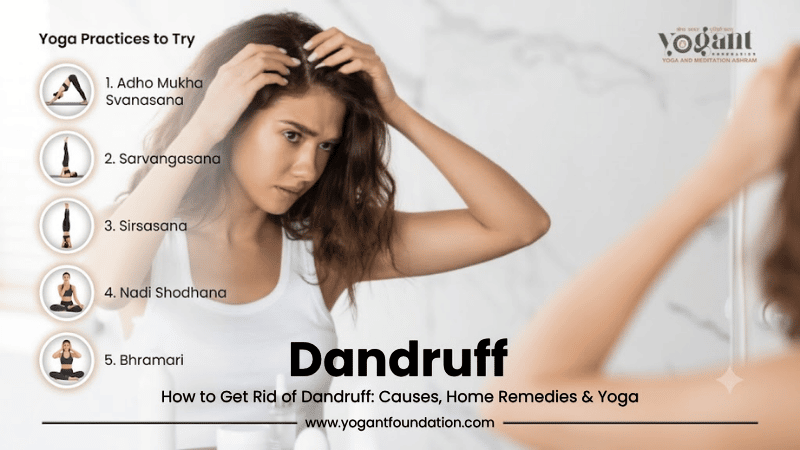
5 Yoga Practices to Try
- Adho Mukha Svanasana (Downward-Facing Dog): The easiest of the inversions, doesn decreases tension in your neck and shoulders.
- Sarvangasana (Shoulder Stand): You will learn it from a teacher and just stay away if you have neck problems.
- Sirsasana (Headstand): Experienced Or Advanced It is recommended for beginners to use a wall, or skip it.
- Nadi Shodhana (Alternate Nostril Breathing): Balances the breath and quiets a busy mind in 5–10 minutes.
- Bhramari (Bee Breath): The gentle humming has a strong calming effect on anxiety.
Even 10–15 minutes a day can noticeably lower your stress levels. If you’d like guided practice, a yoga retreat is a good place to build the habit. (Add your internal link here.)
5 Common Dandruff Mistakes to Avoid
- Giving up too soon. Give each shampoo 3–4 weeks.
- Switching products every week. Your scalp never gets a fair trial.
- Scrubbing with your nails. This causes tiny wounds and more inflammation.
- Not rinsing properly. Leftover residue irritates the scalp.
- Heavy oiling on an oily, flaky scalp. This can feed the yeast.
Dandruff vs. Dry Scalp vs. Seborrheic Dermatitis vs. Psoriasis
| Feature | Dandruff | Dry scalp | Seborrheic dermatitis | Scalp psoriasis |
|---|---|---|---|---|
| Flakes | White or yellow, slightly oily | Small, white, powdery | Yellow, greasy scales | Thick, silvery plaques |
| Scalp feel | Itchy, often oily | Tight, dry, itchy | Red, inflamed, greasy | Sore, crusty, may bleed |
| Main cause | Malassezia and sebum | Lack of moisture | Stronger inflammatory reaction to yeast | Autoimmune |
| Other areas | Scalp only | Scalp only | Face, ears, eyebrows, chest | Elbows, knees, lower back |
If your symptoms look more like the last two columns, see a dermatologist.
Pro Tips for Long-Term Scalp Health
- Alternate shampoos. Use the medicated one on some days and a mild shampoo on the others. For example: medicated on Monday, gentle on Wednesday, medicated on Friday.
- Rotate active ingredients. If one stops working after months of use, switching to a different ingredient often helps.
- Treat your scalp like your face. A light, non-greasy scalp serum can help a dry scalp.
- Be patient. Consistency matters more than any single product.
Frequently Asked Questions
1. Does dandruff mean I have poor hygiene?
No. Dandruff is not caused by being dirty, but by yeast and the production of oils and the way your skin reacts to those oils. But wash less often and it becomes more noticeable.
2. Can dandruff be cured permanently?
There’s no permanent cure, but dandruff can be controlled very well. Most people stay flake-free with a regular routine and a medicated shampoo used once or twice a week.
3. How can I remove dandruff in one day?
A thorough wash with a medicated shampoo removes the visible flakes right away. Controlling the yeast takes a few weeks of regular use, so expect lasting results in 2–4 weeks.
4. What is the best natural remedy for dandruff?
Diluted tea tree oil has the most research behind it. Aloe vera soothes itching, and coconut oil helps when the problem is a dry scalp.
5. How often should I wash my hair if I have dandruff?
Oily scalps often do well with daily washing. Use a medicated shampoo 2–3 times a week, or as the label directs.
6. Can stress cause dandruff?
Flare-ups can be triggered or made worse by stress. Yoga, breathing exercises, sleep and exercise all help.
7. Which shampoo ingredient is best for dandruff?
The agents that work best are ketoconazole, zinc pyrithione and selenium sulfide. Salicylic acid helps lift thick flakes. Try one for a month before switching.
Conclusion: Your Path to a Healthier, Flake-Free Scalp
Dandruff is frustrating, but it’s manageable. You don’t need a miracle product. You need to understand your scalp and look after it consistently.
Combine the right anti-dandruff shampoo with good washing habits, a nourishing diet, and a daily practice that calms your mind. Before long you’ll be wearing that black shirt without a second thought.
Disclaimer: This article is for general information and isn’t a substitute for medical advice. See a dermatologist if your symptoms are severe or don’t go away.