
Ganesh Vandana
When you open the doors to something new, whether it be a project, an adventure, or a new business, it isn’t unusual to hit a wall that seems invisible to everyone but you. In Hinduism, the belief is that this is where the Ganesh Vandana comes into play. It is the most powerful spiritual ritual for success, wisdom, and prosperity as it invokes the remover of obstacles.
If you want to learn the lyrics of Ganesh Vandana to include in your morning prayer, or if you want to understand the deeper meaning of Shri Ganesh Vandana or want to learn how to do Ganesh Aradhana to clear the obstacles in your life, you will find all the answers here. It is a complete and thorough guide on the meaning of Ganesh ji ki Vandana, the lyrics and chants, and support on how to implement them into your daily life.
Definition – What is Ganesh Vandana?
Ganesh Vandana is a form of Hindu worship that is essentially a prayer sung in veneration of Lord Ganesha. Lord Ganesha represented with an elephant head, and he is known as the remover of obstacles and the God of new beginnings. As the word Vandana denotes praise or salutation, the prayer is sung in seeking the blessings of Ganesha before an important task performed. Ganesha’s Vandana is recited before activities, rituals, or ceremonies that are new in order to receive his divine grace for the task to be completed without delay or obstruction.
Why Ganesh Vandana Matters: Spiritual Significance & Benefits
Millions of people start their day or new tasks by performing Ganesh Vandana. This practice takes inspiration from the psychology and the spirit.
Opening Up New Opportunities
Lord Ganesha is the remover of obstacles, also known as Vighnaharta. According to the Skanda Purana, blessings from Ganesha are needed to aid in the removal of all obstacles of life, be they material or spiritual. A person does a Ganesh Vandana and invites a force which clears the way and guarantees success.
Encouraging Intellect and Judgement
Along with being the remover of obstacles, Ganesha is also the God of Intelligence and Wisdom (Buddhi). When asking for the Ganesh Vandana, a person is asking for clarity and the ability to judge the best course of action in complicated situations.
Chanting for a Clear Goal
Since chanting in itself is a meditative practice, focusing the mind on the lyrics that encourage a clear goal and positive mindset will reduce anxiety and bring calmness. This will aid in the strengthening the psychology of performing tasks with a clear and positive goal.
Universal Appeal
Although Ganesha is primarily a Hindu deity, he is also revered in Jainism and Buddhism, thus making this Vandana practice spiritually available to all.
The Different Forms of Ganesh Vandana
“Ganesh Vandana” is a broad term covering multiple forms of mantras, shlokas, and aartis. Given below are some of the highly effective and popular forms.
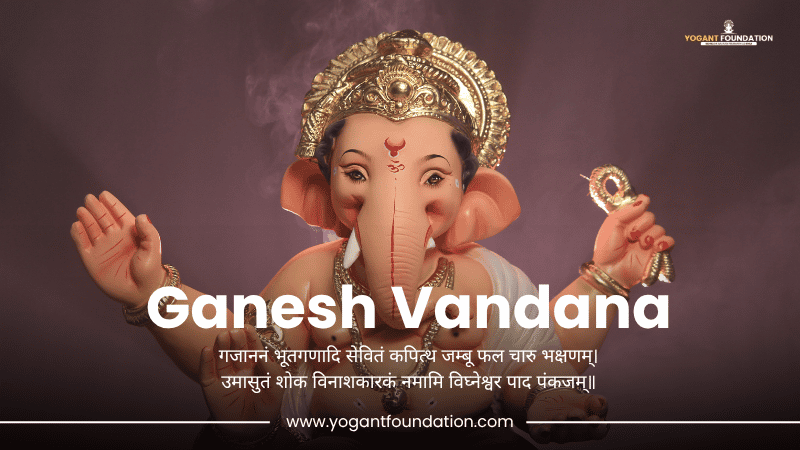
1. The Traditional Shloka: “Gajananaṃ Bhūta Gaṇādi Sevitam”
This is a classical sanskrit shloka which describes lord Ganesha in a beautiful way. The lyrics and translation are as follows:
Gajānanaṃ bhūta gaṇādi sevitam
Kapittha jambū phalacāru bhakṣaṇam
Umā sutaṃ śoka vināśa kārakaṃ
Namāmi vighneśvara pāda pankajamMeaning:
I bow before the lotus feet of Shri Ganesha, the son of Uma (Parvati), the remover of obstacles, who has the face of an elephant, is served by all beings, who enjoys fruits like Kapittha and Black Berry, and who destroys the sorrows of his devotees.
2. The Popular Invocation: “Gaaiye Ganapati Jagvandana”
This Vandana in Hindi is sung widely and is attributed to the poet Tulsidas. It has a beautiful, melodic structure.
| Verse | Lyrics (Transliteration) | Translation |
|---|---|---|
| Sthai (Chorus) | Gaaiye Ganapatii jagavandanaa | Sing the prayer of Ganapati, who is worshiped by the entire world. |
| Shankar Suwan bhawaanii nandan | He is the son of Shankar (Shiva) and the beloved child of Bhavani (Parvati). | |
| Antara 1 | Siddh sadan gajabadan binaayak | The abode of Siddhis (powers), the elephant-faced Lord, the remover of obstacles. |
| Kripaa sindhu sundar sab laayak | He is an ocean of mercy, beautiful, and worthy of all. | |
| Antara 2 | Modak priya mud mangaldaataa | He who loves Modaks (sweet dumplings), is the giver of joy and auspiciousness. |
| Vidya variida buddhii vidaataa | He bestows knowledge and grants wisdom/intellect. | |
| Antara 3 | Maangat Tulsidaas kar joRe | Tulsidas prays with folded hands. |
| Basaa hoon Raam Siiyaa maanas more | May Ram and Sita reside in my mind. |
3. The Aarti: “Jai Ganesh Deva”
Perhaps the most well-known Ganesh prayer is the aarti “Jai Ganesh, Jai Ganesh, Jai Ganesh Deva.” This is often sung during the ritual worship with a lamp. Many of the popular Ganesh ji ki vandana songs you hear during Ganesh Chaturthi are variations of this aarti.
4. A Powerful Shloka for Overcoming Obstacles
This is a very effective prayer for seeking a life free of obstacles :
Vakratunndd mahaakaay Suryakottisamaprabhaa
NirvighnaN kuru me dev sarvakaaryesshu sarvadaaMeaning:
O Lord Ganesha of large body, curved trunk, with the brilliance of a million suns, please make all my work free of obstacles always.
Step-by-Step Guide to Performing Ganesh Vandana & Aradhana
Performing a Ganesh Aradhana with sincerity and proper form enhances its spiritual benefits. Here’s a simple, authentic process based on Vedic traditions :
Step 1: Purification (Shuddhi)
- Take a bath and wear clean, comfortable clothes.
- Cleanse the puja area. Sprinkle a little water around the space.
- Sit facing the east or north direction.
Step 2: Preparation of the Aarti Thali (Plate)
Arrange the following items on a plate, each representing the five elements (Pancha Tattvas) :
- A ghee lamp (Diya) – Represents Fire (Agni).
- Incense sticks (Agarbatti) – Represents Air (Vayu).
- Water (Jal) – Represents Water (Jal).
- Flowers (Pushpa) – Represents Earth (Prithvi).
- Camphor (Kapur) – Represents Ether/Space (Akasha), and is burned to dissolve the ego.
Step 3: Invocation (Avahana)
- Light the lamp and incense.
- Ring a bell gently while chanting “Om Gam Ganapataye Namaha” three times. This is said to alert the deity and invite his presence.
Step 4: Offering and Chanting
- Chant “Om Gam Ganapataye Namaha” and mentally invite Lord Ganesha to receive your offerings.
- Offer Asanam (seat) and Padyam (water to wash feet) by placing a flower and water at the idol’s base while chanting the mantra.
- For a more elaborate puja, you can offer a ritual bath (Abhishekam) to the idol with milk, curd, ghee, honey, and sugar (Panchamrita).
Step 5: Perform the Aarti
- Hold the thali in your right hand.
- Begin singing the Ganesh aarti (like “Jai Ganesh Deva”) or chanting the Ganesh Vandana.
- With your left hand ring the bell gently while moving the thali in clockwise direction. Your movement should be in a circular motion which depicts the cycle of existence and merging of the devotee with the divine.
Step 6: Offerings (Naivedya)
- After the aarti, offer sweets—especially Modak, which is considered Ganesha’s favorite.
- Place the offering before the idol and say “Om Shri Ganeshaya Naivedyam Samarpayami” (I offer this food to Lord Ganesha).
Step 7: Accept the Blessings
- Cup your hands over the flame of the lamp (without touching it) and bring them to your eyes and the top of your head. This signifies receiving the divine light and energy of the deity.
- Distribute the prasad (sanctified food) among your family and friends.
Practical Tips for Chanting Ganesh Vandana
If you would like to enhance your spiritual practice, follow these recommendations:
- Make It a Routine: When you chant every day during Brahma Muhurta (the approximate time of 4:30-5:30 AM), the benefits will be great.
- Don’t Chant Just to Chant: Mechanically chanting the Shri Ganesh Vandana will not be useful. Instead, try to get the message of the words as you chant. Having a meaningful connection is important.
- Chant with the Right Pronunciation: Pronounce words in Sanskrit the right way. You will be able to find multiple resources online about the Ganesh Vandana to help you.
- Begin with a Sankalpa: When beginning your spiritual practice, make sure to set an intention so your mind is aligned with the practice. This can be the intention of achieving a peaceful feeling or gaining wisdom or even the project associated with success.
Common Mistakes to Avoid
- Ritual Without Intention: Absence of intention indicates that the practitioner is merely going through the motions. bhakti (devotion) is at the core of the Vandana and the ritual is only a small part of the process.
- Improper Pronunciation: Although Lord Ganesha is always merciful and understanding, consistent pronunciation of mantras would no doubt result in an even greater effect.
- Stale or Impure Offerings: Ensure freshness and cleanliness of offerings.
- Inconsistent Practice: Rituals should not be performed solely when you are in need of something. People tend to be more consistent when engaging in daily shorter rituals rather than irregularly engaging in longer rituals.
Ganesh Vandana vs. Ganesh Aarti: What’s the Difference?
| Feature | Ganesh Vandana | Ganesh Aarti |
|---|---|---|
| Meaning | “Vandana” translates to salutation or praise. It is a prayer of offering respect and seeking blessings. | “Aarti” is a specific ritual of offering light (a lamp) to the deity while singing a hymn. |
| Purpose | To invoke the deity and seek his grace for a new beginning or to overcome obstacles. | To express gratitude, devotion, and receive the deity’s blessings in return. It’s a more interactive form of worship. |
| Form | Can be a mantra, a shloka, or a bhajan. It can be chanted or sung. | Typically a song with a specific rhythm and is always accompanied by the waving of a lamp. |
| When | Often performed at the start of any puja or new venture as a primary invocation. | Usually performed as a main part of a puja, often towards the end. |
While they are distinct, both are essential parts of any comprehensive Ganesh Aradhana (worship).
Pro Tips & Advanced Insights
- Go Beyond the Ritual: As Swami Niranjanananda Saraswati explains in “Ganapati Aradhana,” perfecting even one form of Ganesh worship can bring profound positive changes by eliminating kleshas (mental afflictions) and deep psychological flaws.
- The 21-Day Sadhana: For a more profound spiritual experience, there’s the option of a 21-day intensive Ganesha Sadhana. There you can experience daily chanting of Ganesha, meditations and study of the symbolism of Ganesha.
- Psychological Symbolism: Ganesha’s elephant head symbolizes immense wisdom and memory. His large ears remind us to listen more. His small mouth encourages us to speak less. Meditating on these forms is a form of self-growth.
Frequently Asked Questions (FAQs)
1. What is the best time to chant Ganesh Vandana?
The most auspicious times are the Brahma Muhurta (around 1.5 hours before sunrise) and the twilight hours (Sandhya). However, you can chant it at any time with a pure heart, especially before starting any new task.
2. What are the most popular Ganesh Vandana lyrics to chant daily?
For daily chanting, the mantra “Om Gam Ganapataye Namaha” is simple and highly powerful. For a more lyrical prayer, the “Gajananaṃ Bhūta Gaṇādi Sevitam” shloka is excellent.
3. Can anyone chant Ganesh Vandana, or is it only for Hindus?
Ganesh Vandana is a universal prayer. Because of Ganesha’s association with wisdom and the removal of obstacles, we can see why this mantra is also popular among Buddhists, Jains and literally every other religion.
4. What is the correct way to perform Ganesh Vandana?
The right way is to take a bath, sit at a clean place, light a lamp and incense and chant the Vandana with devotion and ring the bell. If you follow the step by step guide mentioned above, you will be able to do it in the correct way.
5.What sweets does one offer to Lord Ganesha while performing Vandana?
Modak is Lord Ganesha’s favorite sweet, and it is a key offering in any Ganesh Aradhana. Other sweets like ladoos and fruits are also commonly offered.
6. I don’t know Sanskrit. Can I chant Ganesh Vandana?
Yes you can chant Ganesh Vandana lyrics in English or Hindi transliteration. Most important part is your devotion and meaning. There are apps like Utsav which also have guided audio to help with pronunciation.
7. How is Ganesh Vandana different from Ganesh Aarti?
Ganesh Vandana is a prayer of salutation and praise, while Ganesh Aarti specifically refers to the ritual of offering light to the deity while singing a hymn. A puja often combines them (Aradhana).
Conclusion & Your Next Step
Ganesh Vandana is descriptive, and helpfully released for those of us asking for less struggle and more clarity when it comes to achieving our goals. If you are someone who is discovering the lyrics of the Ganesh Vandana for the first time, or perhaps you are someone who has been practicing and is now expanding the depth of your Ganesh Aradhana, what matters most is your level of sincerity.
The challenges you face and the prayers you make will now take on new meaning. Go ahead and incorporate these prayers into your life and experience their meaning on a profound and personal level. You will be able to see and imagine your future easily and clearly.
Now, we invite you to embrace this powerful practice. Share this guide with family and friends, or simply sit down today and chant your first Ganesh Vandana. May Ganesh remove obstacles from your path and may your travels be fill with insight and fortune. Ganpati Bappa Moryā!