
Sattvic Food: Glow from Within Naturally
Are you sluggish, mentally foggy or stressed despite eating what you think are healthy meals? Maybe it’s not what you’re eating, it’s how calorie-dense your meals really are. Ayurveda holds that food is not simply fuel for the body, but that it also molds the mind and the daily consciousness. Rooted in ancient wisdom, Sattvic food is a refreshing alternative to modern dieting.
It’s all about fresh, seasonal, plant-based ingredients like fruits, vegetables, whole grains, nuts and seeds. These pure foods are thought to promote mental clarity, emotional calmness and a feeling of physical lightness. Imagine creamy kitchari, sweet juicy mangoes, warm almond milk. Each bite is made to nourish your cells, and your spirit too.
The real thing that’s amazing is that sattvic eating isn’t about deprivation, it’s about abundance. It gently guides you away from foods that are too stimulating or dulling, like processed snacks, caffeine, onions, and garlic, and fills you up with wholesome goodness that will help you feel lighter, think clearer, and connect more deeply to yourself and your yoga practice.
Ready to experience balance within? We’ll leave behind the rollercoaster ride of dieting, and get back to an age-old method that actually works, starting with your very next meal.
What is Sattvic Food?
Sattvic food nurture both body and mind through easily digestible whole ingredients. Ayurveda celebrates these high-prana foods—fresh fruits, vegetables, whole grains, and gentle spices—as natural healers. They exclude processed foods and stimulants, providing pure nourishment to calm the nervous system, sharpen the intellect and restore inner balance without any effort.
Read Blogs: Red Dragon Fruit: The Strange Truth About This Superfood
The Three Gunas: How Food Affects Your Mind
To truly understand what sattvic food is, you need to understand the yogic concept of the three Gunas—qualities of energy that exist in all things, including food. The food we eat directly influences our mental state .
What is Sattvic Food in Practice?
This is the highest quality, representing balance, harmony, and clarity. A sattvic diet is not just about being vegetarian; it’s about eating foods that are fresh, seasonal, and prepared with love. It leaves you feeling light, energetic, and content .Sattvic foods include:
Pure Sattvic Food List (Only What to Eat)
| Category | Sattvic Foods to Include |
| Fresh Fruits | Apples, bananas, grapes, oranges, pears, mangoes, papaya, melons, berries, figs, dates, peaches, plums |
| Vegetables | Spinach, kale, broccoli, sweet potatoes, carrots, cabbage, cauliflower, zucchini, pumpkin, okra, asparagus, green beans, beets, celery |
| Whole Grains | Brown rice, basmati rice, whole wheat, oats, barley, millet (ragi), quinoa, amaranth, spelt |
| Legumes & Beans | Split yellow moong dal, red lentils (masoor), chickpeas, black gram (urad dal – in moderation), fresh tofu |
| Nuts & Seeds | Almonds (soaked & peeled), walnuts, pumpkin seeds, sunflower seeds, flaxseeds, sesame seeds, chia seeds |
| Dairy Products | Fresh cow milk, fresh buffalo milk, fresh yogurt (curd), buttermilk, ghee (clarified butter), fresh paneer |
| Oils & Fats | Ghee, coconut oil, cold-pressed sesame oil, cold-pressed olive oil |
| Natural Sweeteners | Raw honey (unheated), jaggery, dates, maple syrup, raw sugar (small amounts) |
| Mild Spices | Turmeric, fresh ginger, dry ginger, cumin seeds, coriander powder, fennel seeds, cardamom, cinnamon, black pepper (pinch), saffron |
| Beverages | Fresh fruit juices (no sugar), fresh vegetable juices, coconut water, herbal teas (mint, chamomile, tulsi), warm water, fresh milk |
| Sprouts & Greens | Mung bean sprouts, alfalfa sprouts, wheatgrass juice, fresh cilantro, fresh mint leaves |
The Rajasic Diet: The Over-Active Mind
Rajasic food includes overly spicy, bitter, salty, or sour items like excessive chili, coffee, tea, and deep-fried dishes. While they provide a temporary burst of energy, they can lead to restlessness, overstimulation, and a hyperactive mind. It is the “activity” Guna .
Tamasic Food: The State of Inertia
Thought to be impure and contains stale and heavy food. Tamasic food includes processed food, leftover food, meat, fish, eggs, alcohol, and fermented or spoiled food. This food is prone to lethargy and dullness, and it is much harder to wake up in the morning and meditate with this food in your system.
Rajasic & Tamasic Food List (Strictly Avoid or Limit)
| Category | Rajasic Foods (Over-Stimulating – Limit/Avoid) | Tamasic Foods (Dull & Heavy – Avoid) |
| Fruits | Unripe, sour, or overly fermented fruits | Canned fruits, overly ripe/fermented fruits, fruits stored for days |
| Vegetables | Onions, garlic, chili peppers, radish, hot peppers, eggplant (in excess) | Mushrooms, potatoes (deep-fried or old), frozen vegetables, canned vegetables |
| Grains | Refined flour (maida), white bread, instant noodles, packaged cereal | Stale bread, week-old grains, fermented batters (excess), processed pasta |
| Legumes | Canned beans, kidney beans (rajma – heavy), chickpeas (if not soaked properly) | Fermented soybean products, old/leftover lentil soups |
| Nuts & Seeds | Roasted/salted nuts, peanuts, pistachios (excess), fried seeds | Rancid nuts, chemically preserved nuts, packaged trail mixes with additives |
| Dairy | Sour cream, processed cheese, ultra-pasteurized milk, ice cream | Spoiled curd, old butter, packaged cheese slices, milk that has been reheated multiple times |
| Oils & Fats | Margarine, vegetable oils (canola, soybean, sunflower refined), hydrogenated oils (vanaspati) | Used/re-heated cooking oil, rancid oils, trans-fat laden products |
| Sweeteners | White sugar, artificial sweeteners, corn syrup, refined sugar products | Old jaggery, chemically processed sugar, expired syrups |
| Spices | Excessive red chili, mustard seeds (in large amounts), asafoetida (hing – excess), clove (excess) | Very old/expired spices, spice mixes with preservatives |
| Beverages | Coffee, black tea, energy drinks, carbonated sodas, alcohol | Stale fruit juices, packaged drinks with preservatives, fermented drinks (excess) |
| Proteins | Eggs (stimulating), meat (in excess – considered rajasic in some texts) | Red meat, pork, beef, chicken, fish, seafood, smoked/cured meats |
| Processed Foods | Deep-fried snacks (samosa, pakora), spicy chips, fast food burgers | Frozen pizzas, instant meals, packaged cakes, cookies, all junk food |
| Fermented Items | Fermented pickles (excess), vinegar-based products | Alcohol, fermented soybean paste, very old pickles, spoiled kimchi |
| Leftovers | Food left for 4–8 hours (starts turning rajasic) | Food stored overnight or beyond 3–4 hours, refrigerated leftovers over 24 hours |
The Power of Purity: Why Adopt a Sattvic Diet?
Switching to a sattvic food list can feel like upgrading the fuel in your car from low-grade to premium. These are some of the reasons why practitioners recommend it:
- Mental Clarity: Your mind will be clearer and sharper with less anxiety and negativity.
- Easier Meditation: Making dietary choices based on purity calms and relaxes the nervous system and makes it easier to retain your posture and concentrate on yoga.
- Physical Vitality: Plant-based whole foods pr..ovide excellent nutrition and reduce the risk factors for cardiovascular disease, type 2 diabetes, and cancer.
- Balanced Emotions: Aversive attitudes and irritability manifested as mood swings will diminish and a more pleasant and consistent attitude will prevail.
Sattvic Food Recipes to Try Today
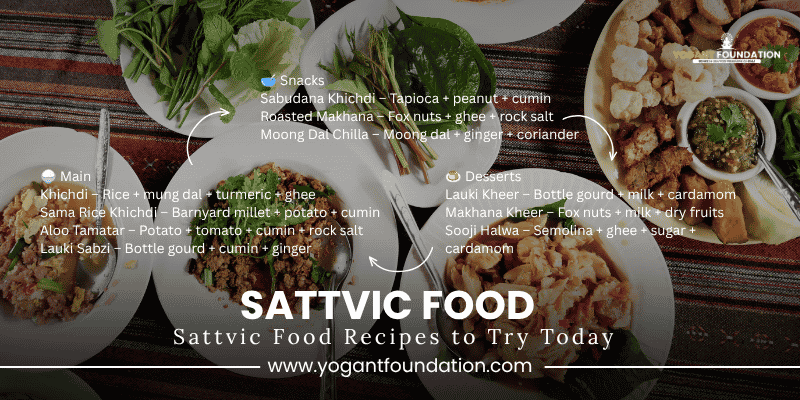
Theory is great, but the real magic happens in the kitchen. Here a couple of simple sattvic food recipes to get you started.
1. Warm Rice with Ghee and Jeera
This is an easy example of a sattvic meal. Rice that is warm and cooked is tempered with cumin that is brightened with ghee. Because ghee is a healthy fat, it is great for nourishment of the brain and joints as well, and cumin is a great digestive aid. This meal is easy on the digestive system, and great meal to have for breakfast, or a quick easy meal for dinner.
2. Moong Dal Chilla (Savory Pancake)
Soaked yellow moong dal infused with fresh ginger and coriander, providing a smooth batter. The batter is pour onto a pan where it forms a pancake, which is crisp and golden once done. Being protein dominant, it encourages feeling of fullness, even being light in digestion. This pancake is a perfect gluten free breakfast option, as well as a filling evening snack.
3. Vegetable Khichdi (One-Pot Cleansing Meal)
In Ayurveda, Kichadi considered a comfort food. Kichadi balances all three doshas, which makes it a nutritious gut-friendly light lunch or detox meal.
Kichadi made with rice, dal and seasonal vegetables like carrots, beans and peas is a great balance for all three doshas. Moong dal is also a good source of plant-based protein. Moong dal is a plant based protein and proteins are moderately heavy and moist which balances all three doshas and helps in the detoxification process. Turmeric and ginger are common ingredients in Kichadi recipes for additional dosha balancing, as both turmeric and ginger are known detox ingredients and digestive aids in Ayurvedic traditions. In ayurveda, kichadi considered to be balancing and nourishing.
4. Golden Oats with Turmeric and Saffron
Simmer rolled oats with either almond milk or water and combine with turmeric, cardamom, and saffron. This breakfast is ready in under 10 minutes and relaxes the nervous system while also benefitting your joints. Bananas or raisins for natural sweetening are great add-ons.
5.Roasted Makhana (Fox Nuts Snack)
Makhana (fox nuts) puffs roasted in ghee (clarified butter) and slightly salted rock salt with some black pepper for spice and crunch. This light snack keeps you full for hours. They are even better as a snack for supporting brain health and digestion.
Quick Tip: All these recipes strictly avoid onion and garlic, use fresh ingredients, and are best consumed within 3–4 hours of cooking to retain their pure, energy-boosting qualities.
Expert Strategies for Incorporating Sattvic Food
Dr. Sharika Menon, Vaidya (Ayurvedic expert), emphasizes that the goal of the diet is to restore harmony.
- Start Slow: Begin removing an item such as coffee of reducing an item such as salt from your diet.
- Mindful Eating: A Sattvic diet considers what you eat along with how you eat. Eating in a calm environment, chewing your food completely, and being appreciative of your meal is a way to adopt this diet.
- Eat with the Seasons: Nature offers us all that we require. The balance summer fruits provide us with and the warm grains during winter are all that we need.
FAQ About Sattvic Food
1. What does “Sattvic” mean?
Sattvic comes from the Sanskrit term for “pure” or “essence,” “Sattva.” This term also describes the primordial state of being associated with balance, harmony, and clarity among the three Gunas or qualities of nature.
2. Is coffee allowed on the Sattvic Diet?
No. Coffee and tea generally considered Rajasic because they act as stimulants, over-exciting the nervous system and leading to restlessness rather than the calm clarity sattvic food promotes .
3. Why are onion and garlic not considered Sattvic?
The principles of a Sattvic diet classify onions and garlic as Rajasic foods. Because they stimulate the senses, they have the tendency to create hyperactivity and an increase of heat in the body, which is opposite to the calming nature of the diet..
4. Can I eat non-vegetarian food on this diet?
No. Meat, fish, and eggs are seen as Tamasic or Rajasic foods. They are heavy, difficult to digest and often cause aggression and sluggishness. A sattvic diet is based on the principle of non-harming (ahimsa), which makes it, at most, a vegetarian diet.
5. What are the best cooking oils to use?
The top three oils best suitable for the Ayurvedic diet plan are Ghee (clarified butter), coconut oil, and sesame oils. These are high smoking points and believed to be the most pure, healthy oils for cooking.
Conclusion
Whether you are in India, the UK, or the US, the search for mental peace and physical health is universal. Sattvic food encompasses an all-inclusive wellness approach which surpasses the measuring of food beyond caloric or macro content. Sattvic food encourages individuals to prepare and consume food that nourishes the spirit, calms the mind, and energizes the body.