

Intorduction
Has your body ever left you feeling sluggish after eating? Or have you worried about your overall health and whether or not your current diet supports it long-term? Your feelings are not unique. There are many people in this fast-paced, modern world who want to find natural and delicious ways to increase their well-being, without having to resort to complicated fads. Was it possible that a simple sweet fruit has the power to improve digestion, give you a healthier heart and sustain energy? Welcoming you to the world or figs.
This pear shape is known around the world as anjeer. It’s more than simply a sweet treat. This fruit is a nutritional powerhouse, filled with vital vitamins and minerals. It also contains dietary fiber in abundance. You can enjoy figs fresh from the trees or dried. Both are rich in Health Benefits of Figs. These benefits will help you manage common health problems, such as digestive upset and high blood sugar. Find out why adding dried fig is one of best things you can do for your health.
What are Figs?
Ficus Carica is the tree that produces figs. A syconium (inverted flower cluster) and not just a single fig, they’re technically a group of inverted flowers. You can find dietary fiber in them, as well as antioxidants including polyphenols. They also contain essential minerals and vitamins such potassium, calcium copper and vitamin K.
The Remarkable Nutritional Value of Figs
We need to know what figs contain in order to understand their benefits. Fresh and dried fig both have incredible nutrition value. However, their nutritional profiles are slightly different, as dried fig contain more calories, sugars and nutrients. It is because of this that dried fruit benefits tend to be highlighted.
Figs Rich in Fiber
Fiber content in fig, one of their most celebrated features. This fibre in figs, is essential for digestion and offers a variety of benefits. About 2 grams of fibre found in just two medium-sized fig. Dry fig contain even more fiber, as they packed into a 100 gram serving (3-4 fig). The fiber in this product is a mixture of soluble as well as non-soluble forms, making it a great tool for overall health.
Vitamins and Minerals
Aside from fiber, fig also contain an abundance of important micronutrients. The figs contain many vitamins and nutrients :
- Potassium: Healthy blood pressure and heart health are essential for a healthy lifestyle.
- Calcium and Magnesium: Important players for building and maintaining strong bone tissue.
- Copper and Manganese: Minerals that are essential for the body and act as cofactors to many enzymes.
- Iron: The fig is a good source of the essential component hemoglobin that carries oxygen through your blood.
- Vitamin K: Blood clotting is important for bone and blood health.
Antioxidants in Figs
Fig are also rich in antioxidants like flavonoids and polyphenols, as well as anti-oxidants are abundant in figs. These powerful compounds combat oxidative strain in the human body. This is associate with aging, chronic diseases such as heart disease, and cancer. Although the antioxidant content of dried and fresh fig can vary, both have some level..
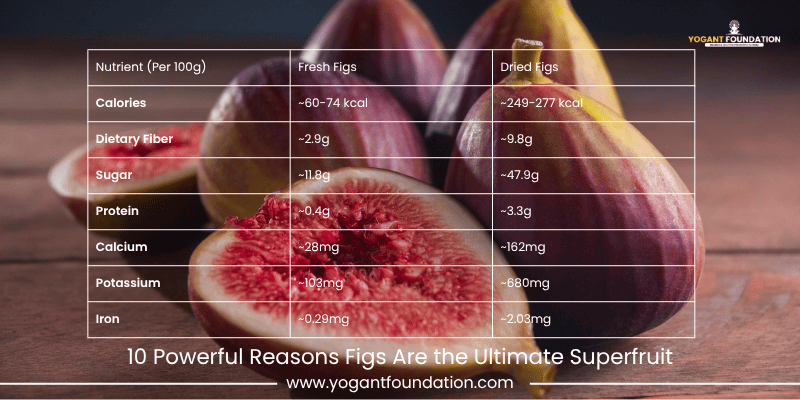
Here is a quick comparison of the nutritional breakdown of fresh vs. dried figs:
| Nutrient (Per 100g) | Fresh Figs | Dried Figs |
|---|---|---|
| Calories | ~60-74 kcal | ~249-277 kcal |
| Dietary Fiber | ~2.9g | ~9.8g |
| Sugar | ~11.8g | ~47.9g |
| Protein | ~0.4g | ~3.3g |
| Calcium | ~28mg | ~162mg |
| Potassium | ~103mg | ~680mg |
| Iron | ~0.29mg | ~2.03mg |
Top 10 Health Benefits of Eating Figs
The high nutritional values of fig translate directly to a range of health advantages. The advantages of figs go beyond your stomach.
1. Figs for Digestion: A Gut Health Superstar
You can find relief from digestion issues by eating fig. Their fiber content is a natural laxative that promotes regular bowel movement and prevents constipation. Figs contain prebiotics as well, nutrients which help feed beneficial bacteria. It is important to have a healthy microbiome in order to reduce inflammation and support a strong immune system.
- Clinical evidence: People with Irritable Bowel Syndrome and constipation (IBSC) who ate dried fig daily found they experienced less discomfort, pain, bloating. The results confirm that the figs can be used to treat digestion.
2. Heart Health Support
The health benefits of Anjeer also extend to the cardiovascular system. The high potassium in fig counteracts the sodium’s effects, helping maintain healthy blood pressure. Fig are a healthy choice because of the combination of antioxidants and these nutrients.
3. Blood Sugar Management
It is possible to control blood sugar with fig despite their sweetness. Due to their high content of dietary fiber, fig help slow the rate at which sugars are digested and absorbed. They prevent a sudden spike in glucose levels. There has been research that suggests benefit of figs for diabetics. According to a study conducted on Type 1 diabetics, those who drank tea made from fig leaves had lower levels of blood sugar. They also required less insulin. Consuming dried fig by those suffering from Type 2 diabetes may reduce the inflammation caused by metabolic diseases. The key is to limit the amount of dried fig you eat, as they are more high in sugar.
4. Weight Management
Weight management is made easier with figs. The fiber in fig can reduce cravings, and help to curb overall calorie consumption. It is possible to control weight by replacing processed snacks that are high in sugar with fiber-rich fruits like fig. For anyone on a weight management journey, fig are a fantastic ally. The figs rich in fiber content promotes a feeling of fullness and satiety, which can help curb cravings and reduce overall calorie intake . Replacing processed, high-sugar snacks with a fiber-rich fruit like figs can be a simple and effective strategy for weight control.
5. Bone Health
They are rich in minerals such as calcium, potassium and magnesium that can help strengthen bones. Figs are a good source of minerals that help build strong bones.
6 .Rich in Antioxidants for Cellular Protection
The phenolic and flavonoids in figs neutralize the free radicals. They contain more antioxidants than dark grapes or blueberries. This helps protect cells against oxidative stress and premature ageing.
7. May Inhibit Cancer Cell Growth
In test-tube studies, compounds found in figs, fig leaves, and their leaves have shown to exhibit antitumor properties against cancerous cells of the colon, breast and cervical cervix, as well lung. These early results are promising, but human trials will be needed.
8. Promotes Healthy Skin and Wound Healing
The fig extract known to reduce skin inflammation and irritation. A cream made of dried fig fruits was found to more effective in treating dermatitis compared with standard hydrocortisone due to its antioxidant and anti-inflammatory properties.
9. Fights Chronic Inflammation
The bioactive compounds found in figs can help decrease inflammation. They may block cytokines- substances that trigger inflammation-which are link to autoimmune diseases, arthritis, and other chronic conditions.
10. A Smart, Nutrient-Dense Snack Choice
The figs contain a lot of fiber, but are also low in sodium and cholesterol. The figs are a healthy, filling snack which supports dietary quality. They also provide lasting energy and don’t contain empty calories.
Yogic & Traditional Benefits of Anjeer (Figs)
Ayurveda, Unani, and other traditional medical systems revere figs as anjeer. Anjeer, which has a variety of health benefits in these systems, is referred to as a panacea. Anjeer is not only valued for digestion health, but also for its diuretic and expectorant properties.
- Yogic food is classified based upon its qualities. Anjeer food is considered Sattvic. Meaning it is pure. Promotes clarity. Nourishes body and mind. A mild natural sweetness combined with grounding qualities is said to help balance Vata dosha. Vata dosha has been linked to anxiety, digestive disorders and the movement of air. Eat mindfully. This is one of the core principles of yoga. Enjoying a delicious fig with its subtle, sweet flavor can even be a kind of meditation.
Step-by-Step Guide: How to Enjoy Figs
It is easy to incorporate figs in your everyday routine. This guide will show you how to enjoy both the fresh and dried types.
Choose Your Fig:
- Fresh: They’re usually in season between late summer and early autumn. You want figs to be plump and soft, with a deep color. Black Mission, Brown Turkey and Calimyrna are the most popular types. Handle them with caution as they are fragile.
- Dried: They are convenient and available year round. The texture is chewy and sweet. You want to choose ones that have a soft texture and aren’t too crystalized or hard.
Preparation:
- Fresh: They should be washed gently in cool water. The stem can be removed. The skin of the fruit is edible, and it’s a good source of nutrients. You can either eat whole or cut them.
- Dried: You can eat them right out of the package. To soften the texture of these chips, soak them for several hours in juice or warm water.
Ideas for Serving:
- Breakfast: Fresh figs can be sliced over cereal, oatmeal or yogurt. Chop dried fig and add them to homemade granola.
- Salads: Combine sliced fresh or dried fig in a salad green with goat cheese, walnuts, and a classic flavour combination.
- Snacks: For a quick energy boost, combine a few dried fig and a handful or almonds.
- Baking: You can use dried fig chopped in muffins, cookies and breads. Or, you can make a jam with figs.
- Savory Dishes: Serve roasted meats and pizza with fig roasted in balsamic vinaigrette.
Practical Tips and Expert Strategies
- Portion Control is Key: It is essential to consume fig in moderation, as they are rich in calories and sugar. 2 to 3 dried fig is a good serving, as are 2-3 fresh fig. Servings of dried fruit (about 100g or 3.5oz) contain 277 calories.
- Pair with Protein and Fat: Pair figs, such as fig, with healthy fats or proteins, like nuts or seeds.
- Start Slowly: If you want to prevent bloating avoid adding the fig too quickly and not drinking enough fluid.
Common Mistakes to Avoid
- Overeating Dried Figs: A person can consume way too many calories. It is important to weigh your food in order to limit the amount of sugar and calories you consume.
- Ignoring Fresh Figs: Do not limit your fig consumption to only dried ones. In season, fresh, low-calorie fig are a tasty, healthy and nutritious snack.
- Not Drinking Enough Water: Drinking more water is crucial when you increase your fiber intake. If you are not drinking enough water, fibers can cause constipation.
- Storing Incorrectly: Fresh fig will only keep for a limited time. After they are ripe you can store them inside the refrigerator for a couple of days and then eat. Dried fig can be kept in an airtight, dark, and cool container.
Pro Tips & Advanced Insights
- Soak Dried Figs: You can soak the fig in water for an entire night to make them plumper, soft and more digestible. Use the water as a sweetener for drinks and smoothies.
- Fig Leaf Tea: Leaves should not be thrown away. Tradition medicine uses fig leaves for blood sugar management. They can dried into a tea.
- Antioxidant Activity: A study has found that the antioxidants present in figs can absorbed and used by humans easily. It means they are readily absorb and utilized by the human organism.
FAQs
1. What is the best way to eat figs for constipation?
Constipation can be treat with fig. They are natural and work well. Eat 2-3 dried fig per day or soak the fig overnight and then eat in the morning. The high fiber content in figs acts as mild laxative, stimulating bowel movement.
2. What are the benefits of eating figs for the skin?
The antioxidants in fig can protect your skin and help reduce wrinkles. Iron and other minerals are also good for hair and skin. Even topical figs extracts can help to treat dermatitis.
3. Are figs good for weight loss?
If consumed in moderation, figs can help you shed weight. A high fiber diet will make you less likely to want snacks and you’ll feel more satisfied. Figs are high in energy but it is important to keep your intake of figs in control.
4. Is it safe to eat fig daily?
If you are eating a nutritious diet, then it’s safe to have figs each day. Consuming fig at a moderate rate, for example 2-3 dried fruits healthy. For diabetics, the amount of sugar is something to be consider. It is safe to consume fig every day as long as they are part of a healthy diet. It is healthy to eat fig moderately, like 2-3 dried figs. Sugar content is important to consider, especially for diabetics.
5. Can diabetics eat figs?
But they should be cautious about the amount. Fibre in fig helps regulate blood sugar. Dried figs contain a lot of sugar. To monitor your blood sugar, start with small amounts (like 1 dried fruit). Some studies indicate that fig leaves may have a similar effect on blood sugar levels
Conclusion
From supporting a healthy gut to fortifying your heart and bones, benefits to eating figs include a healthier gut, a stronger heart and a more robust bone structure. This ancient superfood deserves its own place in the pantry.
Starting simple is the key. If you want to add a little fiber and taste, try adding a few dried or fresh fig with your morning yogurt. Drink plenty of water, be aware of the portion size and keep your diet healthy. If you include fig in your diet regularly, it is an easy way to achieve better health.