
Viparita Karani is a restorative, inverted yoga posture in which you lie on your back and rest your legs up against a wall, usually for 5 to 15 minutes. It is best known as Legs-Up-the-Wall Pose. Most healthy beginners can try it, and it is a calm way to rest tired legs and settle the nervous system.
This guide explains what Viparita Karani is, what it can realistically do for you, how to practise it step by step, who should avoid it, and how it differs from Sarvangasana (Shoulder Stand).
What Is Viparita Karani?
Viparita Karani is a yoga pose in which the legs are raised above the heart while the back rests on the floor. In Sanskrit, viparita means “inverted” or “reversed,” and karani means “action” or “doing.” Together the name points to an “inverting action.”
Today most people practise it as Legs-Up-the-Wall Pose. You lie down, place your legs vertically against a wall, and stay still. The head stays below the legs without any weight on the neck, so it counts as a gentle inverted yoga posture. It sits within restorative yoga, where props and stillness replace effort.
Where Does This Pose Come From?
Viparita Karani is described in traditional hatha yoga texts, including the Hatha Yoga Pradipika, as a mudra (a seal or technique). The classical version is more active, with the hips lifted and supported by the hands. The wall-supported version most people search for is a modern, easier adaptation. Teachers and books describe the details differently, so treat the traditional claims as tradition, not proven fact.
How Does Legs-Up-the-Wall Pose Work in the Body?
Pose simply employs gravity. When youaughter around with your feet up off the ground, blood and fluid from the legs can drain back toward the trunk more easily. This is good for the venous circulation, which is how blood returns back through veins to the heart.
The long, quiet hold also encourages slow breathing. Slow breathing and stillness are generally linked with a shift toward the parasympathetic nervous system, the part of the body that handles rest and recovery. That is why the pose feels calming. It is a relaxation practice, not a medical treatment.
What Are the Benefits of Viparita Karani?
The most reliable benefits of Viparita Karani are physical relaxation, a feeling of lighter legs, and a gentle stretch through the back of the legs and lower back. Research on this exact pose is limited, so the points below describe what practitioners commonly report and what the mechanism suggests, not guaranteed results.
- Calms the mind and body. When you are still and breathe slowly, you can reduce the stress response and help the parasympathetic system work.
- Retired legs and feet. And when you lift your legs up, fluid drains from the lower limbs. Many people find this soothing after long hours of standing or sitting.
- Gently stretches the hamstrings, calves and lower back. The stretch is mild and passive, so it suits stiff beginners.
- Supports relaxation before sleep. Many people use it as a wind-down practice in the evening.
- Offers a low-effort inversion. You get the feeling of an inverted posture without balancing or loading the neck.
What Can This Pose Not Do?
It does not cure disease, replace medical care, or guarantee better sleep, weight loss or hormonal balance. Claims like these are common online but lack solid evidence. If you have swelling, high blood pressure or another health concern, speak with a doctor before relying on any yoga pose.
How Do You Do Viparita Karani Step by Step?
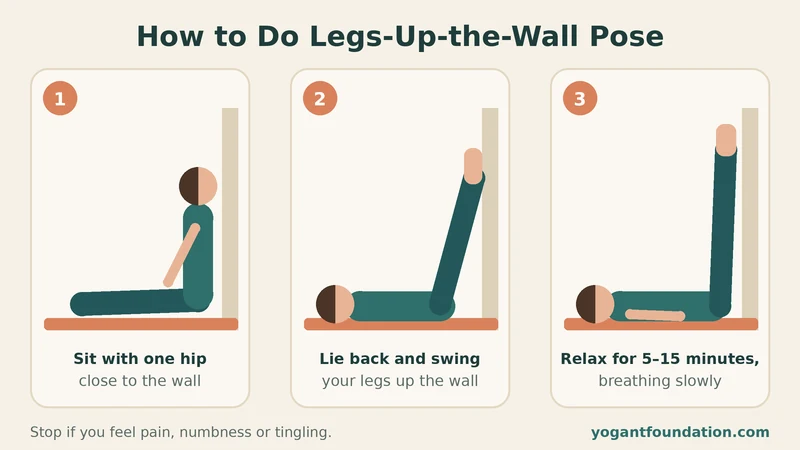
To do Viparita Karani, sit sideways next to a wall, swing your legs up the wall as you lie back, and rest with your hips close to the wall for 5 to 15 minutes. You need a wall, a mat or carpet, and optionally a folded blanket or bolster.
- Set up. Place a folded blanket or bolster about 10 to 15 cm (4 to 6 inches) from the wall, or skip the prop if you prefer the floor.
- Sit sideways. Sit on the prop or floor with your right hip and shoulder touching the wall (swap sides if your left feels easier).
- Turn and lift. Exhale, lean back on your forearms, and swing your legs up the wall as your shoulders lower to the floor.
- Adjust your distance. Shuffle your hips closer to or further from the wall until the back of your legs feels comfortably stretched, not strained.
- Relax your body. Let your arms rest out to the sides, palms up. Keep your knees soft, your jaw loose and your neck long.
- Breathe slowly. Breathe in through your nose and let the exhale be slightly longer than the inhale.
- Stay for 5 to 15 minutes. Set a gentle timer so you can let go completely.
- Come out slowly. Bend your knees, roll to one side, rest for a few breaths, then press up to sit before standing.
How Can Beginners Get Started Safely?
- Start for 3 to 5 minutes and then increase as feels comfortable.
- Move further from the wall if your hamstrings feel tight or your knees want to bend.
- Place a folded blanket under your head if your chin lifts toward your chest.
- Use a bolster or firm cushion under your hips for a gentler, more supported inversion.
- Practise on a quiet stomach. Wait around two hours after a heavy meal.
- Stop if anything hurts. Mild stretching is fine, but pain, numbness or tingling is a signal to come out.
Who Should Avoid Viparita Karani? Contraindications and Safety
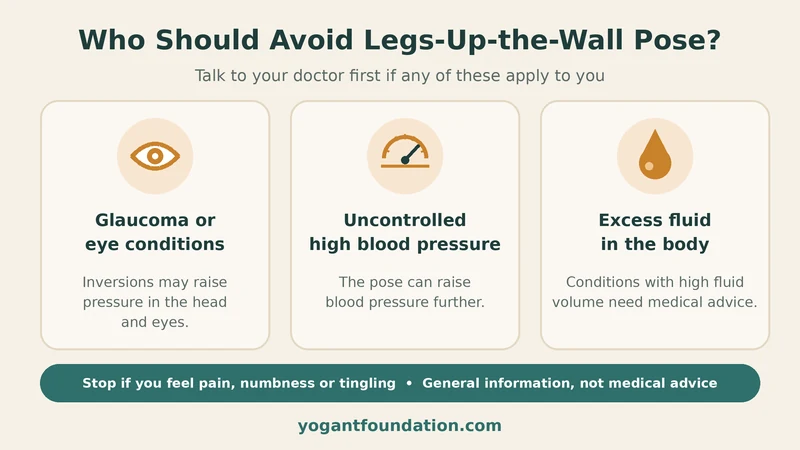
People with certain eye, heart, blood pressure or circulation conditions, and anyone advised against inversions, should avoid Viparita Karani or practise it only with medical approval. For most healthy adults the pose is gentle, but it is still an inversion.
Check with a doctor first if any of these apply:
- Glaucoma or other eye-pressure conditions. Inversions can raise pressure in the eyes.
- Uncontrolled high blood pressure or serious heart conditions.
- Hiatal hernia or severe acid reflux. Lying with the legs up can worsen symptoms.
- Blood clots, deep vein thrombosis or serious circulation problems.
- Recent surgery, or neck, back or hip injuries.
- Pregnancy, especially in later months. Ask your doctor or a trained prenatal teacher about a safe version.
- Severe swelling or kidney problems.
Some traditions advise avoiding inversions during menstruation. This is a matter of tradition and personal comfort, and there is no firm medical consensus, so listen to your body.
Stop and come out of the pose if you feel dizziness, chest discomfort, shortness of breath, headache, or pain, numbness or tingling in the legs. Tingling in the feet can simply mean you are too close to the wall. Move back, bend the knees, or lower the legs.
This article is for educational purposes only and is not medical advice. Please Consider Your Own Individual Circumstances, If Pregnant Or Uncertain Then See A Qualified Health Care Professional Or Experience Yoga Teacher.
What makes Viparita Karani different from Sarvangasana?
Viparita Karani is a restful, wall-supported pose with the legs raised and the shoulders on the floor. Sarvangasana (Shoulder Stand) is an active full inversion in which the body is lifted and balanced on the shoulders. Viparita Karani is far gentler and is the usual starting point.
FeatureViparita Karani (Legs-Up-the-Wall)Sarvangasana (Shoulder Stand)TypeRestorative, passiveActive, strengtheningBody positionBack on floor, legs up the wallShoulders on floor, hips and legs lifted verticallyWeight on neckNoneSignificant, needs careTypical hold5 to 15 minutes30 seconds to a few minutes, built up slowlyLevelBeginner friendlyIntermediate, best learned with a teacherMain purposeRelaxation and recoveryStrength, balance and a full inversion
If you are new to inversions, practise Viparita Karani first. It teaches you to relax with the legs above the heart before you try anything that loads the neck.
What Mistakes Should You Avoid?
- Sitting too far from the wall. The hamstrings pull hard and the lower back arches. Move closer, or bend the knees.
- Sitting too close. The legs may tingle or feel strained. Shift your hips back a few centimetres.
- Forcing straight legs. Soft knees are fine. The pose is about rest, not flexibility.
- Staying too long on day one. Start with a few minutes and build up.
- Lifting the chin. Keep the back of the neck long, with a thin folded blanket under the head if needed.
- Rushing out of the pose. Standing up fast can cause dizziness. Roll to your side first.
- Ignoring health conditions. Check the contraindications above before you begin.
Frequently Asked Questions About Legs-Up-the-Wall Pose
How Long Should You Hold the Pose?
Beginners can start with 3 to 5 minutes. Most people hold the pose for 5 to 15 minutes. Come out earlier if you feel discomfort.
Is Viparita Karani the same as Legs-Up-the-Wall Pose?
Nearly. Legs-Up-the-Wall is the popular, wall-supported version of Viparita Karani. The classical form described in older yoga texts is more active and does not use a wall.
Can You Practise It Every Day?
Most healthy people can practise it daily because it is gentle. Evening is a common time. If you have any medical condition, ask your doctor first.
What Is the Best Time of Day to Practise?
The pose works well in the evening to wind down, or after a long day on your feet. Avoid it right after a heavy meal. Wait about two hours.
Does It Help With Sleep and Stress?
It may help you relax, because slow breathing and stillness support the parasympathetic nervous system. It is not a treatment for insomnia or anxiety. Persistent sleep or stress problems deserve a doctor’s advice.
Can You Do It Without a Wall?
Yes. You can rest your legs on a sofa, chair seat or a stack of cushions, or practise the traditional version with a teacher. A wall just makes it easy to hold the legs in place.
Is It Safe During Pregnancy?
It depends on the stage of pregnancy and your health. Many teachers modify or avoid lying flat with the legs up in later months. Ask your doctor or a qualified prenatal yoga teacher before trying it.
What Is the Main Takeaway on Viparita Karani?
Viparita Karani is a simple, restorative way to rest your legs, slow your breathing and unwind. Set your hips close to a wall, raise your legs, and stay for 5 to 15 minutes. Start small, keep your knees soft, and come out slowly.
It is not a cure for any condition, and it is not suitable for everyone. If you have eye, heart, blood pressure, circulation or pregnancy-related concerns, check with a doctor first. Once Viparita Karani feels easy, you will have a calm base for exploring other inversions such as Sarvangasana with a teacher.
If you would like guided practice in a peaceful setting, you can learn about the yoga retreat at Yogant Foundation in Rishikesh at yogantfoundation.com.