
Introduction: Aprajita Flower That Changes Color Before Your Eyes
Picture a tiny, pale blue flower in your palm, a petal-soft piece of the sky you’ve probably seen draping temple walls or winding quietly over a neighbour’s fence. You sense it’s special, but its name and quiet power escape you. That mystery ends here. This is the Gokarna flower—revered in Hindi as Aprajita flowers, meaning “the undefeated one.” Once you truly know it, everything shifts. From its deep spiritual roots to the Gokarna flower in English name and the life-changing Gokarna flower benefits for your mind and skin, we’re uncovering it all. Even the simple, colour-shifting magic of a warm cup of Gokarna flower tea will soon become your favourite daily ritual.
What Exactly is the Gokarna Flower?
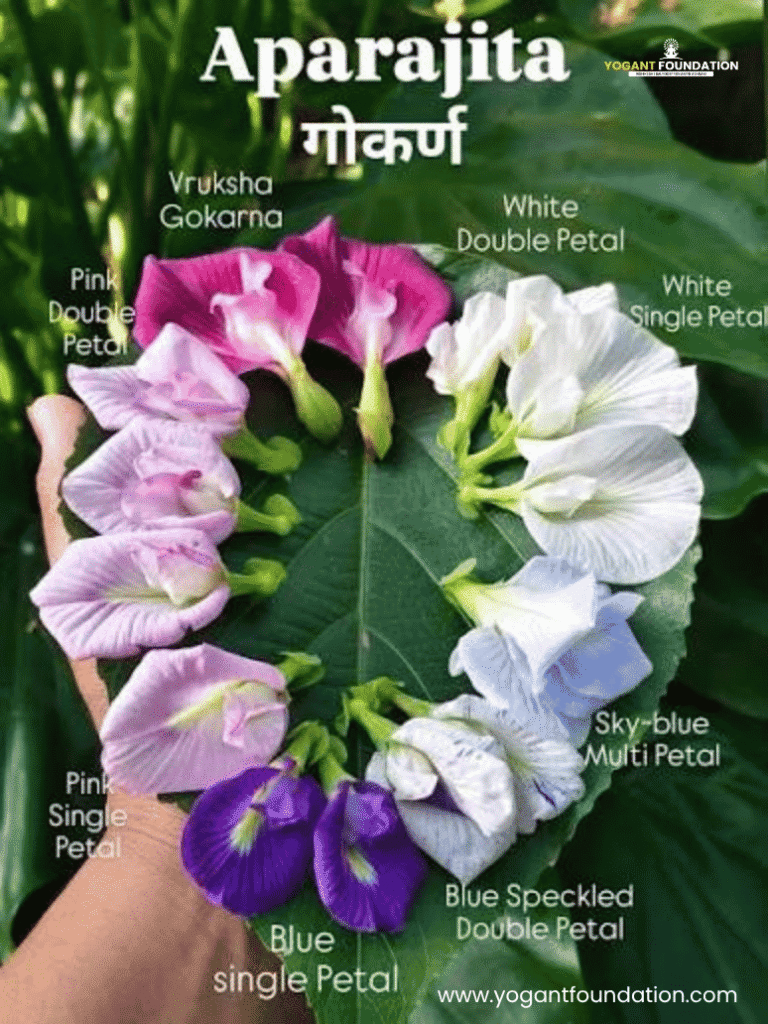
The Gokarna flower, or Butterfly Pea flower, is referred to as Clitoria ternatea in scientific nomenclature and is in the Fabaceae family. This flower, with its striking blue color, is a perennial, sprawling, tropical climbing vine native to India, Thailand, and Malaysia amongst other countries in tropical Asia. Due to its strong antioxidants and anthocyanins in particular, it has gained popularity in traditional Ayurvedic medicine, as a natural food colorant, and in herbal teas.
Quick Naming Guide:
- Malayalam: Shankhpushpi (names may be confused as they are different plants)
- English: Butterfly Pea, Blue Pea, Asian Pigeonwings
- Hindi/Bengali/Sanskrit: Aparajita (अपराजिता)
- Marathi/Konkani: Gokarna (गोकर्ण)
- Tamil: Kakkattan, Kannikkodi
Deep-Rooted History & Cultural Significance
1. Ancient Ayurvedic Wisdom
The Gokarna flower’s new age reputation may suggest that it is a new-age ingredient but, in fact, the Gokarna flower has roots ingrained in the ancient Ayurvedic traditional medicine. The Gokarna flower is classified as a Medhya Rasayana– a flower in Ayurveda that helps with the promotion of memory and intellect. The Charaka Samhita, dated between 400 BCE and 200 CE, describe the application of the Gokarna flower for various skin conditions, febrile disorders and some psychological disorders.
2. Symbolism & Spirituality
The Sanskrit translation of “Aparajita” is “the undefeated” or “the unconquerable.” In Hindu mythology, this term is associated with Goddess Durga and considered a strong and protective flower. In Vastu Shastra, it is stated that Potentilla leaves when planted in the entrance of a house, attract positive energy and bring peace in the house, and also create a wealthy house.
3. Traditional Uses Across Cultures
| Culture/Region | Traditional Use |
|---|---|
| India (Ayurveda) | Memory enhancer, stress reliever, skin treatment |
| Thailand | Traditional herbal drinks for eye health |
| Malaysia | Natural food colouring for rice dishes (Nasi Kerabu) |
| Philippines | Used in traditional medicine for earaches |
Why Gokarna Flower is a Modern Holistic Powerhouse?
The Gokarna flower is at the epicenter of a blossoming wellness trend. Gokarna flower is more than just a pretty face. It’s a superfood. This dark blue flower is flooded with anthocyanins, a type of antioxidant. Social media loves Gokarna flower tea since, when steeped, the flower pigments turn the tea a stunning shade of indigo.
The Gokarna flower tea is helpful with mental fog, stress, and aging, as well as metabolic disorders. Since Gokarna is an adaptogen, it helps the body deal with stress. It is a wonderful first time herb. Good in the kitchen and for beginner at home beauty. It is good for the advanced yogis and herbalists to help with awareness. This will be covered in more depth.
The Incredible, Research-Backed Benefits of Aparajita Flowers
Before investigating the ‘how’, it is important to first understand the ‘why’. Ancient folklore may describe the benefits of this flower but such explanations lack academic foundation. Modern-day phytochemical studies have gone a long way in confirming the medicinal properties of this flower. Cyclotides, flavonol glycosides, and anthocyanins called ternatins are a few of the peptide and glycoside constituents of this flower. Here, we categorize some of the most popular and well-known Gokarna flower benefits.
1. Cognitive Clarity and Neural Protection
Many people agree this is its best quality. In Ayurvedic practices, Aparajita is categorized as a Medhya Rasayana—a herb that provides rejuvenation for the mind and intellect. It is said to strengthen one’s memory and enhance concentration and overall clarity within the mind.
- Mechanism: The flower is said to be nootropic because it alters the activity of the neurotransmitter acetylcholine in the brain, which is thought to be the key neurotransmitter in supporting the processes of learning and memory.
- Practical Impact: In comparison to caffeine, which produces an effect of concentration that comes with jitters, Gokarna flower helps attain a concentrated state of calm. This makes it a good candidate for students and professionals as well as for those who experience brain fog. In addition, it has been shown to help support age-related cognitive decline in the form of a natural cognitive enhancer by the improvement of cholinergic activity in a study done on animals.
2. The Ultimate Stress and Anxiety Antidote
Perpetually wired and tired? Try this flower! It produces intense anti-anxiety effects through its action on the central nervous system without causing you to feel tired.
- How it Works: It has a more gentle, modulating effect and works similarly to anti-anxiety medications by interacting with the GABA system, but it does, especially, enhance and boost the action of the mood equilibrating neurotransmitters dopamine and serotonin.
- The Aparajita Peace: The name of this flower, “Aparajita” means unconquerable, in this case by stress. After a long day, drinking a warm cup of gokarna flower tea helps you ease your body and your mind to prepare to fall into sleep. For this reason, this herb is known as a Shamaka (soothing) herb that brings calm and peace for the nervous system.
3. Potent Antioxidant and Anti-Aging Elixir
Gokarna seeds are deep blue due to the high concentration of anthocyanins. Anthocyanins are a type of flavonoid and are excellent antioxidants.
- Fighting Free Radicals: Free radicals are the cause of cellular damage, and they promote oxidation and aging. Antioxidants protect your body from free radicals. This is why antioxidant rich foods promote healthy aging.
- Skin Health: Gokarna flowers are able to inhibit elastase, the enzyme which causes the breakdown of elastin. Because of this Gokarna flowers maintain elasticity and firmness of the skin. Drinking the tea and using the flower topically can provide a youthful appearance and a natural glow while reducing fine lines.
4. Glowing Skin and Healthy Hair from Within
The Ayurvedic system recommends using the flower for its benefits for hair and skin.
- For Skin: It helps to purify the blood and eliminate skin blemishes as the toxins get released. It also helps to reduce skin rashes and inflammation.
- For Hair: The antioxidants and bio-flavonoids strengthen the hair follicles. Traditionally the flower infusion is used as a final hair rinse to help avoid greying of the hair and promote thick hair. It is believed that the cooling properties of the flower help to settle the Pitta dosha which is responsible for greying of hair and hair fall.
5. Regulating Blood Sugar and Metabolic Health
Both traditional and contemporary studies show the flower’s promising involvement with the metabolic processing of glucose.
- Mechanism: Extracts of Clitoria ternatea have shown the ability to limit dietary glucose absorption by the inhibition of some gut enzymes. In addition to this, it has shown protective properties to the pancreatic beta-cells, which produce insulin.
- A Word of Caution: Prescribing a very strong active functional food, some precaution is highly recommended. In instances of the previous or current medication for diabetes, the monitoring of blood glucose levels is absolutely vital before consulting the attending physician to assess possible hypoglycemia.
6. Cardiovascular and Lipid Profile Support
Antioxidants in Gokarna flowers support cardiac health. Oxidation of low-density lipoprotein (LDL) cholesterol is usually considered bad. The oxidized form of LDL is a major contributor to plaque in the arteries. Overall heart health can be supported with the use of this flower tea as a tonic to improve systemic inflammation as well as endothelial (inner blood vessel walls) health.
The Yogic Connection: A Gateway to the Ajna Chakra
This section will show you the seeker. The blue Gokarna flower exists in the subtle science of yoga and spirituality. The essence of the flower does not solely encompass the material benefits. Rather, the flower is an expression of a particular vibrational frequency.
The blue Aprajita Flower exists as the physical manifestation of the Ajna Chakra or the indigo flower, which is located between the eyebrows. The third-eye is the center of the utmost perception, vision, and intuition. The indigo flower is in harmony with the Ajna Chakra.
What this means in practice:
- Symbolic Offering: When you offer a fresh blue Aparajita flower on a shrine, you are symbolically offering your limited perception and asking for the flowering of inner vision. This is why it’s indispensable in Devi (Goddess) worship, especially for Durga and Kali, who represent the supreme, unconquerable consciousness that sees through all illusion (Maya).
- Meditation Enhancer: Drinking a cup of the tea 20-30 minutes before meditation is a powerful Yogic Nidra (yogic sleep) and Dhyana (meditation) enhancer. Its calming effect stills the mental chatter (Citta Vritti Nirodha), the primary obstacle in yoga. The mind becomes less reactive and more witness-like, gently turning inward.
- Energetic Blueprint: Analytically, the potency (virya) of the flower is cooling (sita) while the potency’s post-digestive effect (vipaka) is sweet. This flower is tridosha-pacifying but is especially useful for the pacification of the Pitta dosha. Pitta dosha represents the fire element which is related to anger, judgment, and stressful mental activity. A serious yogic practice requires a calm mind.
- Feeling of Victory: The name Aparajita (undefeated) in a yogic context refers to conquering the inner demons—self-doubt, laziness, craving, and aversion. Regular, conscious use of this flower is believed to build a kavach (shield) of unshakeable inner tranquility.
The Ultimate Guide to Making Perfect Gokarna Flower Tea
Now for the transformative process. Making gokarna flower tea is an easy tea ritual that employs your sense of sight. This tea is appealing to all ages as it magically changes color. Simply follow the steps to perfection.
Basic Royal Blue Tea (Hot Brew)
- Gather Your Ingredients: In order to brew this tea, you will need (250ml) of filtered water, 3-5 fresh or dried organic Gokarna (Butterfly Pea) flowers, and either a glass teapot or a glass teacup.
- Prepare the Flowers: If using fresh flowers, gently rinse them. If dried, they are ready to go. Delicately remove the green calyx (the base) from fresh flowers to avoid any bitterness.
- Heat the Water: Heat water to a near boiling point around 185 to 195 degrees Fahrenheit or 85 to 90 degrees Celsius. The boiling point of water can scald the delicate petals and damage some compounds and also can damage the some compounds sensitive to heat that produce and the bright blue color.
- The Infusion: Place the flowers in your cup or teapot. Pour the hot water over them. Watch intently as the water almost instantly begins to swirl with royal blue. It’s a moving meditation in itself.
- Steep Time: You should let it steep for 5 to 7 minutes. The color and flavor increase their intensity the longer they steep. The flavor is earthy and woodsy with mild sweetness. They relate to those of a mild green tea but without the grassiness.
- Strain and Savor: Strain the liquid and pour it into a cup. Before you each a sip take a moment to appreciate the aroma. Ideally, you should sip it in a quiet space.
The Famous Color-Changing Magic Trick
This is the showstopper. The tea is a natural pH indicator. Add a few drops of an acidic ingredient to witness an instant chromatic transformation to a vivid purple-magenta.
- The Alchemy: Infuse your blue tea with freshly squeezed lemon or lime.
- The Magic: Observe as the addition of citric acid lowers the pH level and causes the tea to transition to a beautiful magenta.
- Flavor Twist: This is not solely a sensory deception. The lemon harmonizes with the earthy essence of the tea. Lemon adds an uplifting and refreshing note that is also hydrating. If desired, one can add a teaspoon of raw honey to the mixture for a sweetener and to offer some additional healing properties.
Magical Blue Moon Milk (Sleep Elixir)
This is an advanced guide on achieving optimal, recuperative sleep.
- To make a concentrated Gokarna flower tea, use 10-12 flowers and add only ¼ cup of water.
- In a saucepan, gently warm 1 cup of your preferred milk (oat, almond, or whole dairy milk).
- Add the blue tea concentrate to the warm milk. The resulting color will be a milky, serene sky-blue.
- Enhance the sleep-inducing properties with a ¼ teaspoon of ashwagandha powder, a pinch of ground nutmeg, and a tiny pinch of cardamom.
- Sweeten lightly with Jaggery or honey (add honey after the milk is off the heat and has cooled slightly to preserve its enzymes).
- Sip this warm, soul-soothing beverage 45 minutes before bed. It’s a balm for the nervous system.
Practical Tips, Common Mistakes, and Expert Strategies
Switching from theory to daily practice requires knowing the insider secrets. Here are the pitfalls to avoid and the hacks that will make you a true Aparajita aficionado.
5 Common Mistakes to Avoid
- Using Non-Organic Flowers: This is non-negotiable. Flowers from florists or garden centers are often heavily sprayed with pesticides and chemical dyes. Always, without exception, source your flowers from a certified organic garden, a trusted herbal supplier, or grow your own. You are steeping these directly in water, so any chemical will become your tea.
- Boiling the Flowers Vigorously: Aggressive boiling destroys the delicate ternatins (the blue pigment and active compounds). You’ll end up with a murky, dull-colored tea with diminished benefits. Gentle infusion is the key.
- Metallic Contact During Preparation: Do not use aluminum or unlined copper pots and spoons (or any reactive metal) to brew or store herbal tea because they will react with anthocyanins and change the color and the chemistry of the tea. The best materials are glass, ceramic, or stainless steel.
- Over-Steeping for Bitterness: For the ideal infusion time, steep the flowers for 5-7 minutes. If you steep the flowers for 20 minutes, the tea will begin to taste slightly bitter due to the over-extraction of tannins. As for a solution to forgetting your infusion, simply add hot water, and this will account for your over-steeping.
- Drinking on a Completely Empty, Sensitive Stomach: While generally gentle, its cooling, detoxifying nature can be slightly unsettling for individuals with extremely sensitive Vata digestion. It’s best to have it after a light meal or a small snack like a few almonds, at least initially.
Pro Tips for Maximizing Benefits
- The Synergy of Ghee: In Ayurveda, the benefits of Medhya herbs (brain tonics) are significantly amplified when carried by lipids. Try a non-traditional but effective method: brew your tea, let it cool to a drinkable temperature, and then emulsify a small ¼ teaspoon of high-quality cow’s ghee into it using a small frother or blender. The ghee acts as a Yogavahi, a catalytic vehicle that carries the herb deeper into the tissues, particularly the nervous system.
- DIY Flower Ice Cubes: Freeze individual flowers in an ice cube tray with a little water. These magical blue ice cubes are showstoppers in lemonade, cocktails, or even a glass of plain water, gently infusing their benefits and color as they melt.
- Topical Skin Toner: After your tea has cooled, don’t throw away the leftover, unflavored tea. Decant it into a small spray bottle in the fridge. Use it as a calming, antioxidant-rich facial mist or toner within 2-3 days. It’s incredibly soothing on sun-exposed or irritated skin.
- Grow Your Own Consciousness: The most potent connection you can have with this plant is to nurture it. It grows easily from seed in a pot or a garden patch with a trellis. The act of watering, observing, and eventually plucking a flower you’ve grown infuses the tea with your own positive energy and love. It’s a full-circle spiritual practice.
Aprajita vs. Shankhpushpi: Clearing the Confusion
In Ayurvedic brain tonics, both Aparajita and Shankhpushpi tend to confuse people. Are they the same? Generally, no, they are not the same but they are cousins and have similar functions.
This table will serve as your definitive guide.
| Feature | Gokarna / Aparajita (Clitoria ternatea) | Shankhpushpi (Convolvulus pluricaulis) |
|---|---|---|
| Botanical Family | Fabaceae (Pea family) | Convolvulaceae (Morning glory family) |
| Flower Appearance | Large, deep blue/magenta, rounded “cow’s ear” shape with a yellow center. | Small, usually white or light blue-pink, funnel-shaped (like a traditional morning glory). |
| Primary Action on Mind | Nootropic & Calming: Balances both the intellect (Dhi) and composure (Dhriti). Ideal for stress-induced brain fog. | Potent Nootropic & Rejuvenative: A more direct and powerful Medhya Rasayana for memory enhancement and speech. |
| Energetics (Ayurveda) | Cooling (Sita Virya), sweet Vipaka. Pacifies Pitta and Kapha, neutral to Vata in moderation. | Cooling (Sita Virya), sweet Vipaka. Tridoshic, excellent for pacifying high Vata and Pitta. |
| Taste (Rasa) | Mildly earthy, subtle, and slightly sweet. | Bitter-sweet, astringent, and more herbaceous. |
| Best For | Stress management, sleep support, antioxidant-rich tea, meditation enhancement, beauty (skin/hair). | Dedicated memory enhancement, cognitive decline support, speech clarity, high Vata anxiety with scattered thoughts. |
| Visual Identity | The blue cup of tea is its hallmark. | Often consumed as a powdered herb or a medicated ghee. |
In essence, think of Aparajita as the calming, cooling nootropic for the modern stressed mind, while Shankhpushpi is the focused, intellect-sharpening rejuvenator. They can often be taken together for a synergistic effect.
FAQs About Gokarna Flower
1. What is the Gokarna flower in English called?
The Gokarna flower in English is called Asian Pigeonwings, Bluebellvine, or most commonly, Butterfly Pea. Its scientific name is Clitoria ternatea.
2. What are the proven Gokarna flower benefits for the brain?
There is evidence suggesting that the modulation of acetylcholine leads to reduction of anxiety and enhancement of both memory and concentration. There is evidence suggesting that the modulation of acetylcholine leads to a calm and alert mental state.
3. Can I drink Gokarna flower tea every day?
Drinking one to two cups of gokarna flower tea is safe for most people. It is an excellent caffeine-free daily ritual, although, to be cautious, drink one cup to start and take breaks while drinking it over long periods.
4. What is the Gokarna flower in Hindi, and what does it mean?
In Hindi, the flower is termed as अपराजिता (Aparajita), and the interpretation of the term is as “the undefeated one” or “she who cannot be conquered” which refers to the flower’s spiritual meaning to help one conquer their stress and negative energies.
5. How does the tea change color from blue to purple?
Blue tea serves as a natural acid-base indicator. Lemon juice, an acid, decreases the pH. This NH (anionic) form structural change in the anthocyanin results in altered light reflection leading to the change from royal blue to purple.
6. Are Aparajita flowers and Shankhpushpi the same?
No, they are different plants. Aparajita (Clitoria ternatea) has a large blue flower and is excellent for calming. Shankhpushpi (Convolvulus pluricaulis) has small white or light blue flowers and is a sharper nootropic for memory. They are often confused because both are traditional brain tonics.
7. What are the side effects of the Gokarna flower?
When consumed in food-like amounts, it is very safe. In large, medicinal doses, its cooling effect can potentially aggravate a severely imbalanced Vata constitution, leading to slight bloating or gas in some individuals. Due to its blood-sugar-lowering effect, those on diabetic medication should consult a doctor to adjust dosages.
Conclusion: Your Invitation to the Unconquerable Peace
The journey through the world of the Aparajita flower is a journey back to your own center. We’ve moved from learning its name—that powerful “undefeated” one—to scientifically understanding its cognitive and antioxidant magic, and finally, to ritually preparing a cup of tea that changes color under your gaze.
This isn’t just a forgotten herbal remedy; it’s a tool for modern living. In a world that constantly fractures your attention and amplifies your stress, the blue Gokarna flower is a gentle, powerful ally beckoning you toward a calm, focused, and unconquerable state of being. It asks for so little—just water, a moment of your time, and a pinch of reverence—and gives back a cascade of tranquility and well-being.
Your next step is beautifully simple. Don’t just be a reader. Procure some organic dried or fresh Aparajita flowers. Tonight, instead of scrolling, brew a glass teapot of deep blue. Watch the water transform. Squeeze in a lemon and witness the living alchemy of magenta. Sip it slowly. In that quiet, sacred moment, you aren’t just drinking tea; you are partaking in an ancient, vibrant ritual of victory over the mundane. Let the unconquerable peace of Aparajita bloom within you.