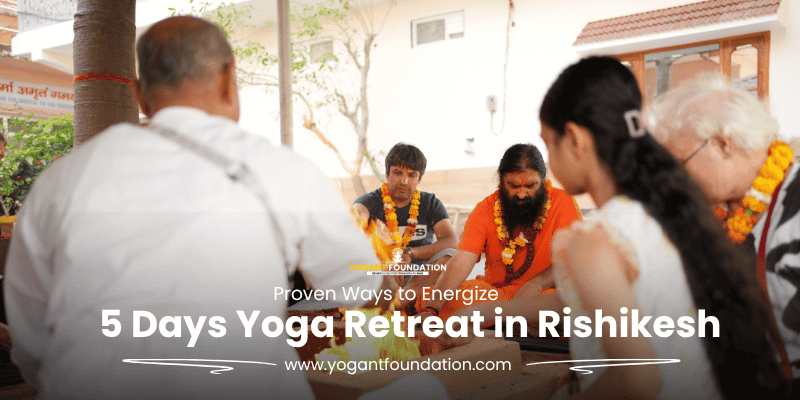

5 Days Yoga Retreat in Rishikesh: Complete Guide
You want a break, but not another holiday that leaves you needing a holiday afterward. Your mind is busy and Body feels stiff. Your sleep may be irregular, your screen time is climbing, and even when you have free time, switching off feels strangely difficult. That is where a 5 days yoga retreat in Rishikesh can be different.
Instead of filling five days with sightseeing, late nights and constant decisions, you enter a slower rhythm: morning yoga, mindful breathing, nourishing meals, meditation, rest, nature and time away from everyday noise. And you do it in Rishikesh—a city internationally associated with yoga, meditation, ashrams and spiritual learning. Uttarakhand Tourism describes Rishikesh as a major pilgrimage and wellness destination on the Ganga and commonly refers to it as the “yoga capital of the world.”
Five days will not magically solve every problem in your life. However, with the right retreat, five focused days can give you something more useful: space to slow down, reconnect with your body, understand your breathing and build practices that still make sense when you return home.
What Is a 5 Days Yoga Retreat in Rishikesh?
A 5 days yoga retreat in Rishikesh is a short residential wellness experience combining daily yoga, pranayama, meditation, mindful living, vegetarian meals and rest. Depending on the retreat, it may also include philosophy, Ayurveda, sound practices, nature walks or spiritual activities designed to help participants step away from routine and deepen self-awareness.
In simple terms, it is more immersive than attending occasional yoga classes but far less demanding than a full yoga teacher training course.
That makes a 5 day yoga retreat Rishikesh experience especially attractive to travelers who have limited time but still want meaningful practice.
Why Choose a 5 Days Yoga Retreat in Rishikesh?
A weekend can feel rushed. A month-long yoga program can feel impossible. Five days sit comfortably between the two. You have enough time to settle into a routine without committing several weeks of annual leave, family time or work.
1. You Have Time to Slow Down
The first day of a retreat is often spent adjusting. You are arriving, unpacking, meeting new people and learning a different schedule. By the second or third day, things often begin to feel more natural. You stop checking the clock every few minutes. Morning practice becomes familiar. Silence feels less uncomfortable. That gradual shift is difficult to experience during a one-night wellness break.
2. It Is Beginner Friendly
You do not need to touch your toes. You do not need an advanced handstand. And you certainly do not need years of yoga experience. A well-designed yoga retreat for beginners should offer modifications, clear instruction and enough recovery time between sessions. The purpose is not to compete with the person on the next mat. It is to understand your own body and practice more intelligently.
3. It Works as a Short Yoga Getaway
For working professionals, international travelers, couples or solo travelers, five days can slot nicely into a longer India itinerary. It is long enough to feel immersive yet short enough to combine with Delhi, Agra, Jaipur, Haridwar or further travel through Uttarakhand.
4. Rishikesh Adds Cultural Context
Yoga can be practiced anywhere. Rishikesh, however, offers a setting where yoga, meditation, pilgrimage and spiritual traditions are visibly woven into daily life. Official Indian tourism resources highlight the city’s ashrams, meditation centers and long-standing reputation among spiritual seekers from around the world.
Therefore, a retreat here can feel less like attending fitness classes in a hotel and more like entering the wider cultural environment from which many yogic traditions developed.
Benefits of a 5 Days Yoga Retreat in Rishikesh
People arrive at retreats for very different reasons. Some want flexibility. Some are exhausted from work. Others want to improve meditation, explore spirituality or simply spend several days away from constant notifications. A balanced retreat addresses more than one dimension of well-being.
Better Body Awareness
Regular asana practice encourages you to notice posture, movement, tension and physical habits. Instead of forcing your body into dramatic poses, good teachers help you understand alignment, stability and appropriate range of motion. You may leave with a clearer sense of which movements support your body and which ones require more patience.
A More Conscious Relationship With Your Breath
Breathing happens automatically. Yet most people rarely pay attention to it. Pranayama sessions introduce structured breathing practices and help participants observe the connection between breathing, attention and mental state. That awareness can become one of the easiest retreat habits to continue at home.
Stress Management
Yoga should not be advertised as a miracle cure. However, research summarized by the U.S. National Center for Complementary and Integrative Health suggests that yoga may support stress management, mental and emotional well-being, sleep and balance. A retreat can support this process further by removing some everyday triggers for a few days: deadlines, commuting, household chores and endless digital input.
Improved Focus
Meditation is not about having “no thoughts.” It is about learning how to notice when attention wanders and gently bring it back. Repeated practice over five days gives beginners enough exposure to explore this skill without expecting instant mastery.
Digital Distance
One underrated retreat benefit is simply having fewer reasons to touch your phone. Even if your retreat does not require a digital detox, keeping devices away during yoga, meals and meditation creates natural periods of disconnection. That space can reveal just how automatically you normally reach for a screen.
A Healthier Daily Rhythm
Retreat life tends to be structured.
Wake up → Practice → Eat → Rest → Learn → Practice again → Sleep
The routine may seem simple, but simplicity is often precisely what busy people are missing.
Yogic Benefits Beyond Physical Exercise
Yoga is broader than flexibility. Traditional yogic practice also includes attention, discipline, breath, self-observation and meditation. A thoughtful spiritual retreat Rishikesh experience may introduce several of these dimensions without demanding that guests adopt a particular belief system.
Asana: Learning Through the Body
Physical postures can develop mobility, stability, coordination and body awareness. More importantly, they teach you to observe how you respond when something becomes uncomfortable.
Do you rush? Compete? Hold your breath? Give up immediately?
Those patterns sometimes appear off the mat too.
Pranayama: Working With Breath
Pranayama practices bring conscious attention to breathing. These methods are not a kind of holding your breath for a long time or advanced methods, they should be slowly learned by the beginner.
Dhyana: Practicing Meditation
Meditation teaches sustained attention. 5 days yoga retreat in Rishikesh will not make every session peaceful. Some may feel restless. That is normal. The value lies in learning how to sit with your experience instead of constantly escaping it.
Pratyahara: Reducing External Noise
Retreat environments naturally reduce stimulation. There are fewer errands, fewer social obligations and fewer decisions. This creates space for turning attention inward.
Svadhyaya: Self-Study
Reflection is an integral part of a deeper yoga practice. If you journal after meditation, if you notice emotional reactions, if you see repetitive thot patterns, then the retreat is no longer a temporary escape but becomes a learning experience.
What Happens During a 5 Days Yoga Retreat in Rishikesh?
Every retreat is different. However, a balanced program usually moves from arrival and foundation toward deeper practice and, finally, integration. Here is a realistic example.
Day 1: Arrive and Ground
The first day should not overwhelm you. You may check in, meet your teachers, settle into your room and attend an orientation. A gentle evening yoga or meditation session works well here.
The goal is simple: arrive mentally as well as physically.
Day 2: Build Your Foundation
Morning practice may introduce Hatha yoga, basic alignment and pranayama. Later sessions could include yoga philosophy, guided meditation or a mindful walk. Beginners should use this day to ask questions. Intermediate practitioners can use it to refine habits they normally overlook.
Day 3: Go Deeper
By now, the schedule feels more familiar. Sessions may explore longer meditation, deeper breath awareness or a more dynamic asana class. Some retreats also include Ayurveda, sound meditation, massage or excursions. The key is balance. A retreat should not schedule every waking minute.
Day 4: Integrate the Practice
This is often the most valuable day. Instead of collecting new techniques, begin connecting what you have already learned.
Notice how your breathing affects movement. How food affects energy. Notice how silence changes your attention.
You may also attend Ganga Aarti or another culturally appropriate local experience if your retreat includes it. Rishikesh is both a yoga destination and an important pilgrimage town, so such experiences should be approached respectfully rather than treated merely as entertainment.
Day 5: Take the Retreat Home
The final morning should focus on integration.
Ask yourself:
- Which practices actually helped me?
- What can I realistically continue?
- How much time can I give yoga at home?
- Which techniques require further teacher guidance?
- What would make my routine sustainable?
Do not leave with a plan to practice two hours every morning if your normal schedule only allows 20 minutes. Build a routine you can keep.
Sample Daily Schedule of 5 Days Yoga Retreat in Rishikesh
| Time | Activity |
|---|---|
| 6:00 AM | Wake up |
| 6:30 AM | Meditation or pranayama |
| 7:00 AM | Hatha yoga |
| 8:30 AM | Breakfast |
| 10:00 AM | Philosophy/workshop |
| 11:30 AM | Sound Healing |
| 1:00 PM | Lunch |
| 2:00 PM | Rest |
| 4:00 PM | Yin yoga |
| 5:30 PM | Mantra Chanting with Fire Rituals |
| 7:00 PM | Meditation, Yog Nidra |
| 8:00 PM | Dinner |
| 9:30 PM | Lights Off |
Treat this as an example rather than a rule. A retreat with generous free time may actually be better than one trying to impress you with an overcrowded schedule.
How to Choose the Right 5-Day Yoga Retreat in Rishikesh
With many yoga schools, ashrams and wellness properties available, choosing can become confusing.
Follow these steps.
1. Decide Why You Are Going
Do not begin with price. Begin with purpose. Ask yourself what you most need:
- Stress relief
- Better yoga technique
- Meditation
- Spiritual exploration
- Rest
- Ayurveda
- Nature
- Digital distance
- A combination of these
Once you know the goal, comparing retreats becomes much easier.
2. Check the Practice Level
“Suitable for everyone” can sometimes mean very little. Ask the retreat how classes are adapted for beginners, intermediate students and experienced practitioners. A beginner needs clear foundations. An intermediate student may want refinement. An advanced practitioner may value philosophy, pranayama and meditation more than simply harder postures.
3. Research the Teachers
Beautiful rooms cannot compensate for poor instruction. Check teacher biographies, training backgrounds, teaching experience and areas of specialization. India’s Ministry of AYUSH also operates the Yoga Certification Board, which establishes certification categories for yoga professionals. YCB certification is not the only possible mark of a capable teacher, but recognized training and transparent credentials can be useful quality signals when comparing programs.
4. Read the Schedule Carefully
More sessions do not automatically mean better value. Look for a sensible combination of:
- Asana
- Meditation
- Pranayama
- Meals
- Rest
- Reflection
- Optional activities
If every hour is scheduled, you may return home more exhausted than when you arrived.
5. Confirm What Your Accommodation Includes
Before paying, ask:
- Private or shared room?
- Attached bathroom?
- Air conditioning or fan?
- Hot water?
- Wi-Fi?
- Towels and bedding?
- Laundry service?
- Quiet hours?
Photos should match the actual room category you are purchasing.
6. Ask About Meals
Many Rishikesh retreat programs serve vegetarian food, often described as yogic or sattvic. If you have allergies, gluten intolerance, vegan requirements or another medical dietary restriction, inform the property before paying your deposit. Do not assume every kitchen can safely accommodate every condition.
7. Understand the Location
“Rishikesh” covers more than one atmosphere. Some retreat areas are busy and social. Others are quieter or farther uphill. Decide whether you want cafés and shops within walking distance or greater isolation.
8. Read the Cancellation Policy
Retreat enthusiasm can make people skip the boring details. Don’t.
Check:
- Deposit amount
- Refund conditions
- Date-change policy
- Airport transfer policy
- Minimum participant requirements
- What happens if the organizer cancels
- Which activities cost extra
Save written confirmation.
Which Retreat Style Is Right for You?
| Retreat Type | Best For | Typical Focus | Possible Drawback |
| Traditional ashram | Spiritual seekers | Yoga, meditation, philosophy, simple living | Fewer luxury comforts |
| Yoga school retreat | Beginners and serious students | Technique, pranayama, meditation | More structured schedule |
| Wellness retreat | Travelers wanting comfort | Yoga, relaxation, treatments, healthy meals | Usually more expensive |
| Meditation-focused retreat | Overstimulated or reflective travelers | Silence, breath, mindfulness | Less physical yoga |
| Adventure + yoga retreat | Active travelers | Yoga plus hiking/rafting/nature | Less contemplative |
| Private retreat | Couples or personalized learning | Flexible one-to-one practice | Higher cost |
There is no universally “best” option. The best retreat is the one whose schedule, teacher, setting and expectations match your reason for traveling.
Is a 5-Day Retreat Suitable for Beginners, Intermediate and Advanced Yogis?
Beginners
Yes. In fact, five days can be an excellent introduction because you receive repeated instruction instead of trying one class and forgetting everything afterward. Choose slower Hatha-based sessions, beginner-friendly pranayama and guided meditation. Avoid retreats that market extreme flexibility or physically demanding practice as the main achievement.
Intermediate Practitioners
Use the retreat to refine rather than perform. Ask teachers about alignment, breathing, transitions and habitual compensations. This can also be a good opportunity to explore philosophy and meditation if your normal studio practice is mainly physical.
Experienced Practitioners
Do not assume you need the most physically difficult retreat. Experienced practitioners often gain more from depth. Look for smaller groups, experienced teachers, philosophy, pranayama, meditation, self-practice and meaningful discussion.
How Much Does a 5 Day Yoga Retreat in Rishikesh Cost?
There is no fixed Rishikesh retreat price. Accommodation standard, room type, teacher access, meals, treatments, excursions and group size can all affect the total.
As a current pricing spot-check rather than a universal market average, several 2026 five-day programs reviewed for this guide advertised entry/shared packages from around US$300, while other programs listed approximately US$450–500 depending on the retreat and room category. Prices can change, so always verify the current package directly before booking.
Luxury wellness resorts can cost substantially more. Therefore, compare inclusions rather than choosing solely by the headline price.
What Should Be Included?
A useful package may include:
- Four nights of accommodation
- Daily yoga classes
- Meditation
- Pranayama
- Vegetarian meals
- Drinking water
- Workshops
- Yoga equipment
- Selected local activities
Some retreats additionally include Ayurveda consultations, massage, sound sessions or excursions. Airport transfers are not always included. Ask before booking.
Best Time for a 5 Days Yoga Retreat in Rishikesh
Rishikesh welcomes visitors throughout the year, but your preferred season depends on your tolerance for heat, rain and cooler mornings. Uttarakhand Tourism highlights March to May and mid-September to December as particularly suitable visiting periods.
However, retreat schedules operate beyond those months too. Before booking, check the seasonal conditions for your exact dates and ask whether practice spaces are heated, cooled, covered or open-air.
How to Reach Rishikesh
For international travelers, getting there is relatively straightforward once you reach northern India. According to Uttarakhand Tourism, Jolly Grant Airport near Dehradun is the nearest airport to Rishikesh, approximately 21 km away, with taxis available for the onward journey. Rishikesh is also accessible by rail and road.
If traveling from the US, Indonesia, Germany, Italy or Türkiye, check India’s current official entry and visa requirements for your specific passport before purchasing non-refundable travel. Do not rely on old blogs for visa information.
Practical Tips for a Better Rishikesh Wellness Retreat
A little preparation can dramatically improve five short days.
Arrive Before the Program Starts
If you are flying internationally, arriving a day early can be valuable. Jet lag plus an early morning yoga session is not an ideal introduction. Give your body time to adjust.
Pack Light
You usually need less than you think. Useful items include:
- Comfortable yoga clothing
- Light layers
- Modest clothes for temples or spiritual spaces
- Reusable water bottle
- Sandals
- Walking shoes
- Personal medication
- Sunscreen
- Journal
- Small day bag
- Earplugs
Ask whether yoga mats are provided before carrying one internationally.
Reduce Caffeine Gradually
If your normal routine includes several coffees each day and the retreat serves little or no coffee, suddenly stopping can make the first days unpleasant. Adjust gradually before traveling if appropriate for you.
Leave Space Between Sessions
You do not need to turn every free hour into tourism. Sit beside the river.
Write → Nap → Read → Walk
A short yoga getaway becomes more restorative when you allow empty space.
Keep Expectations Realistic
You may feel peaceful. You may also feel tired, emotional, restless or sore. A retreat interrupts familiar routines, and people respond differently. Do not judge the entire experience based on one difficult meditation or yoga class.
Common Mistakes to Avoid
1. Choosing Only by Instagram Photos
Mountain views are attractive. Teacher quality matters more. Research the actual program before admiring the infinity pool.
2. Expecting Five Days to Transform Everything
A retreat can create momentum. Your habits after the retreat determine whether that momentum continues.
3. Doing Every Activity
You paid for the retreat. That does not mean you must attend every optional excursion, workshop and healing session. Rest is part of the experience.
4. Comparing Your Yoga Practice
Someone in class may have practiced for 15 years. Someone may have started yesterday. Neither matters. Practice according to your body.
5. Ignoring Pain
Yoga should not become an endurance contest. Sharp, sudden or concerning pain is a reason to stop and speak with the teacher. NCCIH notes that yoga is generally considered safe when performed appropriately under qualified guidance, but injuries are possible. People who are pregnant or have significant health concerns should seek appropriate medical advice about safe exercise.
6. Booking Without Reading What Is Excluded
The cheapest package may become expensive after you add:
- Private accommodation
- Transfers
- Treatments
- Excursions
- Taxes
- Laundry
- Extra nights
Compare total cost.
7. Treating Rishikesh Only as a Wellness Product
Rishikesh is also a sacred pilgrimage destination. Dress respectfully when visiting religious spaces, follow photography restrictions, observe local customs and remember that ceremonies are meaningful religious practices for participants.
Pro Tips to Get More From 5 days yoga retreat in Rishikesh
Choose One Personal Intention
Do not arrive with ten goals. Choose one.
For example: “I want to build a morning yoga routine.”
Or: “I want to learn how to meditate for ten minutes.”
One clear intention makes the retreat easier to integrate afterward.
Keep a Tiny Journal
At the end of each day, write three things:
- What did I notice?
- Helped?
- What will I try tomorrow?
Five minutes is enough.
Ask Teachers Specific Questions
Instead of saying, “How can I improve my yoga?” ask: “Why does my lower back feel compressed in this posture?” Specific questions usually lead to useful answers.
Protect Your First Week Home
The biggest mistake happens after the retreat. People return home and immediately restart the same schedule. Before leaving Rishikesh, decide on a minimum practice.
For example: 15 minutes of yoga + 5 minutes of breathing, four mornings per week.
That is far more useful than promising yourself a perfect 90-minute daily practice you abandon after six days.
Do Not Chase the Retreat Feeling
You may feel unusually calm in Rishikesh because your environment has changed. Home will be different. The goal is not to recreate every part of retreat life. Instead, bring home the practices that still work when emails, traffic, family and deadlines return.
Frequently Asked Questions
Is 5 Days Enough for a Yoga Retreat in Rishikesh?
Yes. Five days is enough for a meaningful introduction to residential yoga, meditation and pranayama without committing to a long program. It is a way for beginners to begin to develop a routine, and for advanced students to deepen particular practices. But these long term benefits require maintaining the appropriate practices after returning home.
Is a 5 Days Yoga Retreat in Rishikesh Good for Beginners?
Yes. Start with a five-day beginner friendly retreat. Choose a program with “simple postures, breathing and meditation with easy modifications. Beginners should steer clear of retreats that focus on advanced poses, extreme flexibility or highly intensive schedules.
What Is Usually Included in a 5 Day Yoga Retreat Rishikesh Package?
Most residential packages include accommodation, yoga classes, meditation, pranayama and vegetarian meals. Some also include workshops, Ayurveda, massage, sound practices, excursions or Ganga Aarti visits. Transfers, private rooms and specialist treatments may cost extra, so check the complete inclusion list before paying.
How Much Does a 5 Days Yoga Retreat in Rishikesh Cost?
Prices vary widely. A spot-check of advertised 2026 programs found some shared-room five-day retreats starting near US$200, while several other structured programs were around US$350–500 depending on accommodation and inclusions. Premium wellness resorts may cost considerably more. Always verify current rates directly before booking.
What Is the Best Time to Visit Rishikesh for Yoga?
Spring and post monsoon/autumn season are popular choices. According to Uttarakhand Tourism, the ideal time to visit is March to May and mid-September to December. Retreats may be available all year round so compare weather, accommodation facilities and your own temperature preferences before booking.
Can I Join a 5 Days Yoga Retreat in Rishikesh Alone?
Absolutely. Solo participation is common in 5 Days Yoga Retreat in Rishikesh environments because classes, shared meals and group activities create natural opportunities to meet others. If you like meeting people and want to save money then shared accommodation is probably more suitable for you.
What Is the Difference Between a Yoga Retreat and Yoga Teacher Training?
A yoga retreat focuses primarily on personal practice, rest, well-being and experience, whereas yoga teacher training is an educational program designed to develop deeper knowledge and, depending on the course, teaching skills. Choose a retreat if you want renewal rather than professional training.
Will I Have Free Time During the 5 Days Yoga Retreat in Rishikesh?
A good 5 days yoga retreat in Rishikesh should include it. Yoga, meditation and workshops require energy and attention. Free time allows your body and mind to absorb the experience. If a schedule runs continuously from early morning until late evening, ask whether activities are optional.
Can Experienced Yogis Benefit From a 5 Days Retreat in Rishikesh?
Yes. 5 days yoga retreat in Rishikesh can be used for refining technique, improving meditation, learning pranayama, studying philosophy or getting personal feedback by advanced practitioners. For advanced students, teacher quality and program depth usually matter more than the number of difficult poses offered.
Final Thoughts: Is a 5 Days Yoga Retreat in Rishikesh Worth It?
Five days will pass quickly. Yet five intentional days can feel very different from five ordinary days. A thoughtful 5 days yoga retreat in Rishikesh gives you time to move your body, observe your breathing, eat more consciously, sit quietly and experience yoga away from the distractions of everyday life.
You do not need to arrive flexible. You do not need to be spiritual. And you do not need to become a completely different person before you leave.
Come curious. Choose qualified teachers. Respect the culture and sacred character of Rishikesh. Practice without comparison.
Then take one or two useful habits home with you. That is where the real value of a yoga and meditation retreat begins—not when you roll out your mat beside the Ganga, but when you can still roll it out weeks later in your own living room.