
The most reliable way to improve heart health is to repeat a few simple habits: eat mostly whole foods, move for at least 150 minutes a week, sleep seven to nine hours, stay away from tobacco, and keep blood pressure, cholesterol, and blood sugar in a healthy range. Those habits match the American Heart Association’s Life’s Essential 8, a checklist of the main factors behind cardiovascular wellness.
You do not need a perfect plan to start. Small changes you keep doing beat big changes you drop after two weeks.
This guide explains what heart health means, what to eat, which exercises help most, where yoga and walking meditation fit, and which symptoms need urgent care. It is general education from Yogant Foundation, a yoga and meditation ashram in Rishikesh, India. It does not replace advice from your own doctor.
Five things you can start this week
- Add one serving of vegetables or fruit to two meals a day.
- Walk briskly for 30 minutes on most days.
- Swap one packaged snack or sugary drink for a whole-food option.
- Pick a fixed bedtime that leaves room for seven to nine hours of sleep.
- If you do not know your blood pressure, cholesterol, and blood sugar numbers, book a check.
What Is Heart Health, and Why Does It Matter?
Heart health describes how well your heart and blood vessels, together called the cardiovascular system, move blood, oxygen, and nutrients through your body. Some people call it cardiovascular wellness. When it is good, your heart pumps efficiently, your arteries stay open, and your blood pressure, cholesterol, and blood sugar sit in healthy ranges.
It matters because heart disease is the leading cause of death in the United States for men, women, and people of most racial and ethnic groups, according to the CDC. In the US, someone has a heart attack about every 40 seconds. Many heart problems build slowly over years, which is why daily habits carry so much weight.
What are the risk factors for heart disease?
A risk factor is anything that raises your chance of developing a condition. The CDC lists high blood pressure, high blood cholesterol, and smoking as three key risk factors, and about half of people in the US have at least one. Other common risk factors for heart disease include:
- Diabetes or prediabetes
- Carrying excess weight
- Low physical activity
- An eating pattern heavy in salt, sugar, and processed foods
- Heavy alcohol use
- Short or poor-quality sleep
- Ongoing stress, which can also push other risk factors up
- Age and family history, which you cannot change
Because you cannot change everything on that list, the parts you can control deserve your attention. A heart-healthy lifestyle works on all of them at once.
What Is the Best Heart Health Diet?
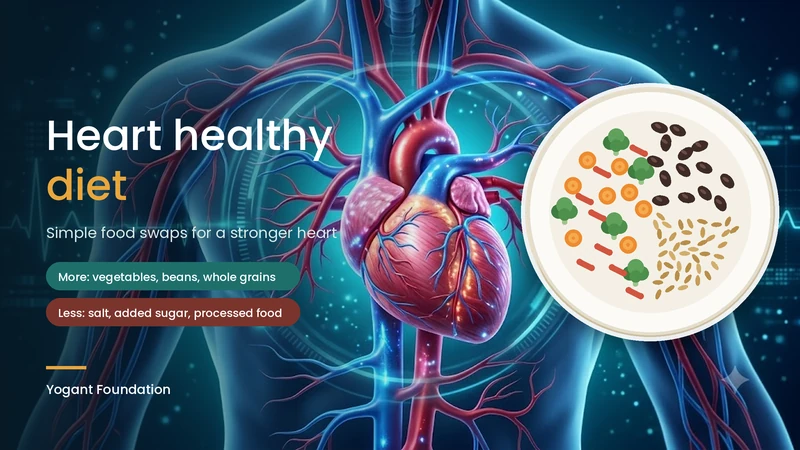
The best heart health diet is a pattern, not a single food. The American Heart Association describes it as whole foods, plenty of fruits and vegetables, lean protein, nuts and seeds, and cooking with non-tropical oils such as olive and canola. This nutrient-rich heart diet also keeps salt, added sugar, and highly processed food low.
| Eat more of | Limit |
|---|---|
| Vegetables and fruit (fresh, frozen, or canned without added salt or sugar) | Salty packaged foods, instant noodles, canned soups |
| Whole grains such as oats, brown rice, and whole-wheat bread | White bread, pastries, sweet cereals |
| Beans, lentils, and chickpeas, whether in frijoles, dal, or chili | Processed meats such as bacon, sausage, and deli meat |
| Fish, poultry, and lean meats | Fatty cuts of meat and full-fat dairy in large amounts |
| Nuts, seeds, olive oil, and canola oil | Butter, coconut oil, palm oil, and fried food |
| Water, unsweetened tea | Soda, sweet coffee drinks, and juice with added sugar |
How much salt is too much?
The NHLBI’s DASH eating plan, built to lower blood pressure, keeps sodium at or below 2,300 mg a day, and 1,500 mg lowers blood pressure further. Roughly 2,300 mg of sodium is one teaspoon of table salt. Most sodium hides in packaged and restaurant food, so label reading helps more than putting the shaker away.
How can you eat for your heart without a strict plan?
- Fill half your plate with vegetables and fruit at lunch and dinner.
- Swap one refined grain for a whole grain this week.
- Add a legume to a meal you already cook.
- Compare two labels on a food you buy often and choose the one lower in sodium and added sugar.
- Cook with olive or canola oil instead of butter when you can.
Change one thing at a time. A plan you can follow on a busy Tuesday is better than a perfect one you abandon.
What Are the Best Exercises for Heart Health?
The best exercises for heart health are aerobic activities that raise your heart rate for a sustained time, such as brisk walking, cycling, swimming, and dancing. The World Health Organization advises adults to get 150 to 300 minutes of moderate aerobic activity a week, or 75 to 150 minutes of vigorous activity, or a mix of both. The American Heart Association’s baseline is 150 minutes of moderate or 75 minutes of vigorous activity.
| Type | Examples | Aim for |
|---|---|---|
| Moderate aerobic exercise | Brisk walking, easy cycling, water aerobics, dancing | 150 to 300 minutes a week |
| Vigorous aerobic exercise | Running, fast cycling, swimming laps | 75 to 150 minutes a week |
| Muscle strengthening | Bodyweight squats, resistance bands, weights | At least 2 days a week |
| Gentle movement | Yoga, tai chi, walking meditation | A supportive extra, not a replacement for aerobic work |
A simple check for moderate effort: you can talk, but you could not comfortably sing.
How can beginners start aerobic exercise for the heart?
The WHO advises starting with small amounts and building up gradually. A realistic path looks like this:
- Week 1: Walk 10 minutes a day at an easy pace.
- Weeks 2 to 3: Add 5 minutes every few days until you reach 30 minutes.
- Week 4: Make some of those minutes brisk.
- Later: Add a second activity you enjoy, plus two short strength sessions.
Does sitting less count?
Yes. The WHO notes that replacing sitting time with movement of any intensity, even light, brings health benefits. Standing up to walk for five minutes every hour is a real step forward.
Who should check with a doctor first?
Anyone with known heart disease, chest discomfort, dizziness, or breathlessness during activity should talk to a doctor before increasing exercise. If you are unsure whether you are safe to start, ask. It is a quick conversation that can prevent a serious problem.
Can Yoga for Heart Health Really Help?
Yes, yoga can support heart health as an add-on to exercise, a heart-healthy diet, and medical care, though not as a replacement. A 2023 meta-analysis of 64 randomized trials with 16,797 participants found that yoga modestly lowered systolic blood pressure by about 4.6 mmHg and diastolic by about 3.4 mmHg. It also lowered LDL (“bad”) cholesterol by about 7.6 mg/dL. The authors described the effect as modest but positive.
The evidence on calm-mind practices is softer. The American Heart Association’s first statement on meditation found a possible benefit for cardiovascular risk, while noting the quality and quantity of studies is modest.
How can you start yoga safely for your heart?
- Tell your doctor first if you have heart disease or high blood pressure. AHA News reports that some poses may need changes, especially those that place the head below the heart.
- Begin with gentle styles such as slow Hatha or restorative practice.
- Tell your teacher about any health condition, and go carefully with long breath holds.
- Practice 20 to 30 minutes, two or three times a week, and keep your brisk walking or cycling too.
Our yoga and meditation retreat in Rishikesh is beginner friendly, and the team asks guests to share injuries or health concerns before arrival. If you would rather practice at home first, there are online and drop-in classes.
What is kinhin walking meditation, and is it good for the heart?
Kinhin (pronounced “keen-hin”) is a slow, mindful walking practice from Zen Buddhism, traditionally done between periods of seated meditation. No study has tested kinhin on its own for heart health outcomes, so treat it as a gentle, low-effort way to move and settle your mind, not as a substitute for brisk aerobic exercise.
To try it for five to ten minutes:
- Stand tall with relaxed shoulders and your hands resting at your belly.
- Take one slow step with each breath, or whatever natural rhythm feels right.
- Keep your eyes soft, looking a few feet ahead.
- Feel your heel, the ball of your foot, and your toes touch the ground.
- When your mind wanders, return to your steps without judging yourself.
It works well after a meal or in the middle of a stressful workday. For guided breath practice, see our pranayama retreat.
What Other Things Help You Keep a Healthy Heart?
Food and exercise get the attention, but four other things for a heart health matter just as much.
- Sleep. The AHA’s Life’s Essential 8 treats seven to nine hours in 24 as the ideal for adults. Sleep was added to the list in 2022.
- Tobacco and vaping. The AHA says inhaled nicotine, including cigarettes and vaping, is the leading cause of preventable death in the US and accounts for about a third of heart disease deaths. Quitting is one of the strongest steps you can take.
- Stress. Ongoing stress can push blood pressure and other risk factors up. Breathing practice, meditation, time outdoors, and good sleep all help you recover.
- Alcohol. Heavy drinking is a known risk factor. If you drink, keep it low and ask your doctor what is safe for you.
Which numbers should you know?
You cannot feel high blood pressure or high cholesterol, so testing is the only way to know. The AHA’s framework, summarized by Brown Health, treats blood pressure under 120/80 mmHg and non-HDL cholesterol under 130 mg/dL as ideal. Your doctor may set different targets based on your age, history, and medications, so use these as conversation starters, not personal goals.
What Are the Symptoms of Heart Disease?
Heart health disease can be silent for years. The CDC explains that it may not be diagnosed until a person has a heart attack, heart failure, or an arrhythmia (an irregular heartbeat). That is why checkups matter even when you feel fine.
What are the warning signs of a heart attack?
The CDC lists these common heart attack symptoms:
- Chest pain or discomfort
- Shortness of breath
- Pain in the jaw, neck, back, arm, or shoulder
- Nausea, light-headedness, or unusual tiredness
Women are more likely to have the less typical signs, such as unexplained tiredness, nausea, or vomiting.
If you notice these symptoms in yourself or someone else, call emergency services right away. That is 911 in the US, Mexico, and Canada, 999 in the UK, 112 in India, and 000 in Australia. Do not wait to see if it passes, and do not drive yourself.
What other symptoms should you mention to a doctor?
Book an appointment if you notice shortness of breath with light activity, swelling in the ankles or legs, a racing or skipping heartbeat, or tiredness that is new and unexplained. These do not always mean heart disease, but they deserve a proper check.
What Common Mistakes Should You Avoid?
- Doing too much too soon. Sudden hard workouts can backfire. Build up gradually, as the WHO advises.
- Chasing one “heart superfood.” Your overall eating pattern matters more than any single food or supplement.
- Using yoga or meditation as a substitute for medical care. Research supports them as helpful extras, so keep your checkups and any prescribed treatment.
- Skipping the numbers. High blood pressure and high cholesterol usually cause no symptoms, so only a test shows them.
- Cutting the salt shaker but not the packaged food. Most sodium comes from processed and restaurant meals.
- Stopping medication because you feel well. Talk to your doctor before changing any prescribed treatment.
- Treating sleep as optional. The AHA added sleep to Life’s Essential 8 in 2022 because it affects heart health too.
If you are pregnant, older, or living with a long-term condition, ask your healthcare provider to tailor these general tips to you.
Frequently Asked Questions About Heart Health
How can I improve my heart health quickly?
There is no instant fix, but you can start today. Walk daily, cut back on salty and sugary packaged foods, protect your sleep, and avoid tobacco. Real gains in blood pressure, cholesterol, and fitness come from keeping those habits up over months.
Is walking enough for a healthy heart?
Brisk walking is a strong start. Thirty minutes on five days gives you 150 minutes, which meets the basic moderate-activity target. Add two short strength sessions a week and you cover most of the guidance.
What foods are worst for the heart health?
Processed meats, very salty packaged foods, fried food, sugary drinks, and foods high in trans fat or saturated fat are the main ones to limit. You do not have to ban them, but they should not be daily staples.
Can yoga replace heart medication?
No. Studies suggest yoga can modestly improve blood pressure, cholesterol, and weight, but it works alongside medical care. Never stop or change a prescribed medicine without your doctor’s advice.
How do I know if chest pain is serious?
You cannot reliably tell on your own. Chest pain or pressure, especially with shortness of breath, sweating, nausea, or pain spreading to the arm, jaw, or back, needs emergency care. Call your local emergency number.
Does heart disease run in families?
Family history raises your risk, according to the CDC, but it does not make heart disease certain. Healthy habits and regular checks matter even more if close relatives had early heart problems.
At what age should I start caring about heart health?
As early as possible. The AHA’s Life’s Essential 8 is designed to apply across the whole life course, from childhood through older age. It is never too early or too late to improve your habits.
Conclusion: Start Small and Keep Going
Knowing how to improve heart health comes down to a handful of repeatable choices. Eat more whole foods and less salt, move your body most days, sleep well, avoid tobacco, manage stress, and learn your blood pressure, cholesterol, and blood sugar numbers. Yoga, pranayama, and walking meditation can support that routine, and they are most useful as companions to exercise and medical care.
Pick one habit from this guide and practice it for two weeks before adding the next. If you have symptoms or a heart condition, see your doctor first.
If you would like guided support with yoga, breathing, and meditation, you can explore the retreats at Yogant Foundation or contact the team with questions before you decide.