
An almond is the edible seed of Prunus dulcis, a tree nut eaten raw, roasted, soaked or pressed into milk and oil. One ounce (28 g, about 23 almonds) provides roughly 164 calories, 6 g of protein, 3.5 g of fibre, 14 g of fat and 7.26 mg of vitamin E, close to half of an adult’s daily value. This guide covers almond nutrition facts, what the research says about the health benefits of almonds, how California, Mamra and Valencia almonds differ, what almond oil can and cannot do for skin and hair, and how to soak almonds overnight.
What is an almond?
An almond is the seed of the sweet almond tree, Prunus dulcis. It is sold and eaten as a tree nut, a food group that also includes walnuts, cashews and pistachios. Botanically it is a seed, and it is one of the most widely eaten nuts in the world. Sweet almonds are the type sold for eating. Bitter almonds are a different variety and are not safe to eat raw.
What are the almond nutrition facts?
One ounce (28 g, about 23 almonds) of almonds contains the following, according to USDA data as summarised by Healthline:
| Nutrient (per 1 oz) | Amount | Share of daily value |
|---|---|---|
| Calories | about 164 | |
| Protein | 6 g | |
| Carbohydrate | 6.1 g | |
| Fibre | 3.5 g | |
| Total fat | 14.1 g, about 9 g monounsaturated | |
| Vitamin E | 7.26 mg | about 48% |
| Manganese | 0.62 mg | about 27% |
| Magnesium | 76.5 mg | about 18% |
Almonds also supply copper, riboflavin (vitamin B2), phosphorus and calcium. They contain no cholesterol. Figures vary slightly by variety and by how the Kaghzi badam are grown and processed.
Why is vitamin E in almonds important?
Vitamin E is a family of fat-soluble antioxidants that sit in cell membranes and help protect them from oxidative damage. Almonds are one of the best food sources: a single ounce gives almost half of the daily value. Because vitamin E dissolves in fat, it comes packaged with the almond’s own oils.
What are the health benefits of almonds?
Regular almond intake is linked to better cholesterol levels, less hunger and a small effect on weight, and almonds supply useful vitamin E and magnesium. Most of this evidence shows association or modest effects, not cures, so the benefits below come with caveats.
| Benefit | What the research suggests | Caveat |
|---|---|---|
| Cholesterol | A 2015 trial found 1.5 oz a day lowered LDL (“bad”) cholesterol and kept HDL steady | Small trials; amounts differ |
| Heart health | A review of 15 trials with 534 people found almonds may improve blood lipids and lower body weight | Trials varied from 25 to 100 g a day, so the best amount is unclear |
| Hunger and weight | A 2024 analysis of 37 trials found about 50 g a day for 12 or more weeks may reduce hunger and improve weight and waist measures | Kaghzi badam are high in calories |
| Blood sugar | Low in carbohydrate, high in fibre, fat and magnesium, so a sensible choice for people watching blood sugar | Magnesium supplements have not clearly been shown to lower blood pressure |
| Inflammation | A 2021 analysis of 18 trials found up to 60 g a day may reduce some inflammation markers | Markers are not the same as disease outcomes |
| Antioxidants | Antioxidants are concentrated in the brown skin | Blanched badam may have less |
In the United States, the FDA allows a qualified health claim for nuts: scientific evidence suggests but does not prove that 1.5 ounces a day of most nuts, as part of a diet low in saturated fat and cholesterol, may reduce the risk of heart disease.
Who should be careful with almonds?
People with a tree-nut allergy should avoid them completely, and those unsure should see an allergist first. Badam are energy-dense, so people managing weight should measure portions. Anyone on a medical diet or with a health condition should check with a doctor or registered dietitian.

What are the main types of almonds: California, Mamra and Valencia?
California almonds are the most widely sold, Mamra almonds are a premium, oil-rich type from Asia, and Valencia almonds come from the Spanish region of Valencia. All are sweet almonds from Prunus dulcis. The differences are mostly taste, texture, price and origin, and there is little solid evidence that one type is clearly healthier than another.
| Type | Where it comes from | Taste and texture | Good for |
|---|---|---|---|
| California (for example Nonpareil, Carmel) | California, USA | Nonpareil is sweet and crunchy; Carmel is among the sweetest | Everyday snacking, baking, almond milk |
| Mamra (Kashmiri, Irani, Afghani) | Parts of Iran, Afghanistan and Kashmir | Higher oil content than California almonds; Kashmiri is the smallest and sweetest | Soaking, traditional sweets and milk drinks |
| Valencia (Spain) | Valencia region, Spain | Flat, light sandy-brown badam | Snacking and baking |
Is Mamra better than California almonds?
Mamra almonds tend to be richer and oilier, and many people prefer their flavour for soaking. Most claims that Mamra is far more nutritious come from sellers, not independent studies. For nutrition, any plain, fresh sweet almond gives you the same core nutrients: vitamin E, magnesium, fibre and protein.
What is special about Valencia almonds?
One university-reported analysis compared almonds from Valencia, Spain, California and Italy. The Valencian almonds had the highest protein (18.8%) and a much higher polyphenol content than the others. This is a single analysis, so treat it as an interesting finding, not proof that Spanish almonds are better.
Spain also grows Marcona, which is described as buttery and sweeter than most badam, and is often sold on its own as a premium snack.
How do you choose good almonds?
- Buy plain, unsalted almonds with an intact, uniform look.
- Smell them: fresh badam smell mildly sweet, stale ones smell like old paint.
- Choose a small pack you will finish within a few weeks and store it airtight.
- In the US, badam sold are required to be pasteurised, which lowers the risk of bacteria such as Salmonella.
Raw vs roasted almonds: which is healthier?
Raw and dry-roasted almonds are nutritionally very close, so the better choice is the one without added salt, sugar or oil. Roasting changes a few things, mainly at high heat.
| Raw | Dry-roasted | |
|---|---|---|
| Calories per ounce | about 161 | about 167 |
| Fat per ounce | about 14 g | about 15 g |
| Vitamin E | Intact | Can fall with heat and time, in one report by around 20% after 25 minutes at 284°F (140°C) |
| Acrylamide (a chemical formed in high-heat cooking) | Not formed | Forms above about 266°F (130°C); more above 295°F (146°C) |
| Taste and texture | Mild, firm | Deeper flavour, crunchier |
The practical advice: buy raw or dry-roasted unsalted badam. If you roast at home, use a low-to-medium temperature of about 284°F (140°C) for roughly 15 minutes.
How do you soak almonds overnight?
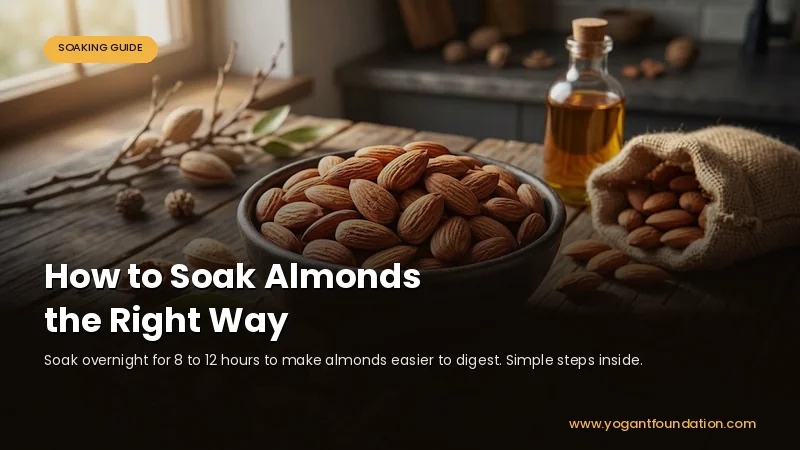
To soak it overnight, cover them with water and leave them for 8 to 12 hours, then drain and rinse. Soaking makes badam softer and milder, and the skins slip off easily.
- Put the almonds in a bowl and cover them with warm tap water. Adding about 1 teaspoon of salt per cup of badam (about 140 g) is optional.
- Cover the bowl and leave it on the counter for 8 to 12 hours.
- Drain and rinse well.
- Pinch off the skins if you prefer a smoother texture.
- Pat dry and eat, or store in an airtight container in the fridge.
Does soaking almonds make them healthier?
Not clearly. In one study, soaking at room temperature for 24 hours lowered phytic acid, a compound that can bind minerals, by less than 5%. An 8-week study of 76 adults found no improvement in digestive symptoms. Soaking mainly changes texture and taste, so choose it if you like the result. Unsoaked almonds remain a healthy food.
What about almond milk?
Almond milk is a drink made by blending almonds with water and straining out the pulp. A homemade version uses roughly 1 cup of soaked almonds to 3 to 4 cups of water, blended for a minute or two and strained. Almond milk is much lighter than whole badam: an ounce of badam gives more protein and fibre than a cup of almond milk, so it is not a like-for-like swap. Shop-bought versions vary in added sugar and fortification, so check the label.
Is almond oil good for skin and hair?
Almond oil is a decent moisturiser for dry skin, but there is little evidence that it works better than other moisturisers, and evidence for hair growth is weak. Almond oil is pressed from badam. Sweet almond oil is the type sold for skin and hair care.
What does the evidence say about almond oil for skin?
- Dry skin and eczema: studies of moisturisers containing almond oil report less itching and better skin barrier function.
- Hand dermatitis: one study found sweet almond oil reduced symptoms in moderate to severe cases.
- Stretch marks, dark circles and anti-ageing: the evidence is limited or unreliable. Sunscreen, not oil, is the recommended protection from UV damage.
Does almond oil help hair?
Almond oil has long been used as a scalp and hair oil in India and elsewhere, and it can make hair feel softer and look glossier as any light oil can. The research I reviewed shows no strong clinical evidence that it makes hair grow faster or prevents hair loss, so treat those claims with caution.
How do you use almond oil safely?
- Choose cosmetic-grade sweet almond oil, never bitter almond oil.
- Patch test first: put a small amount on your inner forearm and wait 24 hours.
- Warm a few drops between your palms and massage into damp skin, or work a small amount through hair ends or the scalp.
- Wash off hair oil after a short time; heavy oil on the scalp can feel greasy.
Avoid almond oil completely if you have a nut allergy. People with eczema have a higher chance of allergy, so be extra careful. If you are pregnant, ask your doctor before daily use. Almond oil does not replace medical treatment for a skin condition.
Common almond mistakes
- Eating salted, sugared or oil-roasted almonds and expecting the benefits above.
- Ignoring portions: 1.5 oz is about 245 calories.
- Keeping soaked almonds out of the fridge for days.
- Using bitter almonds or bitter almond oil. Only sweet almonds are meant for food and skincare.
Frequently asked questions
How many almonds should I eat a day?
About 1 ounce, or 23 almonds, is the standard serving. Research on heart health often uses up to 1.5 ounces.
Are almonds a nut?
Botanically they are seeds, but they are sold and treated as a tree nut, including for allergy labelling.
Is almond milk as healthy as whole almonds?
No. Almond milk has far less protein and fibre than a serving of whole badam, and shop-bought versions can contain added sugar.
Can I use almond oil on my face every day?
Many people with no nut allergy tolerate it, but patch test first and stop if you notice redness, itching or breakouts.
Are Mamra almonds worth the extra cost?
If you like their richer taste, yes. For nutrition, independent evidence that they beat other sweet almonds is limited.
Conclusion
Almond is a simple, nutrient-dense food: a daily ounce gives vitamin E, magnesium, fibre and protein, and the research on cholesterol and fullness is encouraging though modest. Pick plain raw or dry-roasted almonds, soak them overnight if you like the texture, and choose the type that suits your taste and budget. For skin and hair, treat almond oil as an ordinary moisturiser, not a treatment. If you are looking for more wellness reading, you can find more at Yogant Foundation.