
Doshas are the three basic energies in Ayurveda, the traditional medical system of India. Called Vata, Pitta and Kapha, they are believed to shape your body, digestion, energy and temperament. Ayurveda holds that everyone has all three, but in a personal ratio, and that health depends on keeping that ratio steady.
If you have taken an online quiz that told you “you are a Pitta,” or heard a yoga teacher mention Vata season, this guide explains what those words mean. You will learn the traits of each dosha, how a dosha test works, the signs of imbalance, and practical habits for balancing doshas through food, routine and yoga.
One note up front: the dosha system is a traditional framework, not a laboratory diagnosis. We will point out where science supports it and where it does not.
What Are Doshas in Ayurveda?
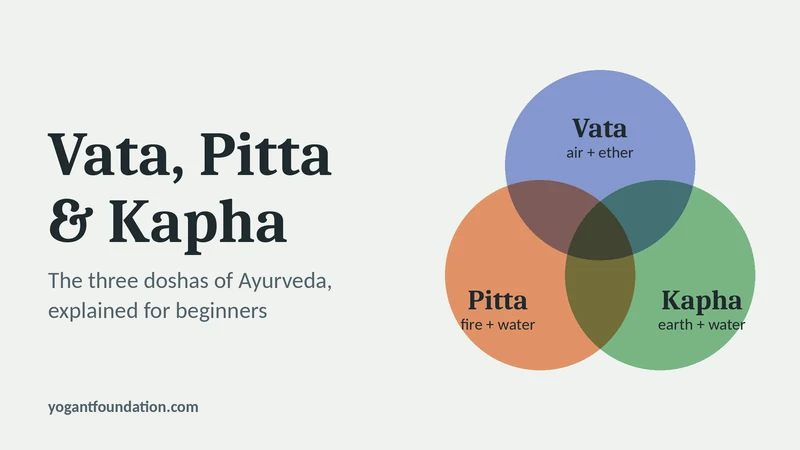
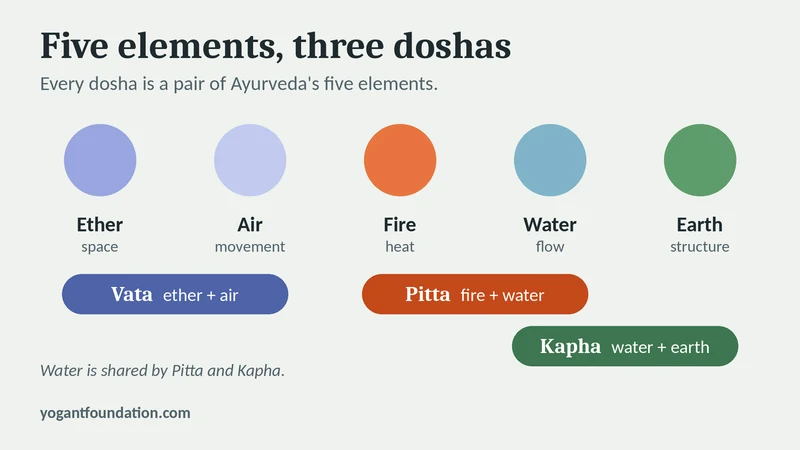
In Ayurveda, doshas are the biological energies that govern how the body and mind work. Each one combines two of the five classical elements: space, air, fire, water and earth.
Ayurveda is a Sanskrit word meaning “knowledge of life.” The U.S. National Institutes of Health describes it as a medical system that began in India thousands of years ago and aims to balance body, mind and spirit.
The word dosha is often translated as “that which can go out of balance.” The idea is that these energies are normal and necessary, but they can become too strong or too weak.
What does Tridosha mean?
Tridosha means “three doshas.” It is the name of the theory that Vata, Pitta and Kapha together explain your constitution and your health.
What are the three doshas?
DoshaElementsMain role in the bodyQualitiesVataAir + spaceMovement: breath, circulation, nerve signalsLight, dry, cold, quickPittaFire + waterTransformation: digestion, metabolism, body heatHot, sharp, intenseKaphaEarth + waterStructure: stability, moisture, immunityHeavy, slow, cool, steady
Vata Dosha: The Energy of Movement
Vata dosha is the air-and-space energy that controls movement. In Ayurveda it relates to breathing, circulation, the nervous system and the elimination of waste.
Common Vata traits:
- Lithe or lean build- Often dry skin
- Creative, inquisitive and starters of new things
- Light, interrupted sleep
- Hands and feet that run cold
- Irregular appetite and digestion
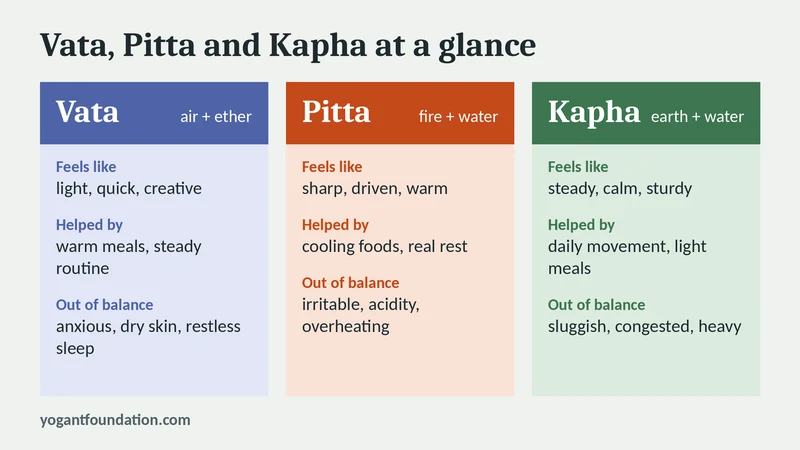
According to Ayurveda, Vata is linked with anxiety, restlessness, constipation, bloating, dry and bad sleeping. Cold, dry and windy weather, travel, irregular routines and stress aggravate vata.
Pitta Dosha: The Energy of Transformation
Pitta dosha is the fire-and-water energy that controls transformation. In Ayurveda it governs digestion, metabolism, body temperature and also how you process ideas and emotions.
Common Pitta traits:
- card medium musculaturewarm body
- Strong appetite and quick digestion
- Focused, ambitious and sharp-minded
- A proclivity toward irritability or impertinence under pressure
- Easily burning or flushing skin
Ayurveda correlates Pitta’s imbalance with acidity, skin rashes, anger issues, perfectionism and burning sensations. Pitta rises in heat, with spicy food and missed meals or overwork.
Kapha Dosha: The Energy of Structure
Kapha dosha is the earth-and-water energy that controls structure and stability. In Ayurveda it supports the body’s moisture, joints, strength and calm temperament.
Common Kapha traits:
- Thick hair, rough skin and thick body
- Calm, patient and loyal nature
- Sleeping deeply and soundly, getting enough sleep over a long period of time, and having energy all the time
- It slows down digestion and can stimulate weight gain
- Strong stamina once moving
Ayurveda links Kapha imbalance with sluggishness, heaviness, congestion, sleep over and lack of enthusiasm. Kapha is aggravated in cold, damp weather and when you eat heavy food without performing proper movement.
What Is Your Dosha? Prakriti vs. Vikriti
Two terms matter before you take any dosha test.
- Prakriti is your original constitution, your natural dosha ratio, believed to be set at birth. It is your baseline.
- Vikriti is your current state, the ratio you have right now after stress, diet, season and lifestyle have pushed it around.
Your Ayurvedic constitution is your prakriti. Most people are a blend, often with one or two leading doshas, such as Vata-Pitta. A smaller number are described as tridoshic, meaning fairly even across all three.
This difference explains why quiz results change. A quiz answered during a stressful month may show your vikriti rather than your true prakriti.
How does a dosha test work?
A dosha test is a questionnaire that asks about your body frame, digestion, sleep, energy, mood and habits. Each answer points toward Vata, Pitta or Kapha, and the highest score suggests your leading dosha.
Online quizzes are useful for self-awareness, but they are simplified. A trained Ayurvedic practitioner typically goes deeper, using an interview, observation and traditional examination, and may still reach different conclusions from another practitioner.
How to get a more honest result:
- Answer for how you have been most of your life, not just this week.
- Choose the answer that fits you most often, not the one you wish described you.
- Take the test twice, a few weeks apart, and compare.
- Treat the result as a starting point, not a label.
What Does Dosha Imbalance Look Like?
- Dosha imbalance means one dosha has become too strong or too weak compared with your natural baseline. Ayurveda says this is the first step toward discomfort, and that noticing it early lets you correct it with simple changes.
| Dosha | Signs of Excess (Traditional View) |
| Vata | Dry skin, worry, gas, constipation, poor sleep |
| Pitta | Acidity, irritability, rashes, excess heat |
| Kapha | Heaviness, congestion, lethargy, oversleeping |
These signs overlap with many ordinary health problems. If a symptom is persistent, severe or new, see a doctor first. Do not assume it is “just a dosha.”
How Can You Balance Your Doshas?
Balancing doshas follows one principle: like increases like, and opposites balance. If your Vata is high (cold, dry, light), you add warmth, moisture and routine. If Pitta is high (hot, sharp), you cool down. If Kapha is high (heavy, slow), you add lightness and movement.
Balancing Vata
- Eat warm, cooked, slightly oily meals such as soups, stews and porridge.
- Keep fixed times for meals and sleep.
- Choose slow, grounding yoga: gentle flows, forward folds and long holds.
- Avoid skipping meals, too much raw food and excess caffeine.
Balancing Pitta
- Favor cooling foods such as cucumber, sweet fruits, leafy greens and plain yogurt or ayran.
- Reduce very spicy, fried and sour foods.
- Make time for rest. Avoid working through lunch.
- Choose calming yoga with relaxed breathing instead of heated, competitive classes.
Balancing Kapha
- Eat lighter, warm and spiced meals. Beans, vegetables and ginger tea suit this type.
- Reduce heavy dairy, sweets and oily food.
- Wake up early and move every day.
- Choose energizing yoga such as sun salutations, standing poses and backbends.
A simple way to start
- Take a dosha test and note your leading dosha.
- Check for current imbalance signs (your vikriti).
- Pick one habit from the matching list above.
- Follow it for two to three weeks, then reassess.
Seasons matter too. Cold, dry weather raises Vata, summer heat raises Pitta, and cool, damp periods raise Kapha. The foods and routines that suit you can reasonably shift through the year.
What Does Science Say About Doshas?
The doshas come from a thousands-year-old tradition, and many of the lifestyle habits attached to them, such as regular meals, enough sleep, whole foods and daily movement, are sensible for most people.
The dosha theory itself, however, is not a validated scientific model. NCCIH, the U.S. government’s research center for complementary health, says there is little scientific evidence on Ayurveda’s value for many health issues, and it notes that some Ayurvedic products can be harmful. It advises people to talk with a health care provider before using Ayurvedic products and not to use them as a replacement for conventional care.
In plain terms: use the doshas as a framework for self-observation and healthy routines, not as a medical diagnosis or treatment.
Common Mistakes When Working With Your Doshas
- Treating a quiz as a diagnosis. Online results are rough estimates.
- Confusing prakriti and vikriti. Your current symptoms are not always your lifelong type.
- Chasing perfect balance. Doshas shift daily and seasonally. The goal is awareness, not perfection.
- Making many changes at once. Change one habit, observe, then continue.
- Starting herbs or supplements without advice. Herbal products can interact with medicines. Ask a doctor or qualified practitioner first.
- Ignoring medical symptoms. Persistent pain, weight changes or digestive problems need a medical check.
Frequently Asked Questions
What are the three doshas?
Answer: The three doshas are Vata (air and space), Pitta (fire and water) and Kapha (earth and water). Ayurveda says they govern movement, transformation and structure in the body.
Which dosha is the strongest?
Answer: No dosha is “best.” Each has strengths and weaknesses, and a healthy state means your own ratio is steady, not that one type wins.
Can you have more than one dosha?
Answer: Yes. Everyone has all three. Most people have one or two that lead, such as Vata-Pitta, and a few are fairly even across all three.
Can your dosha change over time?
Answer: Your natural constitution (prakriti) is considered fixed. Your current balance (vikriti) changes with age, season, diet, stress and lifestyle.
How do I find out my dosha?
Answer: You can do this quickly with a dosha test questionnaire or with the help of a qualified Ayurvedic practitioner. So answer from your long-term patterns.
Is the dosha test scientifically proven?
Answer: No. Dosha tests reflect a traditional system, and there is no solid scientific evidence that they classify people accurately. Use the result as a self-reflection tool.
Can yoga balance doshas?
Answer: Ayurveda pairs yoga styles with doshas: grounding for Vata, cooling for Pitta and energizing for Kapha. Regular yoga is generally good for stress and flexibility, but its effect on “doshas” specifically is a traditional claim, not a proven one.
Are Ayurvedic doshas the same in Turkey, India and the US?
Answer: The core theory is the same everywhere. What differs is local food and climate, so the foods you use to balance a dosha will vary by region.
Conclusion
Doshas give you a simple vocabulary for noticing how your body and mind respond to food, weather, stress and routine. Vata moves, Pitta transforms and Kapha holds things together. Knowing your leading dosha, and the difference between prakriti and vikriti, helps you notice early when something feels off and adjust gently.That is not a medical test; think of the framework as an input for self-awareness and healthy habits. Begin with one thing that you can change according to your dosha, assess how the changes impact you and seek advice from a healthcare professional wherever in doubt.
If you want to put this into practice, explore the yoga practices and wellbeing resources at Yogant Foundation, and choose a style that suits your dosha and your current energy.