
Vibrant Skin Starts with Vitamin A
Orange mangoes, papayas and melons may look like obvious choices for eye and skin health, but there is an important nutritional detail behind their colour. Most fruits rich in vitamin A for skin and vision do not actually contain large amounts of preformed vitamin A. Instead, they provide carotenoids such as beta-carotene and beta-cryptoxanthin, which the body can convert into vitamin A. That distinction matters because vitamin A has well-established physiological roles, while claims that a particular fruit can “fix eyesight” or transform your skin often go beyond the evidence. Here is what these fruits can realistically do, which ones are worth eating, and how to get more nutritional value from them.
You are taught about fruits rich in vitamin A for skin and vision, such as cantaloupe or muskmelon, apricots, persimmons, mangoes, papayas, guavas, watermelons, and mandarins. They primarily supply provitamin A carotenoids rather than retinol. Vitamin A is important for supporting normal vision and epithelial tissues, and the intake of carotenoid-based fruit as part of a balanced diet helps maintain an adequate status in vitamin A.
Why Fruits Rich in Vitamin A for Skin and Vision Matter
- Vitamin A is a fat-soluble vitamin that plays many important roles in the body, including vision, immune function, reproduction, cellular communication, and the differentiation and maintenance of epithelial tissues.
- As for the eye, one of its oldest roles is to provide a vitamin A-derived compound called retinal, which occurs in many pigments, such as rhodopsin, in the dark. These pigments enable the retina to detect light, particularly in low-light settings.
- Thus, if vitamin A deficiency is severe, it may cause night blindness and, if left untreated, lead to more serious eye disease. The skin connection is different.
- Vitamin A involved in normal cell growth and differentiation; it also maintains epithelial tissues—the tissues that form the surfaces of our body (such as the skin, as well as mucosal surfaces inside our organs). This doesn’t mean eating mango or papaya is a remedy for acne, wrinkles or pigmentation. It means vitamin A adequacy is only one component of the dietary pattern need for normal skin function.
Vitamin A in Fruit Is Usually Provitamin A
This is one of the most important facts to understand. Animal-derived foods can contain preformed vitamin A, principally retinol and retinyl esters. Plant foods generally provide carotenoids instead. Some of these, including:
- Beta-carotene
- Alpha-carotene
- Beta-cryptoxanthin
can converted into vitamin A by the body. They consequently called provitamin A carotenoids. Beta-carotene is especially important because it has greater vitamin A activity than alpha-carotene or beta-cryptoxanthin. Nutrition authorities, therefore, commonly express vitamin A intake in micrograms of retinol activity equivalents (mcg RAE), which account for differences in biological activity.
Best Vitamin A-Rich Fruits to Add to Your Diet
1. Cantaloupe or Muskmelon
Orange-fleshed cantaloupe is one of the more useful fresh-fruit sources of provitamin A carotenoids. Its colour comes partly from carotenoid pigments, making it an easy choice when you want a fruit that contributes to vitamin A intake without relying on supplements. Eat it chilled, add it to breakfast, or combine it with yogurt and seeds.
2. Apricots
The orange colour of apricots signals their carotenoid content. Fresh apricots can provide beta-carotene and other nutrients, while dried apricots offer a more concentrated source of these nutrients because much of their water has removed. Remember that dried fruit is also more concentrated in naturally occurring sugars and calories by weight, so portions tend to be smaller.
3. Persimmon
Orange persimmons are another useful fruit for provitamin A carotenoids. They can eaten alone when ripe, sliced into yogurt or oatmeal, or paired with nuts. Their seasonal availability varies considerably by country.
4. Mango
One of the most recognized and beta-carotene-rich fruits is the mango (Mangifera indica), which is widely available in South Asia and other tropical regions. It is, along with vitamin C, a source of provitamin A carotenoids and various plant compounds. Some vitamin A — mango can be a source of it, but we don’t have to eat large quantities of it. Serving analysis as a part of a functioning food plan is adequate.
5. Papaya
Papaya is rich in carotenoids, which are compounds with provitamin A activity. In addition, its soft texture makes it easy to use at breakfast, snacks and smoothies. For instance, mix papaya with plain yogurt or nuts and seeds instead of eating fruit on its own.
6. Guava
Guava provides provitamin A carotenoids and is particularly well known for its vitamin C content. That combination makes it a useful fruit in an overall diet for skin and general health, although vitamin C and vitamin A work through different biological mechanisms.
7. Watermelon
Red watermelon is better known for its lycopene content, a carotenoid that cannot be converted into vitamin A. However, watermelon also provides smaller amounts of provitamin A carotenoids. This is a useful reminder that not every orange or red pigment should be automatically described as vitamin A.
8. Mandarins and Tangerines
Mandarins and tangerines can provide beta-cryptoxanthin, another carotenoid that the body can convert into vitamin A. They are not necessarily the most concentrated source, but they can make a useful contribution when eaten regularly as part of a varied diet.
9. Passion Fruit
Passion fruit contains carotenoids in addition to fibre and several micronutrients. Because typical portions are smaller than servings of melon or mango, its practical contribution depends on how much you actually eat. That is why comparisons based only on nutrient content per 100 grams can sometimes be misleading.
Comparison Table: Fruits for Eye and Skin Health
Exact nutrient content varies with fruit variety, ripeness, growing conditions, serving size and the database entry used.
| Fruit | Vitamin A Content (per 100g) | Key Vitamin A Compound | Eye Health Benefits | Skin Health Benefits |
|---|---|---|---|---|
| Mango | ~54 µg RAE (3,000+ IU) | Beta-carotene | Supports night vision, protects retina from oxidative damage | Promotes cell turnover, gives natural glow, reduces dryness |
| Apricot (dried) | ~180 µg RAE (3,600 IU) | Beta-carotene | Prevents night blindness, supports corneal health | Repairs skin tissue, slows signs of aging, improves elasticity |
| Cantaloupe | ~169 µg RAE (3,382 IU) | Beta-carotene | Maintains healthy mucous membranes in eyes, reduces dry eye | Hydrates skin, protects against UV-related damage |
| Papaya | ~47 µg RAE (950 IU) | Beta-carotene, Lycopene | Lowers risk of macular degeneration, supports vision clarity | Aids in skin repair, reduces acne, brightens complexion |
| Pink Grapefruit | ~58 µg RAE (1,150 IU) | Beta-carotene | Supports retinal function, reduces eye inflammation | Boosts collagen, evens skin tone, fights free radicals |
| Watermelon | ~28 µg RAE (569 IU) | Beta-carotene, Lycopene | Protects eyes from oxidative stress, supports night vision | Soothes irritated skin, adds moisture, promotes radiance |
| Persimmon | ~81 µg RAE (1,620 IU) | Beta-carotene | Improves night vision, protects against cataracts | Firms skin, reduces pores, delays wrinkles |
| Passion Fruit | ~64 µg RAE (1,270 IU) | Beta-carotene | Maintains eye moisture, prevents dry eyes | Exfoliates gently, improves skin texture and glow |
Main Benefits of Vitamin A-Rich Fruits
1. They Support Normal Vision
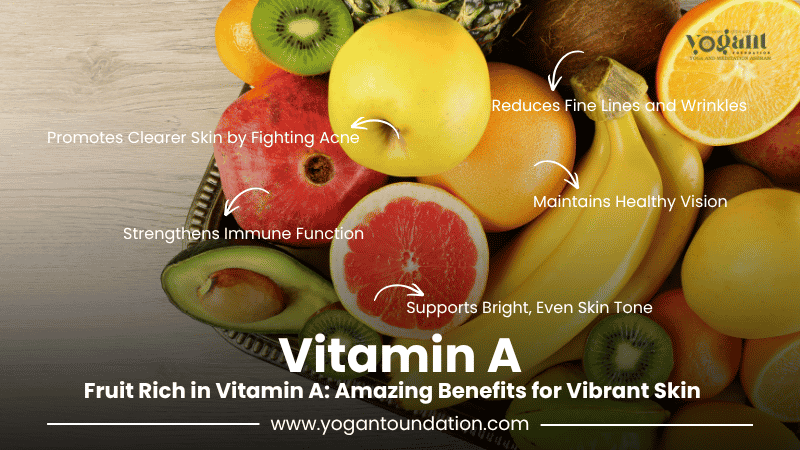
Vitamin A is required for normal visual function. Its role is particularly important in the retina, where vitamin A derivatives participate in the light-sensing process. An adequate intake can therefore help prevent problems associated with vitamin A deficiency. However, this needs to be interpreted correctly. Eating more mango or papaya will not normally correct myopia, hyperopia or astigmatism, and vitamin A-rich fruit should not be presented as a treatment for retinal disease.
2. They Help Maintain Normal Skin Tissues
Vitamin A is involved in cell differentiation and the maintenance of epithelial tissues. That makes adequate vitamin A important for normal skin biology. Fruits also contribute water, vitamin C and various phytochemicals, depending on the fruit. The result is nutritional support for healthy skin rather than a guaranteed cosmetic effect.
3. They Provide Carotenoids From Whole Foods
Beta-carotene and related carotenoids are plant pigments found naturally within foods. Getting them from fruit also means consuming fibre and numerous other nutrients rather than an isolated compound. That matters because evidence about whole foods should not automatically be extrapolated to high-dose carotenoid supplements.
4. They Help Diversify Your Diet
Orange, yellow, red and green plant foods contain different combinations of carotenoids and other phytochemicals. Rotating mango, papaya, melon, citrus, berries, leafy vegetables and other produce provides a broader nutritional profile than depending on a single “superfood.”
5. They Can Complement Other Vitamin A Sources
Fruit does not need to provide all of your vitamin A.Sweet potato, carrots, pumpkin and dark leafy vegetables can be excellent provitamin A sources, while eggs, dairy products, fish and liver can contain preformed vitamin A, depending on the food. A varied diet is generally more practical than trying to obtain the nutrients from fruit alone.
How to Use Fruits Rich in Vitamin A for Skin and Vision
1. Start With Naturally Orange or Yellow Fruits
Colour is not a perfect measure of vitamin content, but orange and yellow flesh can be a useful clue that carotenoids are present. Mango, papaya, apricot, persimmon and cantaloupe are easy starting points.
2. Rotate Rather Than Rely on One Fruit
Instead of eating mango every day because it has beta-carotene, alternate between several fruits. This improves dietary variety and provides a broader mix of fibre, vitamins and phytochemicals.
3. Eat Carotenoid-Rich Fruit With Some Dietary Fat
Carotenoids are fat-soluble compounds. Consuming them with a meal that contains some fat can improve absorption. Practical combinations include:
- Papaya with yogurt and seeds.
- Mango with yogurt.
- Cantaloupe alongside nuts.
- Apricots with nut butter.
- Fruit as part of a meal containing avocado, olive oil, dairy, eggs, nuts or seeds.
You do not need excessive amounts of fat for this purpose.
4. Consider Food Preparation
Carotenoids have to be released from the plant’s cellular structure before they can be absorbed. Chopping, blending and some forms of cooking or processing can increase carotenoid availability from certain foods. That does not automatically make juice superior to whole fruit. Whole fruit generally preserves more intact fibre and is usually the better everyday choice.
5. Include Non-Fruit Sources Too
Someone specifically trying to improve vitamin A intake should not focus exclusively on fruit. Carrots, pumpkin, sweet potato and dark leafy greens can make substantial contributions. Dietary variety also makes it less likely that nutrition advice will lead to an unnecessarily restrictive eating routine.
Practical Tips for Getting More
- Choose whole fruit most of the time rather than depending on fruit juice. Whole fruit usually provides more intact fibre and is easier to portion.
- Combine carotenoid-rich fruit with ordinary meals rather than consuming huge fruit portions because a food has been labelled “good for the eyes.”
- Frozen mango and papaya can also be practical options. Freezing does not suddenly remove all nutritional value.
- Use colour variety as a simple shopping strategy: include orange or yellow fruit alongside green vegetables, berries, citrus and other produce.
- Remember that fruits for healthy skin work as part of the whole diet. Protein, essential fats, hydration, vitamin C, zinc and overall energy intake also influence normal skin physiology.
- Similarly, fruits for better eyesight should be understood as foods that support normal nutritional requirements for vision, not foods that correct refractive errors.
Common Mistakes to Avoid
Mistake 1: Calling Beta-Carotene & Vitamin A Same Thing
Beta-carotene is a precursor. The body can convert it into vitamin A, but the conversion is not one-to-one. That is one reason modern nutrition recommendations use retinol activity equivalents.
Better approach: Say that the fruit provides provitamin A carotenoids rather than claiming it contains large amounts of retinol.
Mistake 2: Assuming More Vitamin A Means Better Eyesight
It’s deficiency can impair vision. That does not mean eating progressively more vitamin A will make normal eyes progressively sharper.
Better approach: Meet nutritional requirements and seek professional eye care when vision changes.
Mistake 3: Expecting Fruit to Cure Skin Conditions
Nutrition contributes to healthy skin, but acne, eczema, pigmentation, infections and other dermatological conditions can have multiple causes.
Better approach: Use food to support general nutritional adequacy, not as a replacement for appropriate medical assessment.
Mistake 4: Ignoring Dietary Fat
A completely fat-free meal is not an ideal context for absorbing fat-soluble carotenoids.
Better approach: Pair carotenoid-rich produce with a modest source of dietary fat.
Mistake 5: Treating Supplements Like Food
High-dose isolated nutrients can behave differently from nutrients consumed in normal foods. Large supplemental doses should not be assumed to provide greater benefits.
Better approach: Prioritize normal foods unless a qualified healthcare professional recommends supplementation for a specific reason.
Mistake 6: Looking Only at “Vitamin A per 100 g”
A food can look impressive on a nutrient database but contribute little if a normal portion is tiny. Conversely, a moderately concentrated food may make a meaningful contribution if it is eaten regularly.
Better approach: Consider nutrient concentration, realistic serving size, and your overall diet.
Expert Insights Competitors Often Miss
Is Better Compared Using RAE
Vitamin A activity can come from preformed retinol or provitamin A carotenoids, and these forms are not equally active.
According to established dietary-reference conventions:
- 1 mcg RAE equals 1 mcg retinol.
- About 12 mcg of dietary beta-carotene provides 1 mcg RAE.
- About 24 mcg of dietary alpha-carotene or beta-cryptoxanthin provides 1 mcg RAE.
This is why comparing foods only by old IU numbers can be confusing.
Adults Do Not All Have the Same Requirement
According to the U.S. National Institutes of Health Office of Dietary Supplements, the recommended dietary allowance for adults is generally:
- 900 mcg RAE per day for adult men.
- 700 mcg RAE per day for adult women.
Requirements vary with age and life stage. For adults aged 19–50, pregnancy and lactation increase requirements. These are targets for total dietary intake, not instructions to obtain the entire amount from fruit.
Lutein and Zeaxanthin Are Not Vitamin A
- This distinction is frequently missed in eye-health articles.
- Lutein and zeaxanthin are carotenoids concentrated in the macula of the eye, but they do not have provitamin A activity.
- Beta-carotene can contribute to vitamin A status.
- Lutein and zeaxanthin have different biological roles.
- Grouping all three together as “vitamin A” is inaccurate.
Fruit cannot Correct Refractive Errors.
Nutrients can support normal eye physiology, but nutrition does not reshape the eye to correct common refractive errors such as myopia. Someone experiencing blurred vision, sudden visual changes, flashes, new floaters, eye pain or significant loss of vision should not rely on dietary changes alone.
Food Beta-Carotene and Supplements Should Not Be Treated as Equivalent
Beta-carotene obtained from ordinary foods is generally considered safe. Very high intakes can sometimes cause carotenodermia, a yellow-orange discoloration of the skin that is typically harmless. Supplementation is a different issue. Large trials found increased lung-cancer risk with high-dose beta-carotene supplementation in certain groups, particularly smokers and people with substantial asbestos exposure. This is one reason food-first recommendations should not be automatically converted into supplement recommendations.
Preformed Vitamin A Has an Upper Intake Limit
- Excessive preformed vitamin A can be toxic because it is stored in the body.
- The adult tolerable upper intake level for preformed vitamin A is 3,000 mcg RAE per day.
- That upper limit does not apply in the same way to beta-carotene naturally present in foods.
- This distinction is especially important when discussing supplements and highly concentrated animal sources.
FAQs About Fruits Rich in Vitamin A for Skin and Vision
Q1. Which fruit has the most vitamin A?
There is no single answer that applies to every serving, cultivar and database entry. Among commonly eaten fresh fruits, orange-fleshed cantaloupe and apricots are notable sources of provitamin A carotenoids. Persimmon, mango and papaya are also useful choices.
Q2. Which fruit is best for eyesight?
No individual fruit is “best” for eyesight. Mango, papaya, cantaloupe, apricots and persimmons can contribute provitamin A carotenoids needed for normal vision. Eye health also depends on many other nutrients and on factors unrelated to diet.
Q3. Is mango rich in vitamin A?
Mango provides beta-carotene and other carotenoids that can contribute to vitamin A intake. It is therefore reasonable to call mango a vitamin A-supporting fruit, although technically much of its vitamin A activity comes from provitamin A carotenoids rather than preformed retinol.
Q4. Is papaya good for the skin and eyes?
Papaya provides carotenoids and vitamin C, so it can contribute to a balanced diet supporting normal skin and eye physiology. It should not, however, be expected to treat skin disorders or correct vision problems.
Q5. Can beta-carotene improve eyesight?
Beta-carotene can help the body meet its vitamin A requirements. Correcting vitamin A deficiency can improve deficiency-related problems such as impaired night vision. Consuming extra beta-carotene does not normally make healthy vision sharper once vitamin A needs are already being met.
Q6. Does vitamin A make your skin glow?
“Skin glow” is not a scientifically standardized outcome. Adequate vitamin A supports normal epithelial tissues and cell differentiation, but skin appearance also affected by genetics, sun exposure, hydration, sleep, diet, hormones, medical conditions and skincare.
Q7. Can I get too much vitamin A from fruit?
Toxicity primarily associated with excessive preformed vitamin A, particularly from supplements or unusually high intakes of concentrated sources. Carotenoids from ordinary fruits and vegetables not associated with classic vitamin A toxicity. Very high carotenoid consumption can cause temporary yellow-orange skin discoloration.
Q8. Are carrots better than fruit for vitamin A?
Carrots are generally a more concentrated source of provitamin A carotenoids than many fruits. That does not make fruit unnecessary. Mango, papaya, melon, apricots and similar fruits provide useful carotenoids alongside other nutrients and can complement vegetables.
Q9. Should I take a beta-carotene supplement for my eyes?
Not routinely without a specific reason. Whole foods are usually the more appropriate way to obtain beta-carotene. High-dose beta-carotene supplements can also be inappropriate for some people, particularly smokers or former smokers. Discuss supplements with a qualified healthcare professional when there is a diagnosed deficiency, a medical condition, or a specific therapeutic indication.
Conclusion
The most useful fruits rich in vitamin A for skin and vision are generally colourful fruits that provide provitamin A carotenoids, including cantaloupe, apricots, persimmons, mango, papaya, guava, watermelon and mandarins. Their role is supportive rather than miraculous. It contributes to normal vision and epithelial tissues, while carotenoid-rich fruits also add fibre and other micronutrients to the diet. Your next step is simple: regularly include one or more orange, yellow, or red fruits in a varied diet, pair carotenoid-rich foods with healthy dietary fat, and combine them with vegetables and other nutrient-dense foods rather than relying on a single fruit or supplement.