

Grape Juice Good for Health
You know that feeling. You grab a bottle of purple juice off the grocery shelf, flip it around, and squint at the label. “Contains 0% fruit juice“ or “Made from concentrate with 28g added sugar.“ It’s frustrating. You want the real deal—that deep, rich flavor that tastes like actual grapes, not a science experiment. Maybe you even have a vine in your backyard going absolutely bonkers right now, dropping fruit faster than you can eat it. Here’s the truth: Making your own grape juice at home is shockingly easy. It requires almost zero skill, minimal equipment, and the payoff is a drink that grocery store bottles can’t touch. And yes, it’s genuinely good for you.
In this guide, I’m going to walk you through exactly how to make grape juice (two foolproof ways), answer the burning question “is grape juice good for health?”, and even show you a creamy avocado and grape juice combo that might just change your breakfast game forever.
Ready to stop wasting grapes and start sipping something spectacular? Let’s get juicing.
What Exactly Is Grape Juice? And Why Homemade Wins
Grape juice is the unfermented liquid extracted from pressed grapes. Unlike wine, which undergoes yeast fermentation converting sugars to alcohol, grape juice preserves the fruit’s original water, natural sugars (glucose/fructose), vitamins, and antioxidant compounds—making it a non-alcoholic beverage rich in polyphenols like resveratrol and anthocyanins.
But here’s the kicker: Not all grape juice is created equal.
That commercial bottle with the cartoon grapes on it? It’s often pasteurized at extreme temperatures, stored as concentrate for months, and reconstituted with filtered water. In the process, many of those delicate, good-for-you compounds degrade.
Fresh, homemade grape juice retains significantly more of its original nutritional profile. The grape juicing process done at home—especially when you include the skins and seeds during heating—actually improves the bioaccessibility of phenolic compounds compared to just eating whole grapes. A 2020 study found that Concord grape juice provided similar (and in some cases, higher) bioaccessible antioxidants than the whole fruit because the juicing process breaks down tough cell walls in the skins and seeds that your teeth might miss .
What to look for:
- 100% Juice: If buying store-bought, make sure it says “100% Juice” on the label. Anything less is sugar water.
- Concord vs. White: Concord (purple) grapes contain 1050 mg/100g of anthocyanins in the skins—that’s the antioxidant powerhouse. Green grapes are delicious but offer far fewer polyphenols .
Is Grape Juice Good for You? The Science-Backed Truth
Let’s cut through the wellness noise. Fruit juice, particularly in the era of keto and low-sugar eating plans, has come under fire. The question then becomes: is grape juice good for you, or simply a source of empty calories?
The answer to this question is complex, but it leans strongly towards yes. However, there are two cautions that should be noted: moderate as well as high quality.
The Heart Health Connection
Purple grape juice is one of the most studied juices for cardiovascular health. Clinical trials have shown that daily consumption of Concord grape juice can:
- Improve endothelial function: This is science-speak for “makes your blood vessels more flexible.” In one study, adults with coronary artery disease who drank grape juice (8 mL/kg/day for 14 days) showed measurable improvements in blood flow .
- Boost HDL Cholesterol: A separate study found that 300 mL of red grape juice daily for one month significantly increased “good” HDL cholesterol and apolipoprotein B levels .
Why does this happen? It’s largely due to polyphenols—specifically resveratrol and flavonoids. These compounds reduce oxidative stress and prevent the oxidation of LDL (bad) cholesterol, which is a key step in plaque buildup in arteries .
The Gut Microbiome Bonus
This is newer science and it’s fascinating. Grape juice acts as a prebiotic. It doesn’t just feed you; it feeds the good bacteria in your gut. Research indicates that grape juice consumption can improve the Bacteroidetes/Firmicutes ratio (a marker of gut health) and increase beneficial bacteria like Lactobacillus .
Think of it this way: Polyphenols found in grape juice act like fertiliser for your garden of beneficial bacteria.
The “But…” (Because There’s Always One)
There’s no sugar-coating it (pun intended): Grape juice contains natural sugar. An 8 oz glass of 100% Concord grape juice packs about 160-170 calories and 37-40g of carbohydrates (mostly natural sugars) .
Is grape juice good for health if you have blood sugar concerns?
Research is mixed. One study found a reduction in fasting blood glucose (-2 mg/dL) in prehypertensive subjects, while others noted modest increases in fasting insulin .
The verdict: For most healthy adults, 4-8 oz of 100% grape juice daily fits perfectly into a balanced diet. If you have Type 2 diabetes or insulin resistance, treat it as you would any carbohydrate source—account for it, dilute it with water or sparkling water, and enjoy it alongside protein and fiber.
Pro Tip: One clever way to enjoy the benefits without the blood sugar spike is to use grape juice as a base in smoothies blended with protein, healthy fats, and fiber. More on that exact recipe later!
The Best Grapes for Juicing: Don’t Just Grab Any Bunch
Before we fire up the stove, let’s talk grapes. Walking into a store and grabbing “red seedless grapes” is fine for snacking, but for grape juicing, variety matters immensely.
| Grape Variety | Flavor Profile | Best For | Juice Yield |
|---|---|---|---|
| Concord | Bold, “grapey,” musky, tart skin | Classic purple juice; high antioxidant | High (seeds add body) |
| Niagara | Sweet, mild, floral, “foxy” | Golden/white juice; blending | Medium |
| Catawba | Sweet, slightly tangy, rosy color | Pink juice; sipping fresh | Medium |
| Muscadine | Rich, honeyed, earthy, thick skins | Southern specialty juice; high resveratrol | Low (very pulpy) |
| Red Globe/Flame | Mild, sweet, low acid | Bulk filler; mixing with Concord | High |
The Champion: Concord Grapes
If you want that nostalgic, “smells like a PB&J sandwich” juice, Concord is non-negotiable. They contain high levels of methyl anthranilate—the compound responsible for that iconic grape aroma. Plus, their seeds and slipskins (that loose outer layer) are where the magic (polyphenols) lives .
One critical warning: Concord grapes are slipskin grapes. If you squeeze a ripe Concord, the green pulp pops right out of the purple skin. This is great for juicing because the skin releases color and antioxidants easily into the water.
How to Make Grape Juice: Two Foolproof Methods for Beginners
Alright, let’s get practical. There are two main camps for how to make grape juice at home: The “I Just Have a Pot” Method and the “I’m Fancy with a Steam Juicer” Method. Both are excellent. One requires you to buy a specialized tool; the other just requires patience.
Method 1: The Stovetop Pot Method (No Special Equipment Needed)
This is the entry point for 90% of home juicers. You don’t need a juicer machine (those centrifugal ones are actually terrible for grapes—they just make foamy, oxidized mess).
You’ll Need:
- 2-3 lbs fresh grapes (Concord preferred)
- Large stockpot
- Potato masher or sturdy spoon
- Fine-mesh strainer or cheesecloth
Step-by-Step Instructions:
- Wash & Destem: Rinse grapes thoroughly. Do this: Pull grapes off the main stems. Not that: Don’t worry about tiny little stem bits attached to the fruit—they won’t hurt. Leaving large stems in can make the juice bitter, so pull the big ones off .
- Load the Pot: Place grapes in your pot. You want it about 2/3 full. Pour in just enough cold water to barely cover the grapes. This is key: too much water = weak, watery juice. Too little = you’ll burn the bottom.
- Simmer & Mash: Bring the pot to a boil over high heat, then immediately reduce to a low simmer. Let it gently bubble for 10-15 minutes. While it simmers, use your potato masher to gently press the grapes against the side of the pot. You’ll see the skins burst and release that gorgeous deep purple hue .
- The Strain (Patience Required): Place your strainer over a large bowl. Pour the hot mixture through. Let it drain naturally for at least 30 minutes. Resist the urge to press or squeeze the pulp! If you squeeze the hot skins, you force out bitter tannins and sediment that will cloud your juice.
- Sweeten (Optional): Taste the warm juice. If it’s too tart (common with wild grapes or under-ripe Concords), whisk in a little honey or maple syrup while it’s warm. Start with 1 tablespoon per quart—you can always add more.
- Chill & Settle: This is the secret step most blogs skip. Refrigerate the juice for 24 hours. During this time, tartrate crystals (tiny, crunchy bits of natural potassium bitartrate) and fine sediment will sink to the bottom. This is totally normal and natural. When you pour off the clear juice, leave that last cloudy inch in the bottom of the jar .
Result: Clear, bright, intensely grape-y juice.
Method 2: The Steam Juicer Method (The “Set It and Forget It” Hero)
If you find yourself with 25 lbs of grapes (looking at you, backyard gardeners), a steam juicer is a game-changer. It costs about $50-$80 and pays for itself in one season of grape juicing by saving you hours of work.
How It Works: Water boils in the bottom pan. Steam rises through the middle collector and cooks the grapes in the top basket. The heat bursts the grapes, juice drips down, and a tube drains pure, hot juice directly into your jar. No straining required.
The Process:
- Fill bottom pot with water to the fill line.
- Pile grapes (stems and all!) into the top basket. Yes, you can leave the stems on! The steam juicer is gentle enough that it won’t extract bitterness from stems the way boiling in a pot does .
- Bring to a boil, then reduce heat to medium.
- Wait. It takes 2-3 hours for the grapes to fully collapse and release all their juice. Check the water level in the bottom pan every 45 mins so it doesn’t boil dry.
- Drain juice via the tube into sterile jars.
Pro Tip: After juicing, you’re left with a basket of flattened grape skins and seeds. Do not throw this away! This “grape pomace” still contains pectin and flavor. Run it through a food mill to make grape butter or fruit leather. That’s maximizing your harvest .
How to Make Avocado and Grape Juice (The Smoothie You Didn’t Know You Needed)
Wait, what? Avocado and grape juice sounds like something from a 1970s diet cookbook, right?
Hear me out. The creaminess of avocado is the perfect counterbalance to the tart, bright acidity of Concord grape juice. Plus, the healthy monounsaturated fats in avocado slow down the absorption of the grape juice’s natural sugars, making this a blood-sugar-friendly powerhouse.
This is how you turn a simple glass of juice into a complete meal replacement that won’t leave you crashing at 10 AM.
The Ultimate Avocado Grape Smoothie Recipe
Why this works: This recipe leverages the protein and fiber from edamame and banana to create a smooth, milkshake-like texture without dairy. The mint wakes up the palate and masks any “green” flavor from the avocado .
Ingredients:
- 1 cup 100% Concord grape juice (cold, preferably homemade)
- 1/4 ripe avocado (frozen avocado chunks make it even creamier!)
- 1/2 frozen banana (for sweetness and frostiness)
- 2/3 cup frozen shelled edamame (trust me on this—it adds 14g of protein and zero flavor)
- 10-12 fresh mint leaves
Instructions:
- Combine all ingredients in a high-speed blender.
- Blend on high for 45-60 seconds until completely smooth and the mint leaves are tiny green specks.
- Pour into a glass and drink immediately.
Nutritional Snapshot (per serving):
- Calories: ~411 kcal
- Protein: 14g (thanks, edamame!)
- Fiber: 11g (slows sugar absorption)
- Potassium: 1171mg (more than a banana!)
- Vitamin C: 17mg
Flavor Pairing Tip: If the grape flavor is too subtle, add a squeeze of lime juice. Acid brightens the grape notes and cuts the richness of the avocado.
Practical Tips & Expert Strategies for Perfect Grape Juicing
Making juice is easy. Making great juice requires a few insider tricks.
1. The Tartrate Crystal Problem (And Why It’s Actually Good)
If you refrigerate homemade grape juice, you’ll find crystals at the bottom that look like broken glass or rock candy. Do not panic. This is potassium bitartrate (cream of tartar). It’s a natural acid salt found in grapes. It’s harmless and actually a sign of minimal processing. If you don’t like the texture, simply decant the juice (pour slowly, leaving crystals behind). If you want to remove them before canning, refrigerate for 24 hours, strain through a coffee filter, then reheat to canning temperature .
2. Concentrate Hacks
Homemade grape juice is often stronger than store-bought. If you find it too intense, you have two options:
- Dilute: Add water or sparkling water when serving.
- Reduce: Simmer the strained juice over low heat until it reduces by half. You now have homemade grape concentrate that takes up less freezer space and can be reconstituted 1:1 with water .
3. Canning for the Pantry
If you want shelf-stable juice (no fridge required), you must use a Water Bath Canner.
- Hot Pack: Heat juice to a boil. Pour into hot, sterilized jars leaving 1/4″ headspace.
- Process: 10 minutes for pints/quarts (adjust for altitude—15 mins above 6,000 ft) .
- Note: You cannot safely can grape juice in an Instant Pot or by just pouring hot liquid in a jar and flipping it over. Botulism is rare but real. Use a proper water bath.
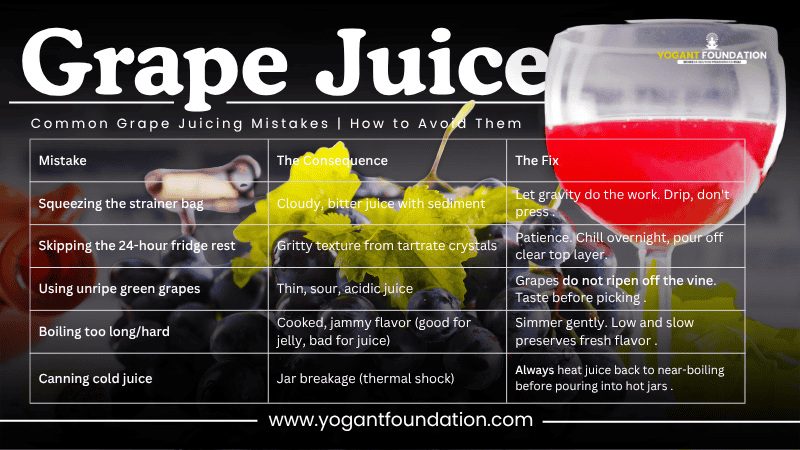
Common Grape Juicing Mistakes | How to Avoid Them
Even seasoned home cooks mess these up. Avoid these pitfalls for a better first batch.
FAQ: Your Burning Grape Juice Questions Answered
Q: Is grape juice good for you if I’m trying to lose weight?
A: It can be, but strategy matters. While 100% grape juice contains natural sugars (about 40g per 8 oz), it’s also nutrient-dense. For weight loss, consider using 4 oz as a flavor base in a high-protein smoothie (like the avocado one above) rather than drinking a full 8 oz glass alone. The fiber from added ingredients will keep you full longer .
Q: Does grape juice have more antioxidants than wine?
A: It’s complicated. Wine fermentation increases the concentration of certain phenolics like resveratrol (average 11.44 mg/L in wine vs 0.1525 mg/L in juice) . However, grape juice offers higher bioaccessibility of other compounds and provides zero alcohol risk. If you want the antioxidant punch without the ethanol, purple grape juice is the winner.
Q: Can I juice grapes with seeds?
A: Absolutely. In fact, please do! Grape seeds are rich in procyanidins and flavan-3-ols (powerful antioxidants). The heat of the juicing process extracts these compounds without crushing the bitter seed interior. Just don’t blend raw seeded grapes in a Vitamix—that will release bitterness .
Q: How long does homemade grape juice last?
A:
- Refrigerator: 7-10 days (fresh, unpasteurized) .
- Freezer: 12 months (leave 1 inch headspace for expansion).
- Canned (Shelf): 12-18 months for best quality; safe indefinitely if seal is intact .
Q: Why does my homemade juice taste different from Welch’s?
A: Welch’s uses a specific Concord grape concentrate and a hot-fill process that slightly caramelizes the sugars. Homemade juice is “brighter” and more acidic. If you want that smoother, deeper flavor, try reducing your homemade juice by 25% to concentrate the sugars .
Q: What’s the deal with the white floaties in my juice?
A: If you see a white film on top of refrigerated juice after a few weeks, it’s likely yeast from natural fermentation beginning (or mold if it’s fuzzy). Discard if fuzzy. If it’s just crystals at the bottom (tartrates), that’s fine and safe to drink.
The Final Sip: Why Homemade Always Wins
We started with a simple question: Is grape juicing worth the effort?
Look at it this way. In the time it takes to watch one episode of your favorite show, you can turn a pile of forgotten grapes into a ruby-red elixir that puts the grocery store bottles to absolute shame.
You’ll taste the difference immediately—that bright, jammy burst of real fruit. But more importantly, you’ll know exactly what’s in your glass: grapes, water, and maybe a touch of honey. No “natural flavors” that aren’t actually natural. No high fructose corn syrup hiding behind clever marketing.
And now you have the roadmap. Whether you’re a pot-on-the-stove purist or ready to invest in a steam juicer, you’ve got the tools to preserve the harvest and sip something truly nourishing.
So, next time those grapes are about to turn on the counter? Don’t toss them. Juice them.
Ready to give it a try? Grab a bag of Concord grapes from the farmer’s market this weekend. Start with the simple pot method. And don’t forget to tag your creation—I want to see that deep purple magic in your glass.
Got questions I didn’t cover? Drop them in the comments below. Happy juicing!