
Methi seeds are the small, golden-brown seeds of the fenugreek plant (Trigonella foenum-graecum). They sit in nearly every Indian spice box and have been used in kitchens and home remedies for generations. Most people look them up for three reasons: blood sugar, digestion and hair.
The research is more mixed than social media suggests. Some benefits have reasonable trial evidence, while others rest mostly on tradition. This guide separates the two, then shows you how to use fenugreek seeds in water, food and hair care. It also covers who should be careful with them.
What Are Methi Seeds (Fenugreek Seeds)?
Methi seeds are the dried seeds of the fenugreek plant, a herb in the legume family. They are small, hard, angular and yellow-amber. They taste bitter and slightly nutty, and they smell like maple syrup once toasted.
“Methi” is the Hindi name. In English they are called fenugreek seeds, and methi dana means the whole seed.
Why Are Methi Seeds So Common in Indian Kitchens?
They add flavour and depth to tempering (tadka), pickles, dals, curries and spice blends such as panch phoron. In Ayurveda, they have long been used as a warming, digestive seed. Fenugreek is also eaten as a leafy vegetable, but the seeds are the part most studied for health.
What Is Inside a Methi Seed?
Fenugreek seeds are an abundant source of a soluble gel-forming fiber called galactomannan. This is because when the seeds soak in water, the fibre swells and becomes slippery. Plant compounds they also contain, which have been investigated for their foil in insulin response are saponins and an amino acid called 4-hydroxyisoleucine.
What Health Benefits Do Methi Seeds Offer?
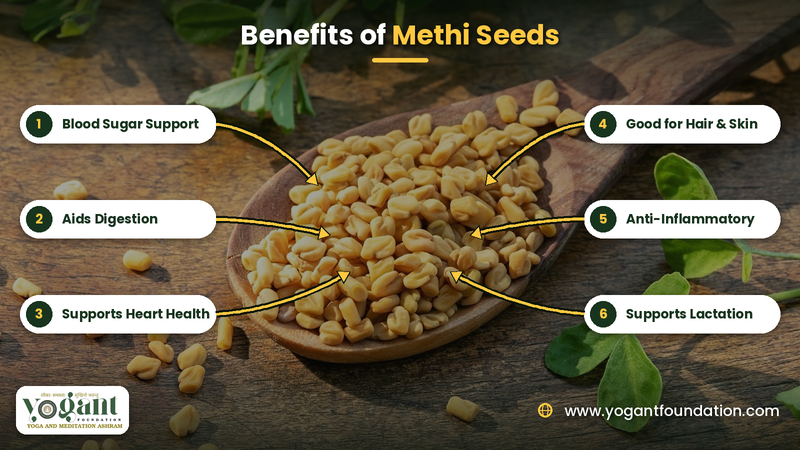
Most research evidence supports these for blood sugar and cholesterol. The digestive and hair claims are more traditional than proven.
Can Fenugreek Seeds Help With Blood Sugar Control?
They may help modestly, mainly in people with type 2 diabetes. A 2014 meta-analysis of clinical trials found fenugreek seeds lowered fasting glucose, post-meal glucose and HbA1c compared with control groups. The effects showed up mostly in studies using medium or high doses in people with diabetes.
The caution is that many of the studies were not of high quality, according to the U.S. National Center for Complementary and Integrative Health (NCCIH). A 2023 review of 14 trials reached a similar conclusion. It saw benefits, but flagged study quality and inconsistency as concerns.
The fiber likely slows how fast carbohydrates are absorbed, which is why this is the most discussed use of methi seeds. It is a helpful food habit, not a replacement for diabetes medicine.
Do Methi Seeds Support Digestive Health?
Possibly. The galactomannan fiber forms a soft gel in the gut. Many people find soaked fenugreek seeds gentle for occasional sluggish digestion or acidity, and Ayurveda has used them this way for a long time.
Controlled human trials on digestion are limited, so treat this as traditional use with a plausible mechanism. Eating too many can cause gas, bloating or loose stools.
Is There a Link to Heart Health?
There is some evidence. A 2024 meta-analysis of 19 trials in people with type 2 diabetes reported lower total cholesterol and LDL (“bad”) cholesterol. It also found higher HDL (“good”) cholesterol. Most participants had diabetes, so the results may not apply equally to everyone.
How Do You Use Methi Seeds Every Day?
You can drink them as fenugreek water, add them to cooking, sprout them or use them as powder. Start small and see how your body responds.
How to Make Fenugreek Water (Step by Step)
Fenugreek water benefits are usually the same as eating the seeds. The soaking makes the fiber soft and easier to swallow.
- Rinse one teaspoon of methi seeds.
- Soak them in a glass of clean water overnight, for about 8 to 10 hours.
- In the morning, strain the water and drink it. You can also chew the softened seeds.
- Start with a smaller amount if your stomach is sensitive.
A teaspoon is a common household amount, not a medical dose. If you have a health condition or take medicine, ask your doctor first.
What Are Other Methi Dana Uses in Cooking?
- Tadka: Add a pinch of whole seeds to hot oil for dals, sabzis and pickles. Don’t let them go dark, or they turn very bitter.
- Dry-roasted powder: Lightly roast, grind and add a small pinch to curries or buttermilk.
- Sprouted methi: Soak for 8 hours, drain, and keep damp for 1 to 2 days. Sprouts are milder and slightly crunchy in salads.
- Fenugreek tea: Steep crushed seeds in hot water for about 10 minutes.
How Much Is Reasonable to Start With?
Begin with about half to one teaspoon a day. The NIH LactMed database notes that about 25 grams or more daily may lower cholesterol and blood sugar. That is a large amount, and NCCIH warns large doses may cause a harmful drop in blood sugar. More is not better.
Do Methi Seeds Really Work for Hair?
Methi seeds for hair are hugely popular, but the scientific evidence is thin. There are no strong human trials showing fenugreek regrows hair or cures hair fall. What exists is mostly small studies and traditional practice.
Many people still use them because the soaked seeds make a slippery, conditioning gel. A simple method:
- Soak two tablespoons of seeds overnight.
- Grind them into a smooth paste.
- Apply to the scalp and lengths for 20 to 30 minutes.
- Rinse well and shampoo.
Do a patch test on your inner arm first, because fenugreek can cause allergic reactions. Treat it as a scalp-conditioning habit. Persistent hair loss deserves a check-up for causes such as thyroid problems, low iron or stress.
Which Form Suits You Best: Soaked, Sprouted, Powder or Tea?
FormBest forTasteEasy tipSoaked waterMorning routineMildly bitterSoak overnight, drink on an empty stomach if it suits youSprouted seedsSalads, snacksMilder, crunchySprout 1 to 2 daysRoasted powderCurries, buttermilkNuttyUse a small pinchTeaEvening drinkBitter, earthySteep about 10 minutesHair pasteScalp careNot eatenPatch test first
Can Methi Seeds Fit Into a Yogic Lifestyle?
Yes, as a simple food habit. Yoga and Ayurveda both emphasise light, mindful eating and good digestion. A glass of fenugreek water can be one small part of a morning routine alongside asana, pranayama and meditation. It supports a balanced lifestyle but does not replace one.
Who Should Be Careful With Fenugreek?
Talk to a doctor first if any of these apply:
- You have diabetes or take blood sugar medicine. Fenugreek may add to the effect and cause low blood sugar. Your doctor may need to adjust doses.
- You take blood thinners. Interactions are possible.
- You are pregnant. High amounts are generally avoided.
- You are breastfeeding. Little is known about the safety of amounts greater than those found in food, and evidence for milk supply is mixed.
- You are allergic to peanuts or chickpeas. Fenugreek is in the same legume family, so cross-reactions can happen.
- You have a hormone-sensitive condition. Ask your doctor first.
Which Mistakes Should You Avoid?
- Overdoing (high dosages) in hopes of being rewarded with the outcome faster.
- Newfancy: application of fenugreek in diabetes, instead of prescribed medicine.
- Burning the seeds in tadka, which make them bitter.
- One overlooked: not doing a patch test before the hair mask.
- Hair regrowth or weight loss in a matter of days.
- Ignoring symptoms such as dizziness, tremors or stomach upset.
Quick Answers: What Else Do People Ask About Fenugreek?
Q: What is the English name for methi seeds?
A: Fenugreek seeds. “Methi” is the Hindi name, and “methi dana” means the whole seed.
Q: Should I drink fenugreek water in the morning or at night?
A: There is no proven best time. Many people drink it in the morning because the seeds soak overnight. Pick a time you can keep up consistently.
Q: Can I eat the soaked seeds, or only drink the water?
A: You can do both. The seeds hold most of the fiber, so chewing them gives you more of it.
Q: How long do methi seeds take to work?
A: It varies. Trials of blood sugar effects ran from weeks to months. Do not expect overnight changes.
Q: Do methi seeds cause side effects?
A: They can cause gas, bloating, diarrhea, allergic reactions and low blood sugar if taken in large amounts. A harmless maple-syrup body odour is also reported.
Q: Are methi seeds good for weight loss?
A: There is no strong proof. The fiber might have a satiety effect, but food and activity matter by far more.
Q: Are methi seeds safe every day?
A:Most healthy adults will tolerate them in small food-level amounts. Ask your doctor if you take medicines or have a health problem.
What Is the Simple Takeaway on Methi Seeds?
Methi seeds are an affordable, traditional spice with real but modest evidence for blood sugar and cholesterol support. Their use for digestion and hair rests more on tradition. Start with a small amount, choose the form you enjoy, and watch how your body responds. Skip them or ask your doctor first if you are pregnant, breastfeeding, allergic to legumes or taking medicine for diabetes or blood clotting.
If you are interested in a food-and-yoga routine for your wellbeing, you can explore the yoga retreats at Yogant Foundation in Rishikesh, where mindful living is part of daily practice.