
Unlocking the Power of Padahastasana
Have you ever stood up after sitting at a desk for hours, feeling the entire back of your body—from your heels to your neck—tight and complaining? That feeling of stiffness isn’t just discomfort; it’s your body begging for a stretch. We spend so much of our day hunched forward, shortening the hamstrings and compressing the spine. The antidote to this modern epidemic of rigidity is surprisingly simple: a conscious, deep forward fold. Enter Padahastasana – the “Hand To Foot Pose.”
Although it may appear that you’re bending to touch your toes in this pose, the asana has a deeper meaning. The asana is an expression of release, it’s also powerful for resetting your nervous system and it’s deep stretching the whole posterior chain. Padahastasana can help you release your tight hamstrings or calm down a racing brain & improves posture.
What is Padahastasana? Definition and Meaning
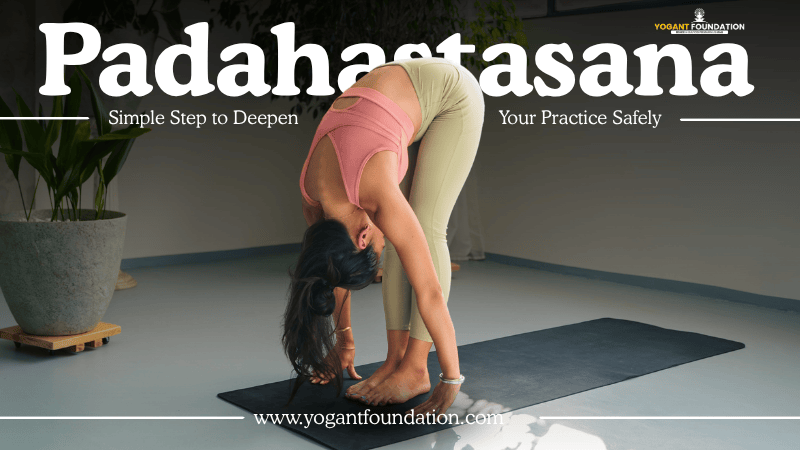
Derived from the Sanskrit pada (foot), hasta (hand), and asana (pose), is a foundational standing forward bend in Hatha yoga where the hands are brought to the feet. It is a quintessential posture that combines a deep hamstring stretch with the calming benefits of an inversion, often included in sequences like Surya Namaskar (Sun Salutation) .
The Incredible Padahastasana Benefits for Body & Mind
Why should you incorporate this fold into your daily routine? The Padahastasana has many benefits that go far beyond being able reach your toes. It is an excellent tool for your health, with a combination of both physical and psychological benefits.
Physical Perks: Flexibility and Strength
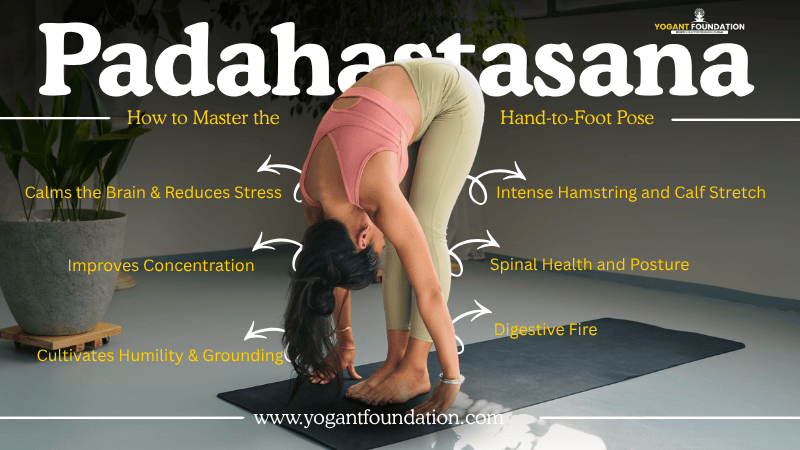
Eases Tight Hamstrings & Calves: Let’s be honest—most of us carry tension here without even realizing it. This pose gently coaxes those stubborn muscles to let go, which over time means less tugging on your lower back and a lower chance of pulling something when you’re just trying to tie your shoes.
Gives Your Spine Some Relief: After hours slumped over a laptop, your spine is crying for the opposite movement. Folding forward creates gentle space between the vertebrae, almost like a slow, much-needed decompression. It simply reminds your back how it feels to be long and neutral again.
Wakes Up Your Digestion: That gentle squeeze in your belly isn’t random—it’s a soft massage for your digestive organs. Practicing this regularly can help things move more smoothly, reducing that heavy, bloated feeling after meals.
Sneakily Strengthens Your Core: You might think you’re just stretching, but your abs are quietly working the whole time to protect your lower back. Over time, this builds functional core strength without a single crunch.
Mental and Energetic Advantages
It Hits a Mental Reset Button: You know that overwhelming mental fog after a long day? This pose forces you to slow down. By folding forward, you physically remove yourself from the “go-go-go” mode and gently activate the body’s natural relaxation response, helping to lower stress levels almost immediately .
It Clears the Mental Clutter: Because your head ends up below your heart, you get a gentle rush of fresh blood and oxygen to the brain. It’s like opening a window in a stuffy room—suddenly, your mind feels sharper, the anxiety quiets down, and you can actually think clearly again .
It Teaches You to Let Go: There’s a practical humility in this pose. You can’t force a forward fold; you have to surrender to gravity. It’s a great physical reminder that sometimes, the most productive thing you can do is stop trying to control everything and just let go of the tension you’re holding onto .
Mastering Padahastasana Steps Approach
Performing padahastasana steps with proper alignment is crucial to reap the benefits and avoid injury. Remember, it’s not about how far down you can go, but how long and straight you can keep your spine. Here is the classic method.
Preparation
Begin in Tadasana | Mountain Pose . Stand tall with your feet together or hip-width apart. Ground down through all four corners of your feet, engage your thigh muscles, and lengthen your spine. Take a deep breath here to center yourself.
The Step-by-Step Guide to Padahastasana
Inhale and Reach Up: On a deep inhale, sweep your arms out to the sides and up above your head. Keep your arms active and reach towards the sky, lengthening your entire front torso. Biceps should be close to the ears .
Exhale and Hinge Forward: As you exhale, initiate the forward fold by hinging at your hip joints, not your waist. Imagine your torso is a flat plank of wood folding over your legs. Keep your spine as long as possible as you begin to descend.
Bring Hands to Feet: Bring your hands down towards your feet. Depending on your flexibility, you may:
- Place your fingertips on the floor beside your feet.
- Place your palms flat on the floor.
- For the full expression of the pose, slide your hands under your feet so the soles rest on your palms, with your toes pointing to your wrists. Your fingers should be pointing toward your heels .
Deepen the Fold (Optional): If your hamstrings are open, on an exhale, gently try to draw your forehead towards your knees. Keep the neck relaxed; let your head hang heavy like a wet noodle .
Hold and Breathe: Stay in the pose for 3-5 deep, steady breaths. With each inhale, think about lengthening the spine slightly. With each exhale, see if you can surrender a little deeper into the stretch.
Come Up with Control: To release, on an inhale, press firmly through your feet. Engage your core and lift your torso back up to standing with a flat back, sweeping your arms out and up overhead. Exhale as you lower your arms back to your sides .
Common Mistakes to Avoid | How to Fix Them
Even seasoned practitioners can fall into bad habits in forward folds. Here’s what to watch out for:
Rounding the Lower Back: This is the most common error. It happens when you focus on grabbing your feet rather than lengthening your spine. This dumps the pressure into the lumbar discs instead of stretching the hamstrings.
The Fix: Micro-bend your knees. Seriously, it’s okay! A slight bend allows your spine to lengthen. Focus on bringing your belly to your thighs, not your nose to your knees.
Locking the Knees | Hyperextending: The knee joints can be strained if you force your knees to lock straight backward.
The Fix: Keep a firm Micro-bend in your knees. Engage your quadriceps (the front thigh muscles) to lift the kneecaps and protect the joint.
Tensing the Shoulders and Neck: In an effort to reach the floor, people often hunch their shoulders up to their ears.
The Fix: Consciously relax your shoulders away from your ears. Let your head and neck be completely passive. The weight of your head should actually help lengthen the neck and spine.
Utthita Padahastasana: An Important Variation
Utthita Padahastasana is a name you may be familiar with. It’s important to differentiate between the names even though they sound similar. They target the body differently.
- Padahastasana (Classic): Typically performed with feet together. It provides a deep, centered hamstring and spine stretch.
- Utthita Padahastasana (Extended Hand-to-Foot Pose): Utthita “extended” means “stretched.” The pose is when legs are spaced apart, usually 3-4. Prasarita Padahastasana or Wide-Legged Front Bend is another name for this variation.
The wide stance of utthita padahastasana allows for a different emphasis. It provides a deep stretch for the inner thighs and groins (adductors) in addition to the hamstrings, and the head can often hang lower, providing a stronger inversion effect. It is generally considered more stable and accessible for people with tight hamstrings.
Comparison: Classic vs. Wide-Legged Forward Fold
| Feature | Padahastasana (Classic) | Utthita Padahastasana (Wide-Legged) |
|---|---|---|
| Stance | Feet together or hip-width apart | Feet 3–4 feet apart |
| Primary Stretch | Hamstrings, calves, lower back | Hamstrings, inner thighs (groins), spine |
| Stability | Can be challenging for balance | More stable base, less balance required |
| Inversion | Mild inversion | Deeper inversion, head hangs lower |
| Therapeutic Focus | General hamstring tightness, stress | Hip opening, groin stretch, abdominal compression |
Padahastasana Contraindications: When to Practice with Caution
Knowing the Contraindications is essential for a safe practice. The pose may be beneficial for some, but isn’t suitable for all. Modifications might also be necessary. The pose should be avoided or you can consult your teacher if:
Back issues: People with back problems, such as herniated disks, sciatica or chronic lower-back injuries, should not take deep bends forward. They can worsen the problem.
Cardiovascular Issues: People with heart disease or high blood pressure should avoid full inversions or practice them with care (i.e., props to keep the head raised).
For pregnant women: Pregnant woman, particularly in the second and the third trimesters should avoid this posture due to compression of the abdominal muscles.
Glaucoma and Retinal Issues: Increased intraocular pressure can harm those who have serious eye problems.
Injuries and Surgeries Recent: Do not do this pose if your hamstrings or hips have been injured recently, or you had abdominal surgery.
Pro Tips for Deepening Your Practice
Concentrate on the Hinge and Not the Reach: Rather than thinking of touching your feet imagine that your pelvis is like a bucket filled with water. Exhale while you tilt the bucket to the front, emptying it of water. The mental signal will prevent you from collapsing at the lower back, and force the stretch from your hips.
Release to Activate: This is an anti-intuitive trick. To release tight hamstrings you must engage your quads. The top of your legs should be pressed firmly against the wall. This tension will make your nervous system feel safe and allow you to lengthen the muscles at the back.
Grab a Yoga Block for Stability: It is best to squeeze it between the inner thighs. It will wake up your adductors and stabilize your stance. You’ll also bend from your hips instead of your knees.
Surrender the Neck: The neck should be doing zero work. Give your head a small, gentle nod if you are feeling tension in your shoulders. Let your head droop, like a piece of ripe fruit, heavy and ready to fall. The cervical spine is decompressed by this passive release, which also signals your entire body to relax.
Frequently Asked Questions (FAQ)
1. What is the difference between Padahastasana and Uttanasana?
It is an extremely common question. Uttanasana is a standing forward fold where the hands rest either on the floor, or the shins. It is a full-expression of the forward fold. The hands rest under the feet with the soles on the palms. It can be considered an advanced form of forward folding.
2. Can Padahastasana reduce belly fat?
While Padahastasana tones the abdominal muscles and improves digestion by massaging the internal organs, it is not a direct tool for spot fat reduction. Fat loss occurs through a combination of a healthy diet, cardiovascular exercise, and overall lifestyle. However, as a stimulating and cleansing asana, it is an excellent part of a weight management routine .
3. Is it normal to feel dizzy in this pose?
Inversions can make you feel lightheaded. Blood rushes up to your brain. Normal and it usually goes away after a little practice. Avoid holding your breath to prevent dizziness. When dizziness persists or is extreme, you should immediately leave the pose and speak to a yoga teacher. You may have a specific contraindication to the pose.
4. I can’t touch my toes. Can I still do Padahastasana?
Absolutely! Touching your toes is not the goal; healthy alignment is. If you can’t reach the floor, place your hands on yoga blocks on either side of your feet. You can also hold onto your shins or ankles. The key is to keep your spine long and hinge from the hips, even if your knees are bent .
5. How long should I hold the pose?
For a general practice, holding the pose for 3 to 5 deep breaths (about 30–60 seconds) is sufficient. If you are holding it as part of a longer restorative practice, you can stay for up to 2 minutes, breathing normally. In some classical teachings, the breath is suspended in the final pose for short periods, but beginners should focus on steady, even breathing .
Conclusion: Your Invitation to Fold Inward
Means more than a stretch. It is more than merely a stretch. It teaches us how to release mental and physical tension. Understand the correct padahastasana steps. Respect the padahastasana contraindications. Appreciate the full range of padahastasana benefits.
It’s important to remember that yoga doesn’t require perfection. Instead, it is all about the sensations and awareness. Invite yourself to fold your spine forward and have a curious mind the next time you put out your mat. Enjoy the feeling of release and tranquility in your body, as well as the groundedness you feel.
Want to take your yoga practice further? Comment below with your Padahastasana experiences. Was there a feeling of relief for you? Are there any suggestions you can give other beginner? Share your knowledge! Share this page with someone you know who is in need of a good stretch.