
Supta Matsyendrasana
Namaste! It’s no secret that we all live in an age where so many things combine to result in bad spines after some amount of time. If you’ve got bad back pain, bad hip pain, and bad bowels, or if you just have deep tension in your torso, we’re here to help you with that. Supta Matsyendrasana, or the reclined spinal twist, is a great thing to have in your beginner’s yoga toolkit. It is also a great pose for deeper practice and for beginning to learn subtle energetic alignment.
Supta Matsyendrasana is great for anyone and helps beginner yogis particularly learn about the benefits and why yoga is so good for you. This is why we will also have some nice Hindi in this book as well. We can’t wait to help you relieve that tension!
What Is Supta Matsyendrasana? (सुप्त मत्स्येन्द्रासन क्या है?)
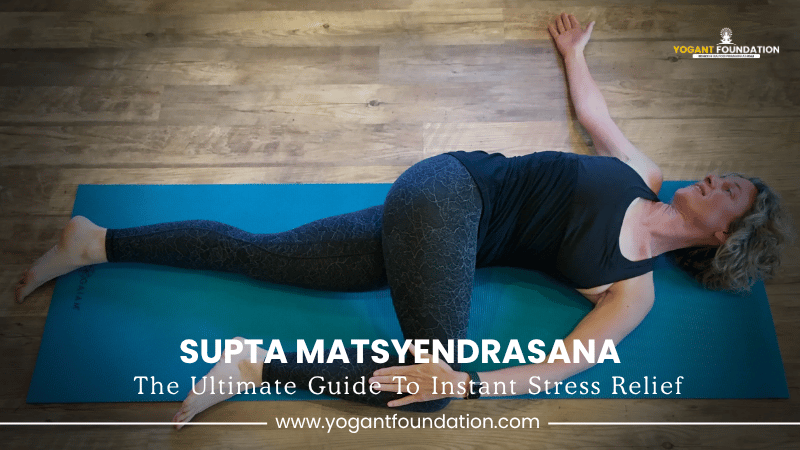
Supta Matsyendrasana (Reclined Spinal Twist / Reclined Lord of the Fishes Pose) is a supine yoga asana where you lie on your back, draw one knee across the body, and turn your head in the opposite direction. The term comes from Sanskrit: “Supta” means reclined or sleeping, “Matsya” means fish, and “Indra” refers to the lord—hence, the pose honors the great yogi Matsyendranath.
This gentle yet powerful twist stretches the spine, glutes, and chest while compressing the abdominal organs, stimulating detoxification and digestion. Because you’re fully supported by the floor, it’s accessible to almost all levels and an ideal wind-down posture before Savasana.
Detailed Definition:
Supta Matsyendrasana, or Reclined Spinal Twist, is a yoga pose where you lie on your back, pull one knee to the opposite side, and stretch the other arm out to the side. It rotates your spine. This pose especially stretches your lower back, hips, and shoulders. It also improves your digestion by massaging your abdominal organs. Helps you calm down and is good if you want to improve the flexibility in your spine or want to decrease back pain. It is good to decrease stress and improve digestion too.
हिंदी में:
सुप्त मत्स्येन्द्रासन (Supta Matsyendrasana) एक ऐसा आसन है जिसे आप बिल्कुल आराम से पीठ के बल लेटकर करते हैं। इसमें आप एक घुटने को धीरे-धीरे दूसरी तरफ ले जाते हैं और अपनी गर्दन को विपरीत दिशा में घुमाते हैं। यह आपकी रीढ़, कूल्हों और कंधों में जमी हुई सारी अकड़न को ऐसे पिघलाता है जैसे गर्म पानी से बर्फ पिघलती है। पेट के अंदरूनी अंगों की हल्की मसाज होती है, जिससे पाचन दुरुस्त रहता है। पूरा शरीर फर्श पर सपोर्टेड रहता है, इसलिए चाहे आपने कल ही योग शुरू किया हो या सालों से कर रहे हों, यह आसन आपके लिए बिल्कुल सुरक्षित और गहरा आराम देने वाला है। मन एकदम शांत, शरीर एकदम रिलैक्स।
Why This Pose Deserves a Spot in Your Daily Practice – The Core Supta Matsyendrasana Benefits
Whether you’re a beginner seeking relief from desk-bound stiffness or an expert refining your inner awareness, the supta matsyendrasana benefits extend far beyond a simple stretch. Let’s break them down, layer by layer.
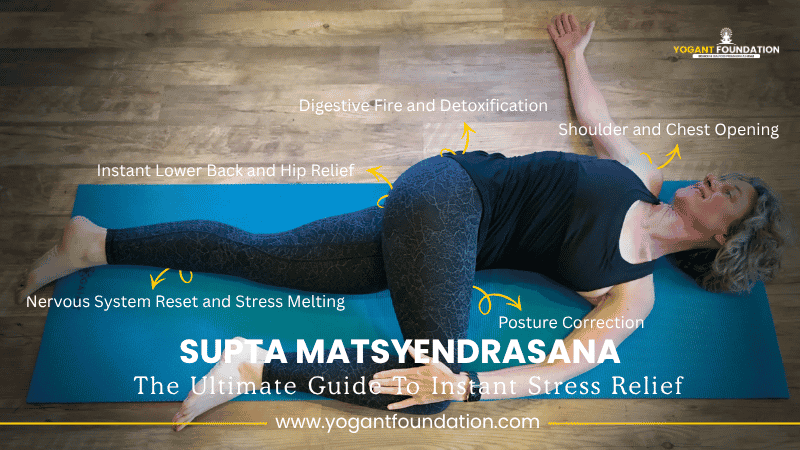
1. Instant Lower Back and Hip Relief
Your lower back is a shock absorber, and chronic sitting compresses the lumbar spine. The reclined twist gently separates the vertebrae, releases the quadratus lumborum (QL) muscle, and softens the deep hip rotators like the piriformis. This makes it one of the safest poses for sciatica discomfort and general lower back pain.
हिंदी: यह आसन रीढ़ की हड्डी के निचले हिस्से और कूल्हों के आसपास की मांसपेशियों को गहराई से खींचता है। डेस्क पर लंबे समय तक बैठने से जो जकड़न आती है, उसे सुप्त मत्स्येन्द्रासन कुछ ही सांसों में दूर कर देता है।
2. Digestive Fire and Detoxification
When you twist, you kind of “wring out” the abdominal organs. This squeezing and releasing gives peristalsis a massaging effect to the intestines, encourages the functions of the liver and kidneys, and promotes the elimination of waste. If you experience any bloating, constipation, or a sluggish metabolism, a few deep breaths in Supta Matsyendrasana may help.
3. Shoulder and Chest Opening
Many of us hunch forward, collapsing the chest. The twist reverses this pattern by opening the pectoral muscles and the front of the shoulder. For beginners, this is a revelation—your breathing immediately feels deeper and freer.
4. Nervous System Reset and Stress Melting
The reclined nature of the pose signals safety to your body. Long, slow exhales while holding the twist activate the parasympathetic nervous system (the “rest and digest” mode). It’s a powerful posture to practice before bed to let go of the day’s mental chatter.
5. Spinal Mobility and Posture Correction
Regular twisting maintains the natural range of motion of the spine and keeps the intervertebral discs supple. Over time you will find that it becomes easier to sit upright and move around with more ease.
Advanced Insight: If you would like to consider this pose from the standpoint of energy, Supta Matsyendrasana will assist in balancing your Manipura (solar plexus) chakra. This, in turn, will help to restore your personal power and will assist in balancing the digestion of your life experiences (and not just food).
Step-by-Step Guide: How to Do Supta Matsyendrasana Correctly
Follow these numbered instructions to build the pose from the ground up. Respect your body’s feedback—never force a twist.
1. Starting Position (Supine Setup)
Lie on your back on a yoga mat. Extend your legs long, arms out at shoulder height in a T-position, palms facing up or down. Feel the back of your neck long, chin slightly tucked.
2. Hug the Right Knee
Draw your right knee toward your chest. Keep the left leg actively extended, toes pointing up, pressing the left thigh down to anchor your pelvis.
3. Guide the Knee Across
On an exhale, use your left hand to gently guide your right knee over to the left side of your body. The right hip will stack or lift slightly; keep your right shoulder grounded as much as possible without straining.
4. Open the Arm and Gaze
Extend your right arm out to the right, palm up. Turn your head to gaze over your right fingertips. If your neck feels uncomfortable, keep your head neutral or look toward the ceiling.
5. Breathe and Soften
Hold for 5–10 deep breaths. With every inhale, lengthen your spine; with every exhale, allow the twist to deepen naturally. Focus on releasing the belly and relaxing the jaw.
6. Release and Switch Sides
To come out, inhale and slowly bring the knee back to center, extend the leg down. Pause and notice the difference between your left and right sides. Repeat on left knee twisting to right.
हिंदी में स्टेप्स:
- पीठ के बल लेट जाएं, हाथों को कंधे की सीध में T-आकार में फैलाएं।
- दाएं घुटने को छाती की ओर लाएं। बाएं पैर को एक्टिव रखें।
- सांस छोड़ते हुए बाएं हाथ से दाएं घुटने को बाईं तरफ ले जाएं। दायां कंधा ज़मीन पर टिका रहने दें।
- दाएं हाथ को सीधा फैलाएं और नज़र दाईं उंगलियों पर ले जाएं। गर्दन में खिंचाव हो तो सामने देखें।
- 5-10 गहरी सांसों तक रुकें। हर सांस के साथ रीढ़ को ढीला छोड़ें।
- सांस लेते हुए घुटने को वापस बीच में लाएं और धीरे-धीरे पैर सीधा करें। दूसरी तरफ दोहराएं।
Practical Tips and Expert Strategies to Maximize Supta Matsyendrasana Benefits
Yoga is never one-size-fits-all. Use these tips to tailor the pose to your body.
- Use a Prop for Your Knee: If the twisting knee hovers far from the floor, slide a folded blanket, bolster, or yoga block under it. Support eliminates the “hanging” tension and lets your muscles truly release.
- Straps for Shoulder Relief: If your straight arm can’t reach the floor or pulls the shoulder forward, loop a strap around the foot and hold it with the opposite hand. This keeps the shoulder socket happy.
- Micro-Bend the Bottom Leg: Beginners who feel pulling in the lower back can slightly bend the extended leg’s knee. It reduces torque on the SI joint.
- Breath-Guided Twisting: For deeper release, inhale to create space, exhale to rotate a tiny bit more. Never yank. Imagine your spine unrolling like a wet towel being wrung out gently.
- Timing Is Everything: Practice in the morning to relieve sleep stiffness, in the evening to relieve the day’s tension, or practice after a meal (wait 2-3 hours) to aid digestion. During your period, and if you have a herniated disc, avoid deep twists unless you have professional clearance.
हिंदी टिप्स:
- अगर घुटना ज़मीन तक न पहुंचे तो उसके नीचे तकिया या ब्लॉक रखें।
- अगर कंधे में खिंचाव हो तो पट्टे का इस्तेमाल करें।
- निचले पैर को थोड़ा मोड़कर रख सकते हैं।
- सांस के साथ आसन को धीरे-धीरे गहरा करें, झटका बिल्कुल न दें।
Common Mistakes to Avoid (Even Experienced Yogis Slip Up)
Steer clear of these pitfalls to make your practice safe and truly beneficial.
- Putting the knee down with the hand – This puts pressure on the knee joint and aggressively twists the pelvis. Let gravity and breath do the work; the hand is merely a gentle guide.
- Floating Opposite Shoulder – If the shoulder of the outstretched arm lifts, you lose the chest-opening benefit and risk neck strain. Tuck a small rolled towel under that shoulder if needed.
- Holding Your Breath – When you grip your breath, your muscles tighten. A smooth, ocean-like Ujjayi breath (or simply long exhales) is the key to unlocking the twist.
- Ignoring Neck Alignment – Forcing the head to turn completely opposite when your cervical spine is stiff can cause dizziness. Always prioritize neck comfort; the gaze can remain upward.
- Rushing Through the Transition – Coming out too fast can shock the spine. Move like you’re underwater—slow, controlled, and deliberate.
Comparison Table: Supta Matsyendrasana vs. Other Spinal Twists
| Pose | Level | Key Focus | Best For |
|---|---|---|---|
| Supta Matsyendrasana (Reclined Twist) | Beginner to Advanced | Passive spinal release, relaxation, digestion | Evening wind-down, back pain relief, stress |
| Ardha Matsyendrasana (Half Lord of the Fishes) | Intermediate | Active core engagement, deep spinal rotation | Building sitting twist strength, hip mobility |
| Jathara Parivartanasana (Belly Twist) | Beginner to Intermediate | Isolating lower spine, legs together or apart | Sciatica, lower back tension, core awareness |
| Marichyasana C (Marichi’s Pose) | Advanced | Intense bound twist, shoulder and hip flexibility | Detoxification, advanced seated twist practice |
Why Supta Matsyendrasana often wins for daily practice: This variation is the most popular variation that helps the nervous system down-regulate while offering a powerful stretch for the spine. It doesn’t put as much strain on the body while you are in the pose for a longer period of time so it is more beneficial for restorative practice and gives more therapeutic benefits.
Pro Tips and Advanced Insights for the Deep Seeker
For intermediate and expert practitioners, Supta Matsyendrasana can become a profound exploration of prana and bandha.
- Add a Leg Bind (Eagle Legs Twist): Instead of keeping the bottom leg straight, wrap the top leg’s thigh over the bottom leg in Garudasana (Eagle) style before twisting. This dramatically deepens the hip and IT band stretch.
- Breath Retention (Kumbhaka): When you are at the maximum extent of the twist, you can attempt a mild retention of breath after a completely exhaled breath (Bahya Kumbhaka). Doing this will create a ‘vacuum’ in the abdomen, which will heighten the massage of the internal organs and increase stimulation of the vagus nerve.
- Drishthi and Energy Flow: Experiment with your gaze. Looking toward the extended hand energizes; keeping the head neutral or turning it toward the bent knee can feel more grounding. Trust your intuitive sense.
- Transition into a Seated Meditation: After you twist, lie still for a minute, then roll to your side, and sit up. How does the symmetry feel compared to before? Listen for the quiet buzz along your spine.
हिंदी में एडवांस टिप: गहरे अनुभव के लिए, आसन में सांस रोकने (बाह्य कुम्भक) का अभ्यास करें। इससे पेट की मालिश और तीव्र हो जाती है। गरुड़ासन पैरों के साथ भी यह आसन करने से कूल्हों की गहरी जकड़न दूर होती है।
FAQ: Your Top Supta Matsyendrasana Questions Answered
Q1. What are the main supta matsyendrasana benefits for beginners?
A: Beginners achieve relief from stiffness in the lower back and hips, aid digestion, and promote better sleeping patterns. Since the pose is practiced lying down, it provides a safe way to teach spinal awareness as a precursor to seated twists.
Q2. Can I practice Supta Matsyendrasana with a herniated disc or sciatica?
A: It can be therapeutic for some spinal conditions, but you must consult a qualified yoga therapist or doctor first. Never force the twist, and use ample props. For acute sciatica, a gentle variation with both knees bent may be safer. Avoid if any movement causes radiating pain.
Q3. Is it safe to do Supta Matsyendrasana during pregnancy?
A: Deep twists are generally avoided during pregnancy because they compress the abdomen. A very gentle open twist (legs wide, no crossing the midline) might be offered in prenatal classes, but always seek an instructor’s guidance. For the standard pose, it’s best to skip it after the first trimester.
Q4. How long should I hold Supta Matsyendrasana to see digestive benefits?
A: Hold each side for at least 1–2 minutes with slow, conscious breathing. This gives the abdominal massage time to stimulate peristalsis. A 2–3 minute hold in a restorative version can be remarkably effective for constipation.
Q5. Why does my knee pop or feel uncomfortable in this twist?
A: Popping without pain is usually just gas or tendon movement. If you feel joint pain, you’re likely forcing the twist from the knee instead of the hip. Place a block under the knee, keep the foot active, and initiate rotation from your core and pelvis, not the lever of your bent leg.
Q6. When is the best time to do Supta Matsyendrasana?
A: It’s versatile. Practice on an empty stomach in the morning to wake up the spine, or in the evening to release the day’s physical and mental tension. It’s also an excellent post-workout recovery posture and an ideal pre-bedtime sequence staple.
Conclusion: Embrace the Gentle Twist, Transform Your Well-Bein
Supta Matsyendrasana is proof that the simplest postures often hold the deepest magic. Without standing up, without complex balancing, you can coax your spine back to life, soothe a frazzled nervous system, and signal to your entire being that it’s safe to let go. The supta matsyendrasana benefits are not just physical—they’re a reset button for your overstimulated modern mind.
Roll out your mat tonight. Lie back, breathe, and let gravity and breath unravel the knots you’ve been holding. Your back, your belly, and your sleep will thank you.
Ready to deepen your practice? Subscribe to our newsletter for more pose breakdowns, sequences, and yogic wisdom delivered straight to your inbox. Share this guide with a friend whose spine deserves some love, and leave a comment below: Which side feels tighter for you—right or left? Let’s start a conversation.
निष्कर्ष (हिंदी):
सुप्त मत्स्येन्द्रासन यह सिखाता है कि सबसे सरल आसन सबसे गहरा प्रभाव डाल सकते हैं। चाहे आप शुरुआती हों या अनुभवी, यह आसन रीढ़ को लचीला, पाचन को मज़बूत और मन को शांत करता है। आज ही अपनी मैट बिछाएं, लेटें और सांसों के साथ इस अद्भुत आसन का अनुभव लें। कोई भी सवाल हो तो कमेंट में ज़रूर पूछें—हम आपके साथ हैं। नमस्ते!