
Jeera is the Hindi name for cumin, the dried seed of a small plant called Cuminum cyminum. It is one of the most widely used spices in Indian kitchens, where it flavours dal, vegetables, rice, raita and almost every masala blend. Many families also treat it as a simple everyday aid for digestion.
If you searched for jeera, you likely want a few clear answers. What exactly is it? How do whole seeds, powder and roasted jeera differ? Is it really good for digestion? And how do you use it well at home? This guide answers each of these in plain language, for readers in India, the US and the UK.
You will also find a step-by-step method for roasting jeera, a simple jaljeera recipe, buying and storage tips, common mistakes, and a short safety section. Where the science is limited, we say so.
Why does every Indian kitchen depend on this spice?
Jeera is the dried seed of the cumin plant. It gives food a warm, earthy, slightly bitter flavour, and it is the base of the tadka (tempering) that starts countless Indian dishes. Cooks use it in three forms: whole seeds, ground powder and dry-roasted seeds.
Its importance comes from how well it works. A spoonful of seeds in hot oil releases aroma in seconds, and the same spice blends easily with turmeric, coriander, chilli and garam masala. That is why Cumin seeds sits in nearly every Indian spice box, alongside other staple Indian spices.
Where does cumin come from, and what is its botanical name?
The botanical name is Cuminum cyminum. It belongs to the Apiaceae family, the same plant family as parsley, coriander, fennel and carrot. What we call a seed is technically the plant’s dried fruit.
Cumin has been grown for a very long time across West Asia, the Mediterranean and South Asia. Today India is among the largest growers and consumers of the spice, but it is also cultivated in countries such as Iran, Turkey and Syria. Exact production rankings change from year to year, so check a current agricultural source if you need figures.
What does jeera taste and smell like?
Jeera tastes warm, nutty, earthy and a little bitter, with a faint citrus edge. Its strong aroma comes largely from a natural compound called cuminaldehyde, which is also why cumin smells so distinctive when it hits hot oil.
Roasting softens the bitterness and brings out a deeper, toastier note. Raw powder tastes sharper and flatter. This difference in cumin flavour and aroma is the main reason Indian cooks choose between raw and roasted Cumin seeds for different dishes.
How do whole jeera, jeera powder and roasted jeera differ?
Whole jeera is the intact seed, jeera powder is the ground seed, and roasted jeera is seed that has been dry-heated and often then ground. They come from the same spice but behave differently in the pan and on the plate.
| Form | Also called | Flavour | Best used for | Typical shelf life* |
|---|---|---|---|---|
| Whole seeds | Sabut jeera, cumin seeds | Fresh, sharp, aromatic | Tadka, rice, pickles, boiling in water | About 1 to 2 years |
| Ground powder | Jeera powder, ground cumin | Earthy, strong, quick to blend | Curries, marinades, rubs, masala mixes | About 6 months to 1 year |
| Roasted seeds or powder | Bhuna jeera, roasted cumin | Nutty, deeper, less bitter | Raita, chaat, jaljeera, buttermilk, salads | A few weeks to a few months |
*Approximate and depends on heat, light and moisture. Sealed, cool and dark storage lasts longest.
Which is better to buy: sabut jeera or jeera powder?
Buy whole sabut jeera if you cook often, because the seeds keep their oils and aroma much longer than powder. Grind small batches when you need them. Choose ready powder only for speed, and buy it in small packs so it stays fresh.
A simple test helps: rub a few seeds between your fingers. A strong, warm smell means they are fresh. A faint or dusty smell means the spice is old.
What is bhuna jeera, and how is it used?
Bhuna jeera is jeera that has been dry-roasted in a pan until it darkens slightly and smells nutty. Cooks usually grind it and sprinkle it over curd, raita, chaat, lassi, fruit salads and jaljeera, where its toasted taste stands out. The roasting steps further down show how to make it at home.
Is jeera good for digestion?
Traditionally, yes. Cumin seeds has long been used in Indian homes to ease heaviness after meals. Modern research is promising but limited, so jeera is best seen as a helpful food habit, not a treatment for any digestive condition.
What does traditional Ayurveda say about jeera?
Ayurveda, India’s traditional system of medicine, describes jeera as deepana (it kindles digestive fire) and pachana (it helps food digest). This is why jeera water, roasted jeera with buttermilk and jaljeera are common after heavy meals. These are traditional beliefs, not clinical proof.
What does modern research say about cumin and digestion?

Laboratory and small human research suggest that compounds in cumin may additionally stimulate digestive enzymes and might help with symptoms along with bloating. Some small trials have looked at cumin extracts for irritable bowel syndrome (IBS). However, many studies use focused extracts or crucial oils, no longer the pinch of seeds you upload to dal. Sample sizes are often small, and results are not but strong sufficient to vow a selected impact.
If you live with ongoing stomach pain, acid reflux or IBS, speak to a doctor first. Cumin seeds can be part of your diet, but it should not replace medical advice.
What nutrients does jeera contain?
Cumin seeds contain small amounts of iron, calcium, manganese and magnesium, along with plant compounds that act as antioxidants. A typical serving is only half a teaspoon to a teaspoon, so jeera adds flavour and a modest nutrient boost rather than major nutrition.
Exact values differ by variety and source. For precise numbers per spoon or per 100 grams, check an official food composition database such as the USDA’s FoodData Central and look up “spices, cumin seed”.
What other health benefits are linked to jeera?
Researchers have explored severa possible results of cumin. Most proof is early, and maximum comes from small research:
- Blood sugar: a few trials propose cumin may additionally assist wholesome blood sugar, however it have to in no way update diabetes remedy.
- Cholesterol: some small research report modest modifications in blood fats.
- Antioxidant interest: laboratory art work shows cumin consists of defensive plant compounds.
- Weight control: effects are mixed, and cumin isn’t a fat-burning shortcut.
Treat the ones as regions of ongoing research. A balanced food regimen, normal movement and sleep depend some distance more than any unmarried spice.
How do you roast jeera at home?
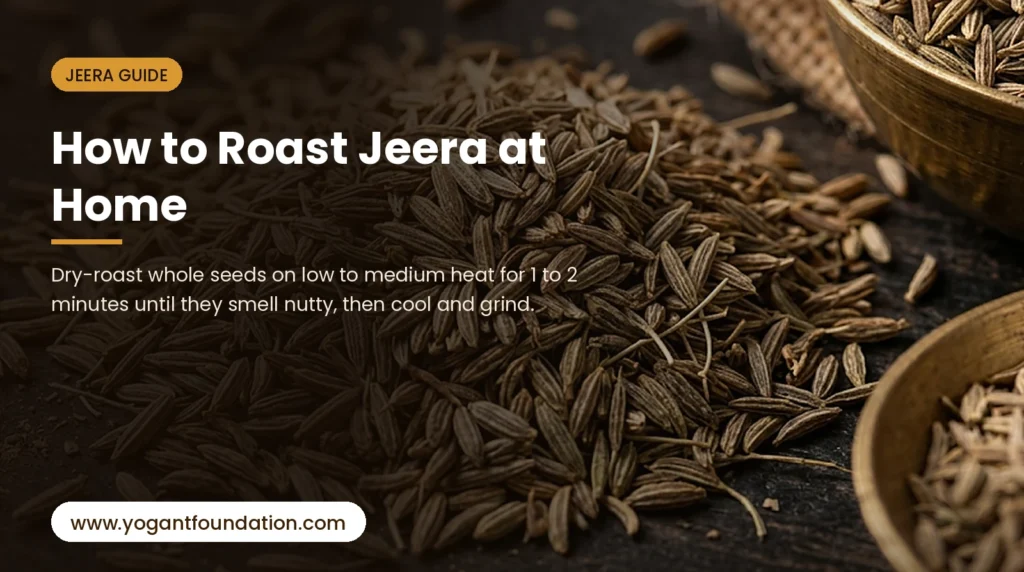
Dry-roast whole jeera in a pan on low to medium heat for about 1 to 2 minutes until it darkens slightly and smells nutty. Then cool it and grind it if you want powder.
- Heat a clean, dry pan on low to medium heat. Do not add oil.
- Add 2 to 3 tablespoons of whole jeera in a single layer.
- Stir or shake the pan constantly for 1 to 2 minutes.
- Switch off the heat when the seeds turn a shade darker and smell toasty.
- Tip them onto a plate right away, since the hot pan can keep cooking them.
- Cool completely, then grind in a mortar or spice grinder.
- Store in a small airtight jar and use within a few weeks.
How do you make jaljeera and simple jeera water?
Jaljeera is a chilled Indian summer drink made from roasted jeera, mint, lemon or tamarind and black salt. Jeera water is simpler: seeds steeped in water. Both are popular as light drinks after meals.
Simple Jaljeera (1 cup)
- Take 1 tsp roasted jeera powder, 1 tsp lemon juice and a pinch of black salt and mix in a glass.
- Add a few crushed mint leaves and a small pinch of sugar or jaggery if you like a sweeter taste.
- Pour in 1 cup of cold water and stir well.
- Serve chilled, ideally freshly made.
Basic jeera water: simmer 1 teaspoon of whole seeds in 1 cup of water for about 5 minutes, strain and sip warm. You can also soak the seeds overnight and drink the water in the morning. These are home traditions, and results vary from person to person.
How is jeera used in everyday cooking?

In Indian kitchens, Cumin seeds is first added to hot oil or ghee as a tadka, then onions, tomatoes or spices follow. The sizzle takes only seconds, so add it before anything else and watch it closely.
Common uses include:
- Jeera rice: whole seeds fried in ghee, then stirred into basmati rice.
- Dal and sabzi: tempering for lentils and dry vegetables.
- Raita and chaat: a sprinkle of roasted jeera powder over curd.
- Masala blends: garam masala, chaat masala and sambar powder often contain cumin.
- Global dishes: ground cumin also flavours chilli, tacos and bean dishes in the US, and curries and spice rubs in the UK.
A useful rule: use whole jeera at the start of cooking, and roasted jeera powder at the end for a fresh finish.
How should you buy and store jeera?
Choose seeds which might be uniform in shade, greenish-brown, and strongly aromatic. Avoid packs that look dusty or scent susceptible.
Store Cumin seeds in an hermetic glass or steel jar, a long way from the variety, sunlight and damp spoons. Buy whole seeds in small quantities, and grind excellent what you want. In humid weather, check for moisture or clumping, that could ruin spices.
What mistakes should you avoid when using jeera?
The most common mistake is burning the seeds. Cumin seeds turns bitter within seconds of going too dark, so lower the heat if the oil is smoking.
- Burning the tadka: add seeds to moderately hot oil and take them off the heat as soon as they sizzle and turn golden.
- Adding powder to a dry, hot pan: ground cumin scorches faster than seeds. Mix it with a little water or add it with onions or tomatoes.
- Roasting too long or on high heat: seeds keep cooking in the hot pan, so move them to a plate immediately.
- Using stale spice: old jeera tastes flat. Smell before you use it.
- Expecting jeera water to work like medicine: it is a gentle food habit, not a cure for weight gain, diabetes or digestive disease.
- Storing near the stove: heat and steam shorten a spice’s life.
Who should be careful with jeera?
Cumin seeds in normal cooking amounts is considered safe for most people. Extra care applies if you plan to take large amounts, concentrated extracts or supplements.
- Pregnancy and breastfeeding: food quantities are typically first-class, but ask your medical doctor earlier than the usage of dietary supplements or huge daily quantities.
- Diabetes drug treatments: because cumin may additionally affect blood sugar, screen your tiers and inform your health practitioner if you use it frequently in larger quantities.
- Bleeding disorders or upcoming surgical operation: ask your health practitioner, as some spice extracts may affect clotting.
- Allergies: people allergic to flora inside the parsley family, together with coriander, fennel or celery, can also react to cumin.
- Acid reflux: spices can get worse heartburn for some people, so pass slowly.
This section is general information and does not replace advice from a qualified doctor or dietitian.
Frequently asked questions about Jeera
Is jeera the same as cumin?
Yes . Jeera is Hindi for cumin ( Cuminum cyminum ) .Cumin seeds and jeera are one and the same spice.
Is kala jeera the same as regular jeera?
No. Kala jeera usually refers to a different, rarer spice, often Bunium persicum, with a sweeter and more delicate taste. Names vary by region, and some people confuse it with kalonji (nigella) or shahi jeera (caraway), so check the botanical name on the pack.
How much jeera can you eat in a day?
There is no official daily limit for jeera used as a cooking spice. Most recipes use half a teaspoon to one teaspoon per serving. Keep supplements and large quantities for a conversation with your doctor.
Does jeera water help with weight loss?
There is not enough strong evidence to say it does. Jeera water has almost no calories, so swapping it for a sugary drink can help, but it will not burn fat by itself.
What is the best time to drink jeera water?
No research has proven one best time. Many people sip it warm in the morning or after meals. Pick a time that works for you and see what your body does.
Is roasted jeera healthier than raw jeera?
Not proven. Roasting mainly changes taste and aroma, making it nuttier and less bitter. Choose by the dish you are cooking.
Can you use whole jeera instead of jeera powder?
Yes. Grind the seeds first, and use about the same amount, then adjust to taste. Freshly ground jeera is usually stronger and more fragrant.
What is the main takeaway on jeera?
Jeera is the dried seed of Cuminum cyminum, a flavourful everyday Indian spice that comes as whole seeds, powder and roasted jeera. It has a long tradition of use for digestion, and early research is interesting, but it is not a medicine. The best approach is simple: buy whole seeds, store them well, roast or temper them with care, and enjoy jeera as part of balanced meals.
If you are curious about mindful eating, yoga and a slower daily rhythm, you can explore the yoga and meditation retreats offered at Yogant Foundation in Rishikesh through our website.