


Let’s be honest. Most of us spend our days hunched over—slouched at desks, curled over phones, collapsing on sofas. Our bodies slowly forget what it feels like to open up, to stretch back, to truly breathe into our own strength. If you’ve ever felt that familiar ache between your shoulder blades or a stiffness in your spine that makes you sigh when you get out of a chair, you’re not alone. I felt it too, for years. Then, I found the Bow. Not a literal bow and arrow, but Dhanurasana, the yoga pose that made me feel, for the first time, like I could actually combat the toll of modern life.
This isn’t just another yoga pose to check off a list. It’s a vibrant, challenging, and incredibly rewarding adventure for your whole being. Today, I want to share with you not just the “how-to,” but the heart and soul behind Dhanurasana yoga—why it feels so good, why it’s so powerful, and how you can make it work for you, exactly as you are.
What is Dhanurasana? More Than Just a Backbend
The name sounds elegant, doesn’t it? Dhanur means bow, asana means pose. When you finally get into it, you’ll see why. Your body forms this beautiful, taut curve, just like an archer’s bow. Your hands gripping your ankles are the string, and your torso and legs create that powerful arc.
In a world that constantly asks us to fold inward—to protect, to scroll, to shrink—Dhanurasana asks us to do the opposite. It asks us to open our hearts to the sky. It’s a act of joyful defiance against the hunch. Every time I practice it, I imagine I’m not just stretching my muscles; I’m drawing back the bowstring of my own potential, ready to release old tensions and aim for a brighter, more open version of myself.
Why You’ll Fall in Love with the Dhanurasana Benefits
Okay, so it looks cool and feels powerful. But what’s actually happening inside? The benefits of Dhanurasana are like a thoughtful gift package for your overworked 21st-century body and mind.
1. For Your Body: The Ultimate Antidote to Chair Life
This is where the pose truly shines as a everyday superhero.
- It’s a Love Letter to Your Spine: All that forward bending we do? Our spines forget how to move backward. Dhanurasana gently reminds every vertebra what it’s capable of, fighting stiffness and bringing back a youthful mobility. It’s like oiling a squeaky, neglected hinge.
- Opens Your Heart, Literally: It stretches across your chest and shoulders, undoing the “computer hunch.” The first time I held it, I took the deepest breath I had in weeks. It wasn’t just my lungs; it felt like my mood lifted, too.
- Fires Up Your Backside: Let’s face it, our glutes and hamstrings are often asleep on the job. This pose wakes them up with a cheerful jolt, strengthening everything from your upper back to your butt. You’ll feel it the next time you walk up stairs with newfound spring.
- A Internal Massage: That gentle pressure on your belly? It’s like giving your digestive organs a little wake-up nudge. Many of my students report feeling less bloated and more regular when they practice Bow Pose consistently. It’s one of those quiet but powerful Dhanurasana yoga perks.
2. For Your Mood and Energy: The Invisible Perks
This is my favorite part. The physical shape creates an internal shift.
- A Confidence Boost: There’s something about successfully holding a Bow Pose that makes you feel powerful. Yogis link it to the solar plexus chakra, your core of self-esteem. After a good session, I often stand a little taller, both on and off the mat.
- Shakes Off the Slump: That 3 PM fatigue? Instead of another coffee, try a Bow (if you have the space!). The combination of chest-opening and mild adrenal stimulation is incredibly invigorating. It fights fatigue by sparking your own energy, not borrowing it from caffeine.
- An Emotional Release Valve: This one surprised me. We hold so much—stress, anxiety, worry—in the front of our bodies. Opening that space can sometimes unlock emotions. It’s not uncommon to feel a wave of release or even want to sigh or laugh afterward. It’s like your body is literally letting something go.
Bow Pose- Dhanurasana benefits in Hindi
मेरा एक सवाल है: क्या आपको भी वो दर्द महसूस होता है, जो दिनभर कुर्सी पर झुक कर बैठने के बाद पीठ के बीचों-बीच जमा हो जाता है? वो अकड़न, जो सुबह उठते ही आपके कंधों को नीचे की ओर खींच लेती है? मैं इससे बखूबी वाकिफ हूँ। और यही वजह है कि मैं धनुरासन से इतना प्यार करती हूँ। यह कोई सिर्फ़ एक “ठोस बैकबेंड” नहीं है, बल्कि जैसे आप अपने शरीर को एक गहरी सांस दे रहे हों, वैसा अनुभव है।
सच कहूँ, तो धनुरासन के लाभ सिर्फ किताबी बातें नहीं हैं। यह आसन आपकी पीठ और पेट की मांसपेशियों को ऐसे जगाता है, जैसे कोई दोस्त प्यार से आपको झिंझोड़ रहा हो। यह रीढ़ को लचीला बनाते हुए भी उसमें ताकत भरता है। और जो बात मुझे सबसे अधिक भाती है, वो है इसका आपके पेट पर होने वाला कोमल दबाव – यह एक प्राकृतिक मालिश की तरह है जो सुस्त पड़ चुके पाचन तंत्र को जगा देती है और भारीपन की भावना से छुटकारा दिलाती है।
नियमित रूप से इसे करने का सबसे बड़ा इनाम? वो है आपकी मुद्रा में आने वाला सुधार। यह आपकी छाती और कंधों को उस सिकुड़न से मुक्त करता है जो लैपटॉप और मोबाइल ने हमें दे रखी है। साथ ही, यह गहरी तनाव और चिंता से मुक्ति का भी एक गुप्त द्वार है। जब आप इस मुद्रा में होते हैं, तो यह आपके एड्रेनल ग्रंथियों को संतुलित करने में मदद करता है, और शरीर में जमा हुआ वो सारा मानसिक तनाव, जो अक्सर हमारी पीठ और जबड़ों में दबा रहता है, धीरे-धीरे बाहर निकल जाता है। एक तरह से, धनुरासन आपको अपने शरीर को फिर से खोलना, और खुद को हल्का महसूस करना सिखाता है।
Dhanurasana benefits in English
Bow Pose is a powerful backbend exercise in yoga. It helps strengthen spinal muscles, enhances posture and improves flexibility.
Dhanurasana is a yoga pose that stimulates the abdomen, helps digestion and strengthens the muscles of the core.
It helps open the shoulders, chest, and hips, which aids in breathing and eases fatigue. The pose can help reduce anxiety and chronic stress. Bow pose does this by stimulating the adrenal glands and keeping energy balanced.
It is great for building back muscles and improving your body alignment. This helps both your mental and physical health. Regular exercise boosts energy levels and improves your inner peace.
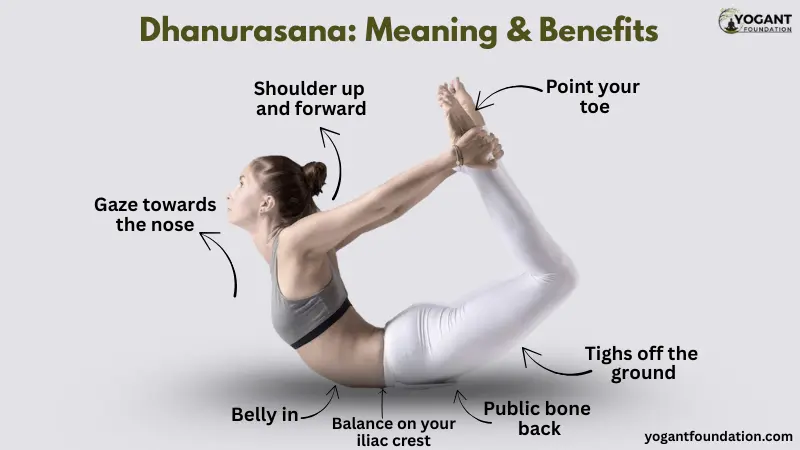
Dhanurasana Step-by-Step Guide
Bow Pose, is a strong backbend. It improves the flexibility of your spine and helps make it stronger.
Start by Getting Cozy:
Lie flat on your stomach on your mat. Turn your head to one side, rest your cheek down, and just breathe for a moment. Let your body settle. This is your starting line.
Bend Your Knees:
Now, as if you’re about to peek at your own back pockets, gently bend your knees and bring your heels toward your butt. Wiggle them a bit closer if you can. No rush.
Reach Back:
This is the tricky bit. Reach your arms back and try to hold the outside of your ankles. If your shoulders are saying “absolutely not,” or your heels are playing hard to get, grab a yoga strap or even a towel. Loop it around your ankles and hold the ends. This is your golden ticket—no shame in it!
The Magical Lift:
Here’s where the magic happens. Take a deep breath in. As you do, press your feet back into your hands (or the strap) like you’re trying to kick your feet to the ceiling. Don’t just yank with your arms—let that kick be what lifts your thighs and, naturally, your chest off the floor. It’s a partnership.
Look Up, Not Back:
Gaze forward, not up at the ceiling. You want a long, graceful curve in your neck, not a crunched one. Feel your shoulder blades hugging toward your spine for support. You’re a bow, not a question mark!
Breathe and Be:
Hold it for a few breaths—maybe 3 to 5 to start. Smile if you can! Feel the incredible stretch across your whole front and the strength firing up in your back. This is the Dhanurasana benefit you can feel in real-time.
The Gentle Release:
On an exhale, gently lower everything down. Let go of your ankles, stretch your legs out long, and turn your head to the opposite side. Notice how your body feels. Different? More alive? That’s the point.
Making Dhanurasana Yoga Your Own: Tips from My Mat to Yours
You don’t have to be a contortionist to reap the rewards. Here’s how to weave this pose into your life with kindness and intelligence.
Warm Up Like You’re Prepping for a Hug
You wouldn’t throw yourself into a sprint cold. Warm up your spine with some gentle Cat-Cows, a few rounds of Cobra Pose (like a mini backbend), and maybe some happy baby pose to open the hips. Your body will thank you.
Listen to the Conversation Your Body is Having
Some days you’ll feel like a graceful archer. Other days, you might feel more like a stiff twig. Both are okay. The practice is in showing up. If your lower back whispers (not shouts) of discomfort, focus on lifting your chest higher to lengthen the spine. If your knees complain, make sure you’re gripping your ankles, not your feet, and don’t pull too hard.
The Beauty of Options: Modifications are Your Friends
- The Strap is a Sage, Not a Crutch: Seriously, using a strap is genius. It allows you to find the shape and work on the back strength without wrestling with tight shoulders.
- Try One Wing at a Time: “Half Bow Pose” is where you just lift one side. Hold your right ankle and lift your right thigh and chest. It’s easier to focus and correct your alignment. It’s also a beautiful way to notice imbalances and gently correct them.
When to Press Pause: Practicing with Wisdom
With great power comes great responsibility. Some days, Bow Pose might not be your friend, and that’s wise to honor. Skip it or practice extreme caution if you have:
- A fresh back or neck injury.
- High or low blood pressure that isn’t well-managed.
- A headache or migraine.
- If you’re pregnant (especially later on).
- Any serious abdominal issues like ulcers or a hernia.
This isn’t a list of limits, but a map for safe exploration. When in doubt, chat with a doctor or a experienced yoga teacher.
Bow pose- Dhanurasana procedure benefits and contraindications
Bow Pose is a powerful backbend exercise as part of yoga. To perform it, sit on your stomach, then bend your knees and then grab your ankles.
Breathe in and raise your legs and chest off the ground, creating the shape of a bow. The posture strengthens the back, enhances posture, improves digestion and also opens your shoulders and chest. The pose also improves flexibility and lowers tension.
But, avoid bow pose when you suffer from an abdominal hernia. Recently had abdominal surgery, elevated blood pressure or back injury.
It is best to practice. It with a guideline and care, particularly if expecting. This is a great option for women who want greater flexibility, strength, as well as better spine health.
The Real Reward: What Happens After You Release the Pose
The final Dhanurasana benefit, in my opinion, isn’t in the hold—it’s in the release. When you gently come down and rest in Child’s Pose afterwards, that’s when the magic integrates. Your body hums with warmth, your breath feels richer, and there’s a quiet sense of accomplishment.
Regularly practicing Dhanurasana Yoga taught me much more than just flexibility in my back. The practice taught me to be resilient. The experience taught me how to be both strong and supple at the same time. The experience reminded me to choose to be open, even when I am tempted to close in.
So, I invite you to try it. Not as a perfect pose, but as an experience. Be the archer and the bow. Draw back against the resistance you feel, and aim for a feeling of openness, of vitality, of your own powerful curve. Your body—and your spirit—might just surprise you.

A lot of thanks for your whole hard work on this web site. Ellie really loves managing investigations and it is easy to see why. Most of us notice all of the compelling method you render practical guidelines via your blog and as well improve participation from people on that subject then my child is learning a lot of things. Have fun with the rest of the year. You are always performing a really good job.