
Introduction: It is My #1 Yoga Pose for Energy and Calm
You know that feeling when you’ve been on your feet all day, your mind is buzzing, and everything just feels a bit… heavy? That’s exactly where I was a few years ago. I’d dabbled in yoga, but it wasn’t until I properly learned Sarvangasana that something clicked. This pose, often called the Queen of Asanas, became my non-negotiable reset button. It’s not just a fancy inversion; it’s a full-system upgrade. Let’s talk about why this pose is so powerful, how to do it safely, and how its cousin, Setu Bandha Sarvangasana, can be a fantastic alternative.
What is Sarvangasana? (Beyond the Instagram Photo)
At first glance, Sarvangasana yoga is the “Shoulder Stand.” You’re balancing on your shoulders with your body pointing straight up. But the Sanskrit name tells the real story: Sarva = all, anga = limb, asana = pose. It’s the “all-limbs pose,” meaning it benefits your entire body.
I remember my teacher saying, “If you only have time for one pose, make it this one.” I was skeptical. But the more I practiced, the more I understood. It’s not about holding a perfect vertical line; it’s about creating a subtle, internal shift. Your thyroid gets a gentle massage, blood flows back to your heart without fighting gravity, and your nervous system gets a chance to quiet down. It’s restorative in a deeply active way.
Why You Might Want to Make This Pose a Habit: Sarvangasana Benefits
The list of Sarvangasana benefits is impressively long. But from my experience, they boil down to a few key areas you’ll actually feel.
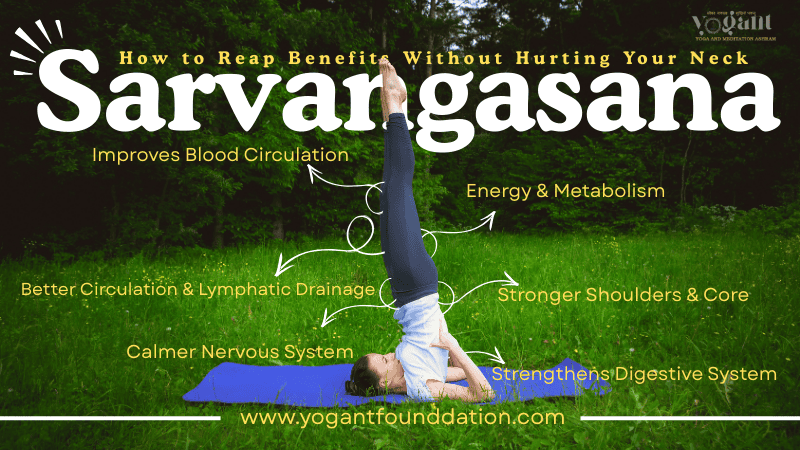
- Your Energy & Metabolism: This is the big one for me. The gentle compression on the thyroid gland (in your neck) is thought to help regulate its function. I’m no doctor, but I can tell you that consistent practice made me feel less sluggish. My digestion improved, and that “afternoon crash” became less dramatic.
- A Calmer Nervous System: In our always-on world, this is gold. The inverted position activates the parasympathetic nervous system—the “rest and digest” mode. After a long hold, I feel a sense of quiet clarity that’s hard to find. It’s better than scrolling through my phone for a dopamine hit, that’s for sure.
- Stronger Shoulders & Core: Beware of the illusion created by stillness. Holding Sarvangasana requires serious engagement. As you lift your legs and core up, your glutes are also working. Your shoulders, arms, and back provide the base. The supporting muscles in my back improved as they became stronger.
- Better Circulation & Lymphatic Drainage: Gravity helps drain fluid from your legs and abdomen. If you spend hours sitting or standing, you know the feeling of heavy legs. This pose reverses that flow. My legs always feel lighter and less puffy afterwards.
The core concepts are the same for my Indian readers who want to know Benefits of Sarvangasana in Hindi: थायरॉइड ग्रंथि को उत्तेजित करता है, रक्त संचार बेहतर करता है, तनाव कम करता है, और पाचन तंत्र को मजबूत बनाता है। (It stimulates the thyroid gland, improves blood circulation, reduces stress, and strengthens the digestive system.)
Getting into Sarvangasana Yoga: A Step-by-Step Guide
This is where experience matters. Doing this pose wrong can hurt your neck. Please, if you have neck issues, high blood pressure, or are menstruating, skip it or consult a teacher. Setu Bandha Sarvangasana (Bridge Pose) is a wonderful substitute we’ll talk about next.
- Start Right: Lie flat on your back on a folded blanket or yoga mat. The blanket should support your shoulders and upper arms, but let your head rest on the floor. This protects your cervical spine.
- Engage and Lift: Bend your knees, feet flat on the floor. Press your arms down, engage your core, and swing your hips up toward the ceiling.
- Support Your Back: Immediately bring your hands to your lower back, thumbs near your spine. Your elbows should be about shoulder-width apart. This is your foundation.
- Walk It Up: Continue to walk slowly your hands along your spine and towards your shoulder blades. Straighten your legs up towards the ceiling.
- Find the Balance: Weight should be on upper arms and shoulders and NOT the neck or head. You should slightly tuck your chin to create space at the back of neck. Breathe deeply.
- Coming Down: Slowly bend your knees, place your hands on the floor and then roll vertebra by vergebra. Savasan (Corpse pose), is an excellent way to relax for at least thirty seconds.
My personal tip: Starting by holding your breath for 30 secs. In weeks and even months, you can gradually increase the duration to 3-5 minute. Consistency beats duration every time.
Benefits of Sarvangasana in Hindi: मेरे रोज़ के 5 मुख्य अनुभव
पहली बार जब मैंने सर्वांगासन किया, तो लगा जैसे पूरे दिन की थकान और भारीपन पल भर में पैरों से सिर की तरफ़ बह गया। यह आसन सिर्फ़ एक योग मुद्रा नहीं, बल्कि पूरे शरीर के लिए एक ताज़गी का झोंका है। कई सालों के अभ्यास के बाद, यहाँ मेरे अनुभव से जुड़े पाँच मुख्य सर्वांगासन के लाभ हैं:
1. एनर्जी का स्विच ऑन होना: इस आसन में गर्दन के पास थायरॉइड ग्लैंड पर हल्का दबाव पड़ता है। मेरे लिए, इसका सीधा असर मेरे एनर्जी लेवल पर दिखा। रोज़मर्रा की सुस्ती कम हुई और शरीर की प्राकृतिक ऊर्जा बहने लगी।
2. तनाव से तुरंत राहत: जब दिमाग़ बहुत भरा हुआ हो, तो सर्वांगासन एक रीसेट बटन की तरह काम करता है। उल्टा होने से नसों को आराम मिलता है, दिमाग़ शांत होता है और चिंता अपने आप कम होने लगती है।
3. पाचन की समस्या में सुधार: गुरुत्वाकर्षण के उल्टे असर से पेट के अंगों को फ़ायदा मिलता है। मेरे लिए, यह आसन कब्ज़ और एसिडिटी जैसी समस्याओं को कम करने में बहुत कारगर रहा है।
4. पैरों की हल्कापन और अच्छी नींद: पूरे दिन खड़े रहने या बैठने से पैरों में जमा द्रव (लिम्फ) यहाँ बहने लगता है। पैर हल्के लगते हैं, और रात को सोने से पहले करने पर नींद गहरी और अच्छी आती है।
5. चेहरे की रौनक और बालों के लिए फ़ायदा: सिर की तरफ़ रक्त संचार बढ़ने का असर साफ़ दिखता है। चेहरे पर नैचुरल ग्लो आता है और बालों की जड़ों को पोषण मिलता है, जिससे झड़ना कम हो सकता है।
ज़रूरी सलाह: गर्दन या कमर में दर्द, हाई बीपी, या ग्लूकोमा हो तो बिना विशेषज्ञ की देखरेख के न करें। हमेशा कंबल या मोटे मैट पर ही अभ्यास करें ताकि गर्दन सुरक्षित रहे। शुरुआत में सिर्फ़ ३० सेकंड से शुरू करें।
Not Ready for the Full Pose? Meet Setu Bandha Sarvangasana.
Setu Bandha Sarvangasana, or Bridge Pose, is often called the “gateway” to the full Shoulder Stand. It offers many similar benefits but is far more accessible. Think of it as Sarvangasana’s kinder, gentler sibling.
- Why I Love It: It’s a fantastic chest and hip opener, it strengthens the back and glutes, and it still gives you that mild inversion benefit. If I’m tired or my neck feels sensitive, this is my go-to.
- How to Do It: Lie on your back, knees bent, feet hip-width apart. Press firmly through your feet and lift your hips toward the ceiling. Clasp your hands under your back and roll your shoulders under. Hold for 5-8 breaths. It’s a powerful pose in its own right and a perfect prep for the full inversion.
Weaving into Your Life
You don’t need a 90-minute practice. I often do just 5 minutes: a quick warm-up, 2-3 minutes in Sarvangasana, and a nice forward fold to counterbalance. Doing it in the morning sets a calm, energized tone for the day. Doing it in the evening helps shed the day’s stress. Listen to your body—some days it wants the full pose, other days Bridge Pose is just right.
FAQs About Sarvangasana
Q: I have neck pain. Can I do Sarvangasana?
A: It’s not a good idea to do it yourself without the direct supervision of a yoga specialist. Keep to Setu Bandha Sarvangasana, and concentrate on neck strengthening and mobility poses.
Q: How long should I hold Sarvangasana?
A: Quality over quantity. A well-aligned 1-minute hold is infinitely better than a shaky 5-minute one. Start with 30 seconds and build up gradually as your strength and comfort increase.
Q: What’s the best time to practice?
A: Traditionally, morning is ideal on an empty stomach. But I’ve found early evening works well too, as long as I haven’t eaten a heavy meal recently. Avoid it right before bed, as the energizing effect might keep some people awake.
Q: Can Sarvangasana help with weight loss?
A: The truth is, it’s not magic. This product promotes thyroid health by promoting metabolism. Additionally, it reduces anxiety that has been linked to increased weight.
Q: What’s the difference between Sarvangasana and Halasana (Plow Pose)?
A: Sarvangasana is the vertical pose. Halasana is often a next step, where you lower your toes to the floor behind your head. Halasana is a deeper stretch for the back and shoulders. Always master Sarvangasana first.
Conclusion: Why it’s Called the Queen of Asanas?
So, there you have it. Sarvangasana isn’t a pose that you can check off. This is a life-changing experience. Sometimes it is effortless and inspiring; on other days, it can be a difficult study of patience and alignment. And that’s okay. The real benefit isn’t in achieving a picture-perfect pose, but in showing up on your mat, tuning into your body, and giving it this unique form of care. Roll out that blanket, start gently, and see how you feel. Your whole system might just thank you for it.