

Green Tea: Your Brain on L-Theanine
You’ve seen the Instagram ads. Your coworker won’t stop talking about her “matcha ritual.” But every time you stare at a box of green tea bags in the grocery aisle, a little voice whispers: Does this actually do anything, or am I just buying expensive flavored water?
I get it. The wellness industry loves to take something simple and drown it in pseudoscience and fancy packaging. It’s exhausting to sift through.
Here’s the truth: Green tea isn’t magic. But it is one of the most extensively researched natural substances on the planet. The real, documented green tea benefits are actually more impressive than the overblown marketing claims.
In this guide, we’re skipping the fluff. We’re going to look at exactly what the science says about the benefits of green tea for your brain, heart, body, and lifespan—and exactly how you (as a complete beginner) can use it without making the embarrassing mistakes that turn this health elixir into a bitter, stomach-churning mess.
Let’s settle this once and for all.
What Exactly Is Green Tea?
All true tea—whether green and tea leaves destined for black tea or white tea—comes from the same plant: Camellia sinensis .
The difference lies entirely in how the leaves are processed after harvesting.
Black tea leaves are fully oxidized. Think of cutting an apple slice and watching it turn brown—that’s oxidation. This process darkens the leaves and creates the robust, malty flavors of black tea, but it also significantly alters the natural chemical compounds within the leaf .
Green tea leaves are heated shortly after picking—either by steaming (the Japanese method) or pan-firing (the Chinese method)—to deliberately stop that oxidation process immediately . By halting oxidation, the leaf is essentially “locked in” to a state that retains its vibrant green color and, more importantly, preserves a remarkably high concentration of natural plant compounds called catechins .
When you drink green and tea beverages from different processing methods, you’re consuming fundamentally different chemical profiles. The minimal processing is why green tea delivers such a unique and potent health punch.
The Science-Backed Green Tea Benefits: What Actually Happens Inside Your Body
The benefits of green tea aren’t a mystery. Scientists have identified exactly what’s going on at the molecular level. Let’s walk through the most meaningful, evidence-backed effects.
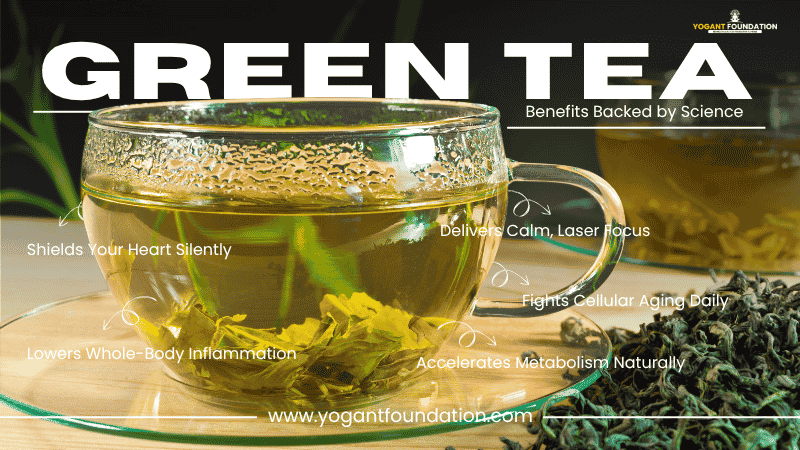
1. It Turns Your Body into a Better Fat-Burner
This is the benefit that gets all the attention, and for good reason—it’s actually supported by clinical research.
Green tea contains a unique combination of caffeine (a stimulant) and catechins (antioxidants). Neither is particularly special on its own for weight loss. But together, they create a synergistic effect that has been shown to measurably increase your metabolic rate.
Clinical trials have studied the use of green tea extract containing roughly 400-625 mg of catechins, often finding a modest but real increase in energy expenditure and fat oxidation in overweight adults . One study protocol used EGCG 400 mg twice daily for 8 weeks to study this very effect .
This doesn’t mean green tea is a magic Weight-loss pill that lets you eat pizza with abandon. What it means is that when combined with a reasonable diet and some movement, those 3-4 daily cups can create a small but cumulative metabolic advantage that adds up over weeks and months.
What this feels like in real life: You don’t suddenly drop 10 pounds. Instead, you may find the normal effort you put in the gym and kitchen will start to pay slightly better dividends than it did before.
2. It Protects Your Cells from Premature Aging (The Antioxidant Effect)
Your body is constantly under attack from something called oxidative stress—essentially an imbalance between unstable molecules (free radicals or reactive oxygen species) and your body’s ability to neutralize them. This cellular damage accumulates over time, contributing to aging, heart disease, and many types of cancer .
This is where green tea truly shines.
The catechins in green tea, especially the superstar compound called epigallocatechin-3-gallate (EGCG) , are potent direct scavengers of these free radicals . In simple language: they act as a cellular shield, smothering these harmful molecules before they can damage your DNA and tissue.
Research shows EGCG not only directly neutralizes free radicals, but also activates your body’s own defence systems. It stimulates the Nrf2 pathway, which turns on your body’s natural production of protective antioxidant enzymes . This means green tea provides a double layer of protection.
Here’s the key takeaway: the green tea leaf retains far more of these protective catechins than black tea because it isn’t oxidized. EGCG can represent up to 50% of all the catechins in a cup of green tea .
3. It Sharply Reduces Inflammation (The Silent Killer)
You can’t feel chronic inflammation, but it’s quietly at the root of most modern diseases—from arthritis to depression to heart attacks.
EGCG is a powerful anti-inflammatory agent. It works by suppressing a master switch in your cells called NF-κB (nuclear factor kappa-B), a protein complex that orchestrates your body’s inflammatory response . When NF-κB is chronically over-activated, inflammation runs rampant throughout your body.
EGCG puts the brakes on this process.
Here’s what matters for you: This isn’t a subtle effect. In research, the anti-inflammatory action of green tea catechins is considered one of the primary reasons tea drinkers show lower rates of heart disease and other inflammatory conditions .
4. Your Brain Works Better (Calmer, Sharper, Longer)
Green tea delivers a mental state that coffee simply can’t replicate.
Coffee gives you a sharp, jittery spike of alertness that often comes with a crash. Green tea gives you something different: calm, sustained focus.
This is because of a rare and beautiful partnership between two compounds. Caffeine provides the stimulation (about 28-50 mg per cup, much less than coffee’s 95 mg) . But then there’s L-theanine, a unique amino acid almost exclusively found in tea plants.
L-theanine increases alpha brain wave activity—the same brain waves associated with a state of wakeful relaxation, similar to meditation . It takes the edge off the caffeine, smoothing out the energy curve. You’re alert but not anxious. Focused but not wired.
In a clinical setting, a combination of green tea extract (1,440 mg daily containing L-theanine) has been studied for its effects on cognitive impairment, with participants taking the supplement twice daily for 16 weeks . The goal isn’t just feeling less brain fog today—it’s protecting your cognitive function for decades to come.
5. It’s One of the Best Things You Can Do for Your Heart
Heart disease is still the number one killer globally. And here, the evidence for green tea is both deep and consistent.
Large-scale population studies repeatedly show that regular green tea consumption is associated with a lower risk of cardiovascular disease and even reduced cardiovascular mortality .
The Dutch dietary guidelines specifically recommend consuming three cups of green or black tea daily to reduce cardiovascular disease risk .
Green tea helps your heart in multiple ways. It improves cholesterol profiles, gently lowers blood pressure, reduces inflammation in blood vessels, and improves the function of the endothelial lining of your arteries .
This isn’t a pharmaceutical-level intervention. It’s a gentle, daily, cumulative protection that compounds over years of consistent consumption.
A Day in Your Life with Green Tea: When and How Much
Consistency beats intensity.
You don’t need to chug a gallon of green tea tomorrow morning and consider yourself healthy. That will just give you a stomach ache and make you hate the taste. The goal is a sustainable, pleasant daily rhythm.
Here’s the sweet spot based on the data: 3 to 5 cups per day, which provides roughly 720 to 1,200 mL of green tea and delivers at least 180 mg of catechins and 60 mg of theanine .
| Time of Day | Why This Time Works |
|---|---|
| 9:30 AM | A gentle, clear-headed start—caffeine without the adrenaline spike of coffee. Replace your second cup of coffee with this. |
| 2:30 PM | The classic afternoon slump. L-theanine keeps you focused without ruining your sleep later. |
| 7:00 PM | Yes, evening green tea! Opt for a low-caffeine variety (like Bancha or Hojicha) if caffeine affects your sleep. The ritual is part of the benefit. |
Hot or iced? It literally doesn’t matter for the health benefits. The catechins are heat-stable during normal brewing. Choose whatever you’ll actually enjoy drinking consistently.
The bottom line: Drinking 2–4 cups daily has been shown in studies to lower the prevalence of depressive symptoms . There’s something to this ancient daily ritual that goes beyond chemistry.
The Perfect Cup: A Step-by-Step Method for Beginners
Most people who “hate green tea” have only ever tasted a bitter, over-brewed, burnt mess. You didn’t taste green tea—you tasted user error. Here’s how to unlock the smooth, slightly sweet, umami flavor that green tea enthusiasts are obsessed with.
Start with Cold, Fresh, Filtered Water
Oxygen in fresh water brings out flavor. Stale, re-boiled water makes flat tea. If your tap water doesn’t taste good on its own, your tea won’t either. Always start cold .
Heat the Water to 80°C (176°F)—Not Boiling
Boiling water (100°C) is the number one reason people make bitter green tea. It scalds the delicate leaves, destroying the sweet catechins and releasing excessive bitter tannins . If you don’t have a temperature-controlled kettle, bring water to a full boil, then open the lid and let it cool for exactly 2 minutes. This should drop the temperature to roughly the right range.
Use the Right Amount of Tea
For tea bags: Use 1 tea bag per 8 oz (240 mL) cup.
For loose leaf: Use approximately 1 level teaspoon (about 2 grams) per 8 oz cup . A digital kitchen scale is even better if you want perfect consistency.
Steep for 1–2 Minutes—Set a Timer
This is the second most critical variable. Steeping longer doesn’t make the tea “stronger” or healthier—it just makes it more bitter . Start with 1 minute for a light, sweet cup. Try 2 minutes next time. Find your preference in that narrow window.
Remove the Leaves Immediately
If using a tea bag, lift it out. If using an infuser basket, pull the whole basket out. Don’t let the leaves sit in your cup after the steeping time is up. Every extra second of contact adds bitterness.
Sip It Plain (At Least at First)
To truly understand what green tea tastes like and to enjoy the full health benefits without added calories, try at least a few sips without honey, sugar, or lemon . You’re training your palate to appreciate subtlety.
Common Beginner Mistakes &How to Fix Them
These errors are the difference between someone who drinks green tea for life and someone who dumps the box in the back of the pantry after three days.
Mistake #1: Using Boiling Water
The catechins that make green tea healthy also make it bitter when scorched. Boiling water denatures them. The fix: Invest in a kettle with a temperature setting, or set a 2-minute cooling timer after boiling.
Mistake #2: Over-Steeping
Leaving the tea bag in the cup while you drink it is a guaranteed way to get a mouthful of bitter tannins. The fix: Remove the leaves after 2 minutes maximum .
Mistake #3: Drinking It on a Completely Empty Stomach
Green tea can be slightly astringent and can cause nausea or stomach discomfort in some people when there’s absolutely no food in their stomach. The fix: Have your first cup after or alongside breakfast, not before.
Mistake #4: Expecting a Coffee-Like Kick
If you’re looking for the electric jolt of a double espresso, you’ll be disappointed. Green tea provides a smoother, more sustained focus. The fix: Appreciate it for what it is—gentle clarity, not a jackhammer.
Mistake #5: Thinking “More Is Always Better” (Green Tea Extracts)
This is critically important. While drinking brewed green tea is universally considered safe, taking high-dose green tea extract pills on an empty stomach has been linked to rare but serious cases of liver toxicity . High levels of EGCG metabolites in the blood are the suspected culprit.
Never take green tea extract supplements on an empty stomach. The recommended upper limit from the European Food Safety Authority for EGCG from supplements is around 800 mg/day, but safe levels for brewed tea are far higher because the body metabolizes them differently. Stick to brewed leaves and you’ll never have to worry about this .
Green Tea vs. Matcha vs. Black Tea: Which One Is for You?
Pro Tips for Making Green Tea a Lifelong Habit
After years of drinking and writing about tea, here are the non-obvious strategies that make the difference between a two-week phase and a lifelong ritual.
1. Upgrade Your Tools Just Once
You don’t need a full Japanese tea ceremony setup. Get a simple basket-style infuser that lets the leaves fully expand and circulate (those tiny ball infusers are garbage). Alternatively, a 20-ounce mug with a built-in infuser basket is a game-changer for loose leaf beginners.
2. Find Your “Gateway” Green Tea
Not all green tea tastes the same. If you’ve only tried cheap, dusty tea bags, you’ve never actually tasted good green tea.
- Genmaicha: Green tea mixed with toasted brown rice. Nutty, warm, and incredibly comforting. This is the best beginner green tea on earth.
- Jasmine Green Tea: Green tea leaves scented with jasmine blossoms. Floral, familiar, and smooth .
- Sencha: The classic Japanese everyday green tea. Grassy and fresh. A great second step after the gateway teas.
3. The “Better Than Nothing” Rule
On days when you can’t be bothered to heat water and wait, a high-quality cold-brew tea bag dropped into a water bottle overnight in the fridge is still giving you catechins. It’s smooth, sweet, and impossible to mess up.
4. Pair It with Vitamin C
A squeeze of lemon, or drinking green tea with a meal that contains citrus or bell peppers, can actually increase the absorption of catechins in your digestive system.
Frequently Asked Questions About Green Tea Benefits
Q: How much green tea should I drink a day to see results?
A: For measurable health impacts on heart health, metabolism, and cognition, research consistently points to 3 to 5 cups per day (720 to 1,200 mL total). This amount provides at least 180 mg of catechins daily. Benefits are cumulative, so consistency over months and years matters more than a single high dose .
Q: Can I drink green tea on an empty stomach?
A: It depends on your individual sensitivity. Green tea contains tannins that can increase stomach acid and cause nausea or irritation in some people when there’s no food to buffer it. Green tea is best drunk with, or soon after, a meal, rather than first thing in the morning on an empty stomach.
Q: Which has more caffeine: green tea or coffee?
A: Coffee has significantly more. An 8 oz cup of brewed coffee typically contains about 96 mg of caffeine, while the same amount of green tea contains a much milder 25–50 mg . Matcha, a powdered green tea, sits in the middle at around 70 mg per serving because you’re consuming the entire ground leaf .
Q: Does adding milk to green tea destroy its benefits?
A: The evidence is mixed, but some studies suggest that the casein protein in milk can bind to tea catechins and reduce their absorption. Traditional preparation rarely adds milk to green tea anyway, as it overpowers the delicate flavor profile . If you want to maximize benefits, drink it plain. If adding milk means you’ll actually drink it when you otherwise wouldn’t, then add the milk—it’s better than not drinking it at all.
Q: Are green tea extract pills safe and effective?
A: Green tea extract delivers a concentrated dose of EGCG, and clinical trials have used them at doses ranging from 160 mg to 2,488 mg daily for conditions like obesity and cardiovascular risk . However, extracts carry a known risk of hepatotoxicity (liver damage) , especially when taken in high doses on an empty stomach . The safe, proven, and side-effect-free approach for beginners is to simply drink the brewed beverage.
The Bottom Line: Just Start
You’ve just read 3,000 words about a leaf.
At this point, you know more about the science of green tea benefits than 99% of the people who drink it casually. You know it’s not about magical detoxes or instant weight loss.
It’s about consistently giving your body a gentle, potent tool to fight inflammation, protect your brain, and support your heart. The benefits of green tea are a slow, beautiful, and deeply researched accumulation of small daily acts.
Don’t overcomplicate this. Your next step isn’t buying $30 ceremonial-grade matcha or signing up for a tea subscription.
Your next step is much simpler than that.
Tonight, put a mug and a simple tea bag on your kitchen counter. Tomorrow morning, boil some water, let it sit for two minutes, pour it in, and brew it for one minute. Just do that.
One cup. That’s how the habit that changes your health begins.



I appreciate how this post cuts through the marketing hype and focuses on science-backed benefits. The point about L-Theanine is spot on—I’ve noticed it helps with focus and calmness during hectic days. Posts like this make it easier to separate real wellness benefits from the hype.