
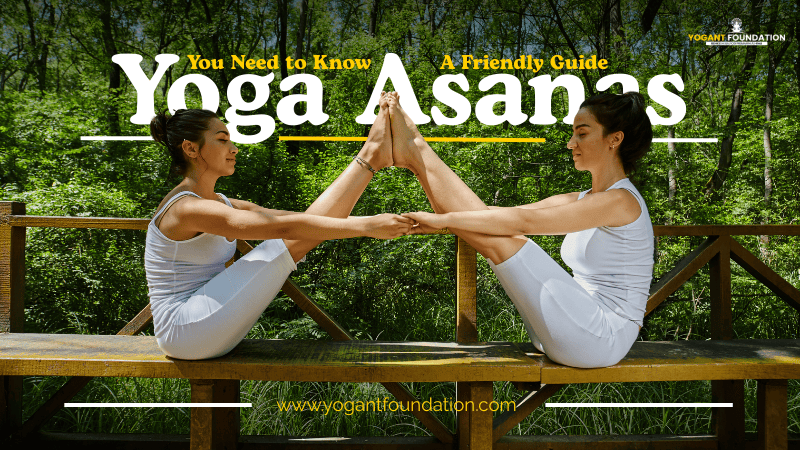

Introduction: More Than Just Poses – The World of Yoga Asanas Awaits
Yoga Asanas – Let’s be honest. My first yoga class was a confusing chorus of strange-sounding words. The teacher gracefully moved, saying things like, “Now, flow into Utthita Hasta Padangusthasana,” while I wobbled, trying to figure out which limb was supposed to go where. I left feeling both intrigued and utterly lost. If you’ve ever felt that way, you’re in the right place.
This isn’t a sterile encyclopedia of poses.This is a coffee talk about yoga asanas, those beautiful and sometimes challenging shapes that our bodies create. You’ll learn the mysterious yoga asanas names and the power behind yoga standing asanas. We will also discover the magic in sitting asanas. By the end of this article, I guarantee that you will not only understand what these asanas are called, but you will also be excited to discover what they can offer and. Grab your mug or mat and let’s start.
What Are Yoga Asanas? The Foundation of Your Practice
Okay, let’s strip it right back. The word “asana” (pronounced aa-suh-nuh, relax your jaw when you say it) literally means “seat.” Centuries ago, it was pretty literal—finding a steady, comfortable seat for meditation. Today, yoga asanas encompass all the physical postures, from a fierce Warrior to a tranquil Lotus.
But here’s the real secret I wish I’d known earlier: an asana is not a performance. It’s an experience.
Think of it this way: When you’re stuck in traffic and you consciously relax your death-grip on the steering wheel, that’s a moment of awareness. An asana is a dedicated container for that same awareness. You’re not just doing a pose; you’re inhabiting it. Feeling the floor under your feet in a standing yoga asana, noticing the rhythm of your breath in a sitting asana, and observing the quiet chatter of your mind throughout. They are tools to tune in, not just to stretch out.
Decoding the Language: A Look at Common Yoga Asanas Names
The Sanskrit names can be intimidating. I used to think teachers were showing off! Then I learned the beauty behind them. Most yoga asanas names are wonderfully descriptive, often poetry for the body.
- Balasana (Child’s Pose): Bala = child. It’s a return to simplicity, a resting shape that feels like a sigh.
- Bhujangasana (Cobra Pose): Bhujanga = serpent. It’s that graceful, uplifting curve of a cobra’s hood.
- Savasana (Corpse Pose): Shava = corpse. Not morbid, but profoundly about letting go of everything and just… being.
You don’t need to memorize a dictionary. Start by connecting with a few. When you hear “Adho Mukha Svanasana,” and you know it means “Downward-Facing Dog,” you can picture the stretch, the inverted V, the feeling of energy it brings. It stops being a foreign word and becomes an invitation. And it’s perfectly okay to think, “Oh, that’s Dog Pose!” That’s your gateway in.
Grounded and Powerful: The Benefits of Standing Yoga Asana
If standing yoga asanas had a motto, it would be: “Find your footing, in here and out there.”

I have a personal love-hate relationship with them. On a tired Tuesday morning, holding Warrior II (Virabhadrasana II) for five more breaths feels like an eternity. But that’s exactly why they’re so transformative. They build more than muscle; they build character.
Why You Should Practice Standing Poses:
- They Teach You to Stand Your Ground: Literally, Poses like Tadasana will help you root your feet down and feel present in a constantly-rushing environment. In a world that is constantly rushing, poses like Tadasana (Mountain Pose) train you to root down through your feet and feel solid and present.
- They Reveal Your Imbalances: We all have a “good side.” Standing yoga asanas gently highlight that, not to criticize, but to show you where you can create more balance and symmetry.
- Generate Inner Heat: Not just sweat (though that happens!). They stoke your inner fire (agni), boosting circulation and energy in a way that a cup of coffee can’t match.
- They Build Humble Confidence: There’s nothing quite like the moment you find stillness in Vrksasana (Tree Pose) on a wobbly day. It’s a quiet, personal victory.
Key Standing Yoga Asanas to Know:
- Tadasana (Mountain Pose): The neutral starting position is here. It helps you to learn proper alignment. Feet firmly planted, spine straight, shoulders relaxed. All other standing yoga asanas arise from this pose.
- Virabhadrasana I & II (Warrior I & II): These classic poses open hips and shoulders and strengthen the legs. Warrior I is a concentrated upward reach. Warrior II has the arms open to the side. Both pose build strength and improve concentration.
- Trikonasana (Triangle Pose): A wonderful side stretch that opens the hips, hamstrings, and spine while stimulating the abdominal organs.
- Vrksasana (Tree Pose): The classic balance pose. It teaches poise, focus, and the delicate act of rooting down while reaching up—a beautiful metaphor for life.
- Utkatasana (Chair Pose): Often called “fierce pose,” this is a powerful strengthener for the thighs and core. It ignites internal heat and builds endurance.
Cultivating Calm: The Deep Value of Sitting Asanas
After the fiery work of standing poses, sitting asanas feel like coming home. They are where the practice often turns inward, from “doing” to “feeling.”
For years, I avoided them. My hips were tight, my mind was restless, and sitting still felt harder than any plank. I’d fidget, my thoughts would race, and I’d feel defeated. Sound familiar?
Here’s what changed: I got a cushion. And then a blanket. And I stopped trying to look like a textbook statue.
The Unique Gifts of Seated Poses:
- They Are Masters of Release: While standing poses build you up, sitting asanas like Paschimottanasana (Seated Forward Bend) teach you how to soften, how to let your spine lengthen rather than force your head to your knees.
- Prepare You for You: Their ultimate goal is to make sitting comfortable for meditation or just breathing. They aren’t about extreme flexibility; they’re about finding a seat where you can be both alert and at ease.
- They Offer a Container for Your Thoughts: In the stillness of Sukhasana (Easy Pose), you notice your mind. Instead of fighting it, you learn to watch the thoughts drift by like clouds. It’s practice for life off the mat.
- They Care for Your Hips & Spine: We sit all day in chairs, which tightens our hips and weakens our backs. These poses offer the antidote—gentle, intelligent counter-movements.
Foundational Sitting Asanas for Your Practice:
- Supported Sukhasana: My daily anchor. I sit on the front edge of a firm cushion, a blanket under my knees if needed. It’s not fancy, but it’s my sacred space for three minutes of breath before my day begins.
- Baddha Konasana (Bound Angle Pose) with Props: I place a block under each knee. Instant relief! No straining, just a gentle opening that says “hello” to my inner thighs.
- A Gentle Twist (like Bharadvajasana): Sitting sideways on a chair, twisting to look behind me. This is my 3 p.m. desk detox. It wrings out the mental and physical stiffness of the day.
Crafting a Balanced Practice: Integrating Standing and Sitting Asanas
Here’s how I like to think of it: Standing yoga asanas are like brewing a strong, invigorating cup of tea. Sitting asanas are the time you take to sit by the window and sip it, feeling its warmth.
A balanced practice honors both energies. You wouldn’t just boil water and stare at it (all standing, no rest). And you wouldn’t just drink cold water (all sitting, no engagement). You need both.
Try This Simple, Feel-Good Sequence:
- Arrive: Sit in Sukhasana. Close your eyes. Ask yourself: “How do I feel today?” Just notice. No judgment.
- Wake Up: Come to hands and knees. Cat-Cow for a few breaths—let your spine move freely.
- Build Energy: Step back to Downward Dog. Peddle your feet. Sigh it out.
- Stand Strong: Walk to the top of your mat. Tadasana. Feel your feet.
- Inhale, sweep arms up. Exhale, fold forward (Uttanasana).
- Inhale, half-lift. Exhale, step back into a lunge.
- Settle into Warrior II on your right side. Hold for 3 breaths. Feel powerful.
- Straighten your front leg, flow into Triangle Pose. Hold for 3 breaths. Feel spacious.
- Gently wind down that side and repeat on the left.
- Come Down: As you sit down, lower your body slowly.
- Soften & Integrate: Paschimottanasana—fold forward with a long spine, maybe over a bolster. Stay for 8 slow breaths. Then, gently come into a supine twist, hugging your knees.
- Rest: Savasana. For at least 5 minutes. Let the work integrate. This is the most important part.
Beyond the Physical: The Mind-Body Connection in Every Asana
This is the heart of it all. The yoga asanas, the names, the standing and sitting—they are all gateways.
The true magic happens in the spaces in between. It’s the moment in Warrior II when you remember to breathe into your tight shoulder. The kindness you offer yourself in a seated forward bend when you use a strap instead of forcing it. It’s the laugh that escapes when you fall out of Tree Pose.
Your mat becomes a microcosm of your life. How do you respond to challenge? To stillness? To discomfort? You will find that the patience you learn here is reflected in your personal relationships. Strength you discover here can help you to carry heavier loads in life. This place is a haven of calmness that you can reach at any time.
Conclusion: Your Journey with Yoga Asanas Begins Now
So, here we are. The world of yoga asanas isn’t a closed club with a secret handshake. It’s an open field, and you’re invited to explore. You don’t need to conquer all the yoga asanas names or achieve picture-perfect standing yoga asanas.
You just need to start. Start with Mountain Pose while brushing your teeth & with a one-minute Child’s Pose before bed. Start by learning one name—maybe the one for the pose you like the least, or the one you love the most.
This practice is a conversation, a lifelong one, between your body, your breath, and your spirit. Some days the conversation is easy and flowing. Other days it’s just a grunt. Both are perfectly okay.
Your unique journey through the beautiful landscape of yoga asanas—from the powerful peaks of the standing poses to the quiet valleys of the sitting asanas—starts with a single, conscious breath. Take it now. You’ve got this.


