
Introduction: More Than Just a Yoga Pose
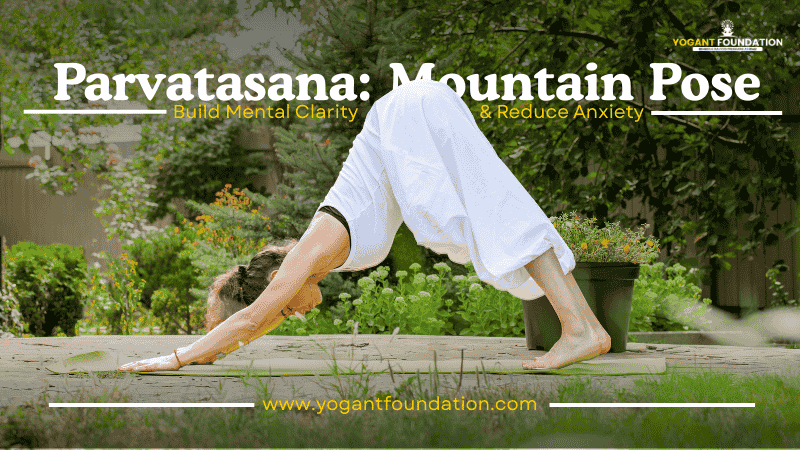
Have you ever stood at the foot of a real mountain, looking up? That mix of awe at its size and the quiet, solid strength it seems to breathe into the air around it? That’s the feeling—the essence—we try to capture on our yoga mats with Parvatasana.
Now, I’ll be honest. For the longest time, I blew right past this pose. In the middle of a fast Sun Salutation, it felt like just a quick stop to grab a breath before jumping into something more “impressive.” I was missing the point entirely.
Parvatasana, which translates simply to Mountain Pose (Parvata = mountain, Asana = pose), isn’t a flashy destination. It’s the foundation. It’s the steady, calm, powerful base camp from which every other climb becomes possible. In this guide, I want to walk with you through not just the “how-to,” but the “why bother.” We’ll explore the profound, yet deeply practical Parvatasana benefits that convinced me to slow down and appreciate this pose. Whether you’re looking to fix that nagging desk hunch or find a moment of calm in a chaotic day, this mountain has something to offer you.
What is Parvatasana? Unpacking the Pose
Let’s clear up a little confusion first. If you’ve heard of Tadasana (the standing Mountain Pose), you might wonder how Parvatasana is different. Think of it this way: Tadasana is about being the mountain—finding grounded, majestic stillness while standing. Parvatasana is about building the mountain—creating that powerful, upward surge of energy from a seated base.
You’ll typically meet this pose in two ways:
- The Seated Mountain: This is the classic. You’re cross-legged on the floor, you interlace your fingers, turn your palms out, and reach for the sky. It’s a staple in meditation sequences and a gorgeous stretch all on its own.
- The Mountain in Motion: You see this in vinyasa flows. From Downward-Facing Dog, you step a foot forward, root down, and sweep your arms up high. It’s a dynamic, powerful expression of the same intention.
Today, let’s focus on the seated version. It’s where the magic of alignment and internal focus really begins, and it’s accessible to almost everyone. This is where we learn the rules of the mountain, so we can play with them later.
Step-by-Step Guide: How to Practice Parvatasana Correctly
Forget rigid instructions for a second. Let’s build this pose with feeling. Grab your mat, and maybe a cushion.
1. Find Your Foundation:
Sit down in a simple cross-legged position (Sukhasana). If your knees are popping up toward the ceiling or your back is rounding, please sit on the edge of a firm cushion or folded blanket. This isn’t cheating—it’s smart yoga. It tilts your pelvis forward and lets your spine be long. Feel your sit bones heavy, like roots digging into the earth.
2. Grow Tall:
Before you move your arms, find length. Imagine a warm, gentle hand on the crown of your head, lifting you up. Let your shoulders melt down your back, as if you’re putting on a heavy backpack. Take a deep breath here. This is the soil you’re planting in.
3. Interlace and Press:
Interlace your fingers. Now, extend your arms straight out in front of you at shoulder height. See your knuckles? Turn them away from you, pushing your palms out. Feel that interesting stretch in your wrists and forearms? That’s opening energy channels you didn’t know were sleepy.
4. Reach for the Sky:
Here’s the big move. Inhale deeply, and as you exhale, sweep your arms up alongside your ears. Keep those palms pressing hard toward the ceiling. Now, check in:
- Shoulders: Are they inching up to your ears? Gently draw them back down. Create space.
- Ribs: Don’t let them jut forward. Hug your lower ribs in slightly. The lift comes from your core and your side body, not from arching your back.
- Gaze: Look straight ahead with a soft focus. You can look up to your thumbs if it feels right on your neck. There is no need to strain.
- Breath: This is the most important part. Breathe into the space you’ve just created. Feel your sides expand.
You’re a mountain. Stable at the base, reaching magnificently toward the peak. Hold for 5-10 deep, easy breaths.
5. Coming Down:
Exhale, slowly lower your arms, release your fingers, and rest your hands on your knees. Close your eyes for a moment. Feel the buzz in your arms, the new space in your torso, the quiet in your mind. That’s the afterglow.
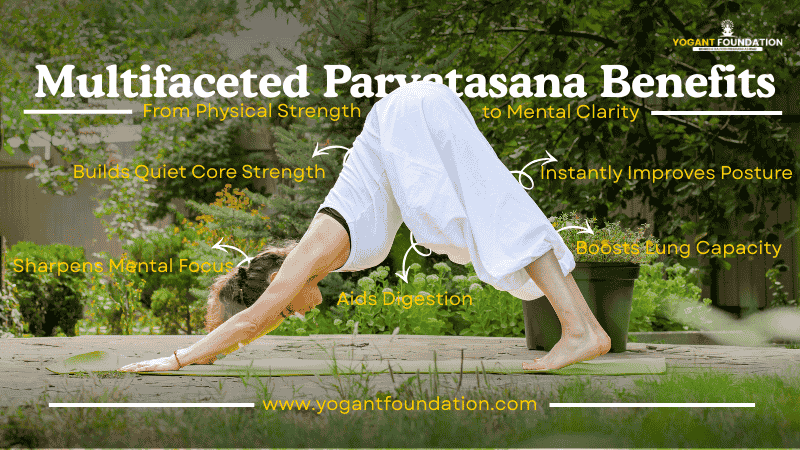
The Multifaceted Parvatasana Benefits: From Physical Strength to Mental Clarity
This isn’t just theory. The Parvatasana benefits are tangible things you can feel in your body and your day. Let’s break them down into real-world wins.
Physical Parvatasana Benefits
It Fixes Your “Tech Neck” Posture: Let’s face it, we’re all hunched over. This pose is the antidote. By actively drawing the shoulders down while reaching up, it strengthens the muscles between your shoulder blades and stretches the front of your chest. Do this regularly, and you’ll naturally start sitting and standing taller.
It’s a Secret Core Workout: To keep from arching your back, you have to engage your deep abdominal muscles. It’s a subtle, but incredibly effective way to build core stability without a single crunch.
It Gives You a “Lung Upgrade”: The extra space created by the chest-collarbone stretch allows your lungs to grow. You’ll notice you can take fuller, deeper breaths even after you’ve left the mat. For anyone who feels breathless with anxiety, this is a game-changer.
It Wakes Up Your Digestion: Your digestive organs will feel a gentle massage as you gently compress and release your abdomen. The gentle compression and release on your abdomen can act as a soft, internal massage for your digestive organs.
Mental and Energetic Parvatasana Benefits
It’s a Meditation Hack: Struggling to quiet a busy mind? The physical challenge of holding Parvatasana gives your brain a single, clear job: hold the pose, breathe. It forces you into the present moment, cutting through the mental noise more effectively than just trying to “think quiet.”
It Melts Stress: There’s a direct line between physical expansion and mental release. That big, open chest posture signals to your nervous system, “Hey, we’re safe. We can relax.” It helps shift you out of fight-or-flight mode.
It Builds Quiet Confidence: Holding a strong and tall form is undeniably powerful. You’re affirming your own power. When you’re having a tough day, this pose may feel like an anchor. It reminds you to stay strong and steady.
It’s an Energy Mover: In yoga philosophy, this pose is said to ignite your solar plexus (your inner fire and confidence) and open your heart center. Whether you buy into the energy talk or not, the feeling of vitality you get afterwards is very, very real.
Modifications and Variations for Every Body
Your yoga is yours. Here’s how to make Parvatasana fit your body today.
- “My shoulders are too tight!” Skip the finger interlace. Hold a yoga strap, belt, or even the sleeve of your sweater between your hands. The goal is the upward reach and shoulder alignment, not contorting your fingers.
- “My wrists hurt.” Same solution. Use a strap, or simply press your palms together in a prayer position overhead.
- “My lower back is cranky.” Double down on the cushion under your hips. Focus fiercely on engaging your core. Imagine zipping up a tight pair of jeans from your pubic bone to your navel.
- “I get dizzy looking up.” Keep your gaze forward, full stop. Your neck’s comfort is paramount.
- Want More? Try a gentle side bend. Inhale in the center, exhale and lean slightly to the right. Feel an incredible stretch along your left side. Inhale back to center, exhale to the left.
Weaving Parvatasana into the Fabric of Your Day
You don’t need a 90-minute practice to get the Parvatasana benefits. Here’s how to sneak it in:
- Morning Coffee Swap: Before you check your phone, sit on the floor and do 5 rounds of Parvatasana. It sets a better tone than scrolling.
- The Desk Detox: Every hour, take 60 seconds. Sit forward in your chair, plant your feet, and do a seated Parvatasana. Instant posture reset.
- In Your Flow: Use it as a beautiful, active rest between more strenuous poses. It’s perfect after a series of forward folds or before a twist.
- With Your Breath: Practice dynamic movement. Inhale arms up, exhale arms down. Sync movement and breath for a moving meditation.
Variations of Parvatasana: Play with Your Mountain
Like a real mountain range, this pose has fascinating ridges and peaks to explore. Once you’ve found stability in the basic form, playing with variations can deepen the stretch, challenge your balance, and keep your practice feeling fresh. Here are a few ways to explore:
Dynamic Side Stretch: From your tall, seated mountain, inhale deeply. As you exhale, gently lean your torso to the right, keeping both sit bones rooted. Feel an incredible ribbon of stretch all along your left side. Inhale back to center, and exhale to the left. It’s like your mountain is swaying in a gentle, mindful breeze.
Parvatasana in a Chair: Yes, really! This is a secret weapon for office tension. Sit tall in your chair, feet flat. Interlace your fingers, press your palms up, and reach. It’s an instant reset for hunched shoulders and a foggy brain. No mat required.
Revolved Parvatasana: Add a twist for digestion and spinal mobility. From the classic pose, exhale and slowly rotate your torso to the right, bringing your left elbow toward the outside of your right knee. Keep your palms pressed. You’re now a spiraling, energizing peak.
Integrating Parvatasana into Your Yoga Routine
As with any pose, a little mindfulness goes a long way.
- If you have a current shoulder or neck injury, avoid raising your arms overhead until you’ve spoken to a doctor or physio.
- Those with unmanaged High Blood Pressure should keep the arms at or below heart level.
- If you’re pregnant, your center of gravity is different. Practice near a wall for stability, and focus on the feeling of lift rather than the exact arm position.
Conclusion: Your Invitation to Stand Tall
Parvatasana taught me that the most powerful poses aren’t always the most complicated. Sometimes, strength is found in simple, steady reach. It’s in the conscious choice to ground down so you can rise up without fear.
So next time you’re on your mat, or even just feeling overwhelmed at your desk, remember you have a mountain within you. It doesn’t ask you to be flexible or strong. It just asks you to show up, root down, and reach.
Build your mountain, breath by breath. See how the view changes.