
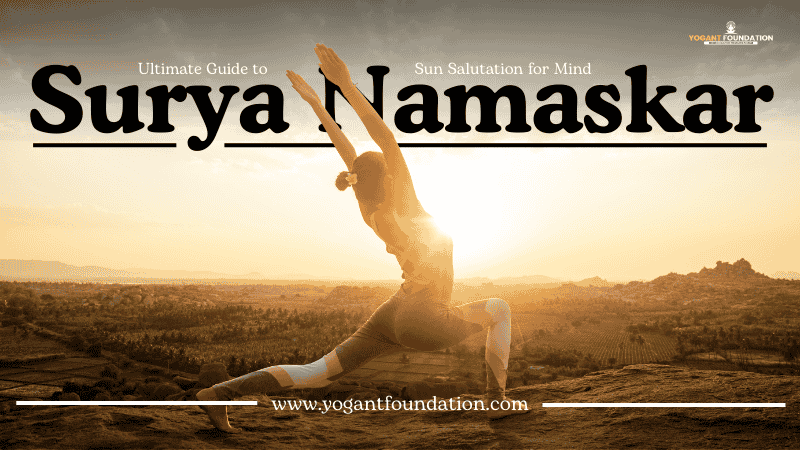

Surya Namaskar: Your Morning Cup of Sunshine
That’s the quiet promise of Surya Namaskar, or Sun Salutation. I like to think of it not as a “yoga sequence” you have to do, but as a moving thank-you note to the day. For centuries, people have stepped outside at dawn, faced the rising sun, and flowed through these poses. They weren’t just stretching; they were tapping into a source of energy far bigger than themselves. In our modern, screen-lit lives, this practice is a gentle rebellion. It’s a way to plug back into a natural rhythm and remember that we, too, have a little inner sunrise waiting to happen.
No matter if you are a beginner or an experienced practitioner, it’s time to get on your virtual mat. Explore this practice with me, not as an exercise but rather as a powerful, personal tool to enhance your everyday wellbeing.
What is Surya Namaskar Yoga? A Symphony of Twelve Poses
If you’ve ever seen someone glide gracefully from a standing pose to a plank to a backbend in one breath-linked flow, you’ve likely witnessed Surya Namaskar. At its heart, it’s a series of twelve yoga poses strung together like pearls on a necklace. But calling it just an exercise is like calling a symphony just noise.
The magic is in the marriage of movement and breath. You inhale as you reach up, soaking in energy. You exhale as you fold forward, releasing what you don’t need. This conscious breathing is what turns a physical sequence into a moving meditation. It’s a complete workout in a compact package: it strengthens your arms and core, stretches your hamstrings and back, massages your internal organs, and gets your heart pumping—all in about 90 seconds per round.
But for me, the real beauty is in the metaphor. This sequence reflects the rhythm of life: expansion and contraction; standing high and bowing down. This is a reminder to us every day that we are capable of navigating through life with grace.
The 12 Surya Namaskar Poses: A Step-by-Step Journey
Don’t let the Sanskrit names intimidate you. Let’s walk through these poses together, thinking of them as friends you’re getting to know. The key? Go slow. Listen to your body more than any instruction.
1. Pranamasana (Prayer Pose):
Stand at the top of your mat. Close your eyes for a second. Feel your feet on the floor. Bring your palms together at your heart. This isn’t just a starting position; it’s your moment to arrive. Take a breath and think, “Okay, I’m here for me.”
2. Hasta Uttanasana (Raised Arms Pose):
Inhale deeply as you sweep your arms out to the sides and up overhead. Look up if your neck is happy. Don’t force the backbend; just feel a lovely stretch across your belly and chest. It’s like reaching for a giant hug from the sky.
3. Hasta Padasana (Hand to Foot Pose):
Exhale as you fold forward from the hips. Let your head hang heavy. Bend your knees generously if your hamstrings shout “no way!” The goal isn’t to touch your toes; it’s to let your spine release. Imagine stress dripping off your fingertips onto the floor.
4. Ashwa Sanchalanasana (Equestrian Pose):
Step your right leg backwards into a low-lunge.If you wish, drop your knee at the back.Focus your gaze on the front. Lift up your chest.You should feel strong, steady and confident as a warrior sizing up the horizon.
5. Dandasana (Plank Pose): The Power Pause
On your next exhale, step your left foot back to meet the right. Hello, plank position! Engage your core; don’t let your hips sag or poke up. It’s just a moment of gathering strength. You’ve got this.
6. Ashtanga Namaskara (Knees-Chest-Chin Pose):
Lower your chest and then your chin, starting with your knees. Your hips should be slightly raised. It feels like an act of humility, a little surrender. This pose teaches that being strong also means knowing how to surrender gracefully.
7. Bhujangasana (Cobra Pose):
Inhale as you slide forward and use the strength of your back to lift your chest. Keep your elbows softly bent. This is a gentle, loving backbend. Imagine your heart shining forward, not your ego pushing you up.
8. Adho Mukha Svanasana (Downward Dog):
Exhale, tuck your toes, and lift your hips up and back. Pedal out your knees. Let your head hang. Downward Dog is the ultimate reset button—a chance to catch your breath, lengthen your spine, and see the world upside-down for a moment.
9. Ashwa Sanchalanasana (Equestrian Pose):
Inhale and step your right foot forward between your hands, returning to that strong lunge. Notice how different it feels the second time around.
10. Hasta Padasana (Hand to Foot Pose):
Exhale, bring your left foot forward to meet the right, and fold. Ah, familiar ground.
11. Hasta Uttanasana (Raised Arms Pose):
Take a deep breath, raise your shoulders, spread your arms wide and slightly arch your back. You will feel your energy return.
12. Pranamasana (Prayer Pose):
Exhale back to mountain pose, hands at the heart. Pause. Feel the warmth in your body, the rhythm of your breath. You did it.
That’s half a round! For the full round, you’ll do it again, this time stepping back with your left leg first in poses 4 and 9. It’s all about balance.
The Power of Sound: Surya Namaskar Mantra and Its Meaning
This is the layer that transformed my practice from a workout to something sacred. Each of the twelve poses is traditionally paired with a silent mantra—a name for the sun that represents a different quality. Chanting them (even in your head) turns your flow into a prayer for those qualities in your own life.
You don’t need to memorize them all at once. Start with one. I began with “Om Mitraya Namah” – Salutations to the friend of all. As I folded forward, I’d think, “May I be a friend to myself today.” It changed everything.
Here’s the beautiful essence of each mantra:
- Om Mitraya Namah – Salutations to the friend of all.
- Om Ravaye Namah – Salutations to the shining one, the radiant.
- Aum Suryaya Namah – Salutations to the one who induces activity.
- Om Bhanave Namah – Salutations to the one who illuminates.
- Om Khagaya Namah – Salutations to the one who moves through the sky.
- Aum Pushne Namah – Salutations to the giver of strength and nourishment.
- Om Hiranya Garbhaya Namah – Salutations to the golden cosmic self.
- Om Marichaye Namah – Salutations to the lord of dawn.
- Aum Adityaya Namah – Salutations to the son of Aditi, the cosmic mother.
- Om Savitre Namah – Salutations to the stimulating power of the sun.
- Om Arkaya Namah – Salutations to the one worthy of praise.
- Aum Bhaskaraya Namah – Salutations to the one who leads to enlightenment.
Surya Namaskar is a powerfully personal movement when these silent intents are woven into it.
A Universe of Benefits: Why You Should Practice Surya Namaskar Daily
Forget dry lists. Here’s what a consistent Sun Salutation practice actually feels like in your daily life:

Physical Benefits
Bye-Bye, Morning Stiffness: That creaky back and tight hips? Gone after a few fluid rounds. It’s the best full-body stretch you’ll ever do.
Silent Strength: You’ll notice it when you carry groceries effortlessly or play with your kids without getting winded. This sequence builds functional, lean strength everywhere.
Glowy Skin & Happy Digestion: All that twisting and compressing acts like an internal massage, getting things moving and circulation flowing to your face. Hello, natural glow!
Mental and Emotional Benefits
The Anxiety Tamer: The forced coordination of breath and movement is a form of “meditation for fidgety people.” It pulls you out of yesterday’s regrets and tomorrow’s worries and plants you firmly in the now.
The Focus Finder: This mindful exercise will help you to clear your mind faster than an espresso. This sets the tone for clarity in your day.
The Sleep Helper: A morning practice helps regulate your body’s internal clock. You wake up more alert, and by bedtime, you’re genuinely ready to rest.
Spiritual Benefits
It builds a quiet, unshakable confidence. Showing up for yourself on the mat, rain or shine, builds self-trust. You start your day with a small victory, and that energy carries through everything else.
How to Do Surya Namaskar: A Beginner’s Guide to Safe Practice
1. Timing is Everything (But Be Flexible):
Sunrise is ideal, but your ideal time is when you can actually do it. Before breakfast is key. Can’t manage dawn? A sunset salutation to unwind is equally poetic.
2. Your Sacred Space:
A quiet corner. A non-slip mat. That’s it. You don’t need special clothes or a perfect view.
3. Warm-Up Like You’re Waking Up:
Shake out your limbs. Roll your shoulders. Cat-Cow your spine. Spend two minutes being kind to your body before asking it to flow.
4. The Golden Rule: Breath First.
If you forget the poses, just remember: inhale to open, exhale to fold. Let your breath lead the dance.
5. Start Embarrassingly Small.
Aim for two rounds. Just two. Consistency with a tiny, achievable goal is a million times better than doing twelve rounds once and never returning.
6. Be Your Own Best Friend.
Knees bent in forward fold? Perfect. Downward Dog with heels high off the ground? Beautiful. This is your practice. Honor where you are today.
Surya Namaskar in Hindi: Connecting with the Cultural Roots (सूर्य नमस्कार)
Knowing a few words connects you to the river of tradition you’re dipping into.
- Surya Namaskar (सूर्य नमस्कार): The term itself.
- Asana (आसन): A posture or stance.
- Pranayama (प्राणायाम): Breath control.
- Mantra (मंत्र): The sacred chanting or sound.
- Prana (प्राण): Life force energy.
It’s a reminder that this is more than calisthenics. It’s a centuries-old conversation between humanity and the source of all light.
Common Mistakes to Avoid
If you have high blood pressure, skip the deep backbend (Hasta Uttanasana). Just raise your arms parallel.
If you have wrist issues, make fists and plant your knuckles in Downward Dog and Plank.
If you’re pregnant or have serious back concerns, please check with a doctor or a qualified yoga teacher before starting.
Never, ever sacrifice your breath. If you’re gasping, slow down.
Conclusion: Your Daily Ritual for a Radiant Life
So here’s my invitation to you. Tomorrow morning, before you check your phone, before the kettle boils, unroll a towel if you don’t have a mat. Stand tall. Bring your hands to your heart.
Do one single, slow, mindful round of Surya Namaskar. Don’t worry about how it looks. Feel how it feels—the stretch, the strength, the quiet space between breaths.
This practice is a millennium-old tradition because it has lasted so long. The goal is not to perfect the poses, but rather, it is to remember your capacity for strength, light and grace.
Your mat is waiting. The sun is always rising.


Pingback: Surya Namaskar 12 Steps | Sun Salutation | Yogant Foundation
Pingback: Utkatasana (Chair Pose): A Complete Guide to Benefits & Form