
Cobra Stretch: You know that feeling? The one where you finally push back from your desk after hours of staring at a screen, and your back feels like a stiff, crumpled piece of paper. Your shoulders are up by your ears, and there’s a dull ache right in the spot where you wish a wing-back chair had better support.
For years, I thought this was just the inevitable tax for a modern, desk-bound life. I tried expensive ergonomic chairs, countless pillows, and even those five-minute desk workouts that you forget about after two days. Nothing really stuck, and nothing truly released that deep-seated tension.
Then, I rediscovered something simple. Something that doesn’t require any equipment, takes less than a minute, and has been around for centuries. I’m talking about the Cobra Stretch.
It sounds almost too basic, right? I used to think so, too. I’d breeze through it in a yoga class, treating it as a mere stepping stone to the “harder” poses. The real magic is often found in the most simple movements. The Cobra Stretch isn’t just a stretch; it’s a reset button for your body and a deep, calming breath for your spine. Let me tell you why it’s become my non-negotiable daily ritual.
What Exactly is the Cobra Stretch? More Than Just a Backbend
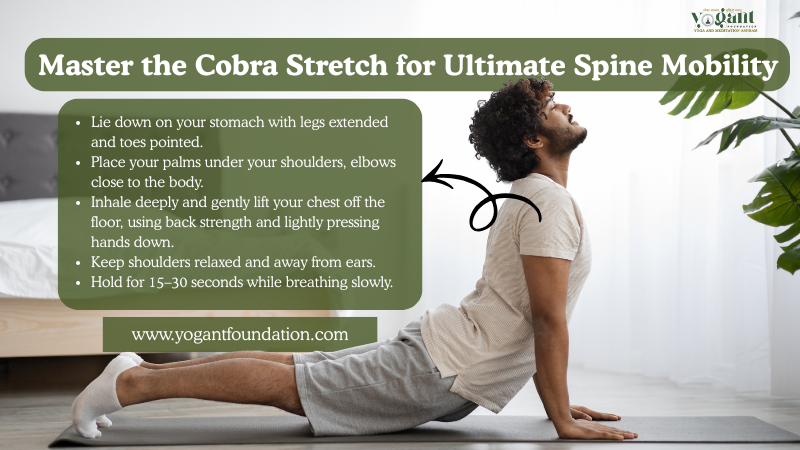
Let’s get a picture in your head. You’re lying on your stomach, like a lazy cat sunbathing. You place your hands under your shoulders, and as you breathe in, you gently lift your chest, arching your back like a cobra rising from a basket charmer’s flute.
That’s the visual. But the feeling is so much more.
In yoga, they call it Bhujangasana (boo-jang-GA-sana), which literally means “serpent pose.” And that’s the first clue to its power. It’s not about a harsh, forceful bend. It’s about an uncoiling. A slow, mindful awakening of the spine.
For most of our days, we’re in a forward fold—physically and sometimes even mentally. We hunch, we slump, we cave in. The Cobra Stretch Exercise is the perfect, graceful opposition to all of that. It’s your body’s way of saying, “Nope, we’re opening up now.”
The Anatomy of a Cobra Stretch: What’s Happening in Your Body?
I’m not a doctor, but understanding a little of how this works made me appreciate it so much more. Think of your body as a team of muscles having a tug-of-war.
The muscles in the front of your body—your chest and abs—can get tight and short from all that hunching. The muscles in the back—along your spine, your shoulders—get overstretched and weak. It’s an imbalanced team, and that’s where the pain comes from.
When you do the Cobra Stretch, you’re gently telling the team to rebalance. You’re:
- Strengthening the back team: The muscles along your spine (your spinal erectors) light up, getting the workout they desperately need to hold you upright.
- Stretching the front team: Your chest and abdomen get a beautiful, much-needed release. It’s like finally opening a window in a stuffy room.
- Getting everyone to cooperate: Your glutes and core engage to support the move, and your breath deepens, sending oxygen to all the right places.
A Pose of Many Gifts: The Multifaceted Benefits of Cobra Stretch
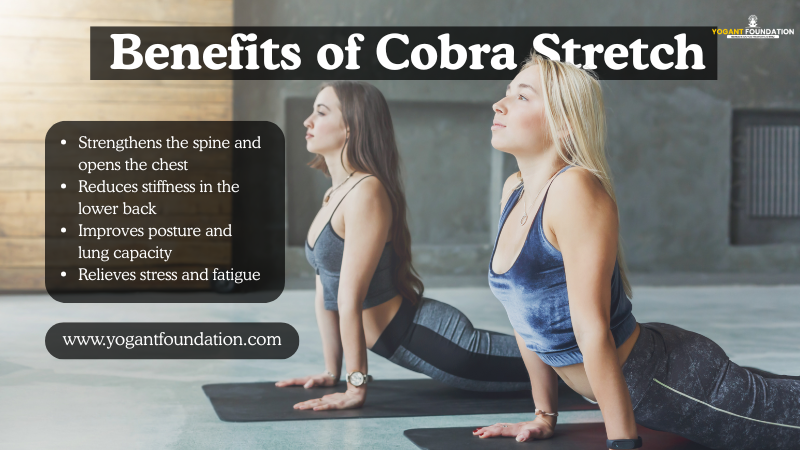
This one pose is a serious overachiever. The benefits go way beyond just “feeling a stretch in your back.”
1. The Ultimate Antidote to Desk Posture
This is the big one for me. The Cobra Stretch is the exact opposite shape of my terrible desk posture. When I’m typing away, I’m a human question mark. The cobra makes me an exclamation point of openness!
Doing this stretch a few times a day actively fights that rounded-shoulder, forward-head posture. It coaxes your shoulders back and down and helps your spine find its natural, elegant S-curve again. It’s a postural correction you can feel instantly.
2. Kiss Your Back Pain Goodbye
I used to have this nagging ache in my lower back that I just accepted as normal. The Cobra Stretch was a game-changer. By gently strengthening the tiny muscles that support each vertebra, it builds a natural “corset” of muscle around your spine. It also creates space between the bones, taking pressure off squished discs and irritated nerves. It’s not about brute force; it’s about building intelligent, resilient strength.
3. Boost Flexibility and Mobility
I want you to think about your spine like a chain. If it’s rusty and the links are stuck together, every movement is stiff and jarring. If each link is able to move with ease, then the entire chain will be fluid and graceful. Cobra Stretch is like lubricating that chain. The Cobra Stretch teaches your spine how to move in different directions. This makes it easier to do everything, from picking up your grocery bag to interacting with your children.
4. A Deep Breath of Fresh Air
Here’s a benefit I never expected. The first time I held the pose and focused on my breath, I was shocked at how much deeper I could inhale. By opening up your chest, you’re literally giving your lungs and diaphragm more room to expand. It’s an incredible feeling, especially if you tend to hold your breath when you’re stressed or take shallow, anxious sips of air. This stretch is a full, satisfying gulp of oxygen.
5. An Unexpected Stress Reliever
This is the part that feels a little like magic. There’s a reason why poses like this are called “heart openers” in yoga. There is a powerful, undeniable link between our physical posture and our emotional state.
When I’m anxious or down, my body instinctively curls inward—a protective fetal position. Forcing myself into the opposite shape—chest open, head lifted—has a profound psychological effect. It feels vulnerable, but in a brave, empowering way. It’s a physical declaration that you are open to what the day brings. The gentle pressure on your belly can also be very calming for your nervous system. It’s a built-in mini-meditation.
The Art of the Serpent: Your Step-by-Step Guide to the Perfect Cobra Stretch
Okay, let’s get you on the mat. Forget what you think you know. We’re going to do this slowly and mindfully.
Step 1: The Foundation (Getting Grounded)
Find a cozy spot on the floor (a yoga mat or carpet is perfect). Lie down on your belly like you’re about to take the world’s most relaxed nap.
Stretch your legs out long behind you, letting the tops of your feet relax onto the floor. No clenching!
Place your hands directly under your shoulders, as if you’re about to do a push-up. Tuck your elbows in close to your body.
Rest your forehead gently on the mat. Close your eyes for a second. Take a deep breath in, and sigh it out. Let your whole body get heavy.
Step 2: The Initiation (The Secret is in the Legs)
Here’s the pro tip I wish I’d known earlier: before you even think about lifting up, press the tops of your feet and your thighs firmly into the floor. This is your anchor. It protects your lower back.
Gently squeeze your glutes. Not a hard clench, just a gentle engagement, like you’re lightly tucking a tail between your legs.
Now, as you inhale, imagine your chest is being pulled forward by an invisible string. Start to lift your head and chest, using the muscles in your back. Your hands are just lightly touching the floor for support.
Step 3: The Ascent (How High is High Enough?)
This is the most important part: Your height does not matter. I’ll say it again for the people in the back: how high you go is irrelevant. What matters is how it feels.
Use your hands for guidance, not to push yourself up. If you feel any pinching, crunching, or sharp pain in your lower back, you’ve gone too high. Back off a little. A low, graceful cobra is a happy cobra.
Keep your elbows hugging your ribs. Don’t let them flare out into a “T-Rex” pose.
Look straight ahead or slightly down to keep your neck long. Don’t crank your head back to look at the ceiling.
Step 4: The Hold (Breathe Into It)
Keep the position for between 15-30 secs. Deeply inhale. You should feel your stomach stretching and your strength increasing in your back. Is the tension melting away from your shoulders?
Smile. This feels good.
Step 5: The Release (Come Down with Care)
As you exhale, lower your chest down with the same control you used to lift it. Don’t just collapse.
Turn your head to one side, rest your cheek on the mat, and relax your arms. Notice how your back feels. Warm? Tingly? More alive? That’s the magic.
Common Cobra Stretch Mistakes and How to Slither Past Them
We’ve all been there. Here’s how to avoid the common pitfalls.
- The Push-Up: Using your arms to shove yourself up. You’ll feel it in your lower back immediately. The Fix: Pretend your hands are just resting on two blocks of ice. Lead with your chest, not your hands.
- The Turtle Neck: Craning your neck back to see what’s going on behind you. The Fix: Keep the back of your neck long. Gaze forward, not up.
- The Belly Flop: Completely relaxing your core so your belly sags. The Fix: A gentle engagement of your core and glutes keeps everything supported.
- The Chicken Wing: Letting your elbows fly out to the sides. The Fix: Imagine you’re holding a pencil between your elbow and your rib cage. Don’t drop it!
Tailoring the Pose: Cobra Stretch Exercise Variations for Every Body
Your cobra is unique to you. Here’s how to make it work, no matter how you’re feeling.
Beginners or Those with a Grumpy Back:
- Baby Cobra: This is my personal favorite. Keep your forearms on the floor! Just lift your chest a few inches. It’s unbelievably gentle and therapeutic.
For a Sustained, Gentle Stretch:
- Sphinx Pose: Stay on your forearms with your elbows under your shoulders. It’s less about lifting and more about a deep, passive opening for your entire spine. It feels fantastic.
For When It Starts to Feel Easy:
- King Cobra: If your standard cobra is strong and pain-free, you can try straightening your arms. The key is to maintain all that leg and core engagement so the bend comes from your upper and middle back, not just your lower back.
Weaving the Cobra Stretch Into Your Daily Life
You don’t need a 60-minute yoga flow. Sneak this pose into your life.
- Morning Ritual: Before you even check your phone, do three cobras on your bedroom floor. It sets a tone of openness for the day.
- The Desk Detox: Every hour, get on the floor for one cobra stretch. It’s a total system reset that beats any software update.
- After a Workout: Whether you’ve been running or lifting, a few cobras will release your core and back beautifully.
- Evening Unwind: Before bed, a gentle baby cobra or sphinx can help release physical tension from the day and tell your nervous system that it is time for rest.
The Final Uncoiling: Embrace the Journey
I have learned to treat my body with kindness through the Cobra Stretch. Listening is the key. It’s a practice in listening, not forcing. Some days my cobra is high and proud; other days, it’s a humble little lift. And both are perfect.
It’s a small act of rebellion against a world that encourages us to curl inward. It’s a way to stand tall, even when you’re on your stomach. So, the next time you feel that familiar crunch of modern life, remember the serpent. Lie down, breathe, and uncoil. Your spine—and your spirit—will rise to the occasion.