
The first time I heard this phrase, I will never forget. In a yoga session, I found myself struggling to maintain a certain pose. My muscles were shaking, and my mind was screaming for me to stop. Then, through all the chaos I was experiencing, a whispering, soft sound came from the mat right next to me. The sound was like the gentle sighing of trees or ocean waves. It was steady. It was calm. Everything I wasn’t in that moment. This is the Type of Pranayama (Ujjayi Pranayama).
That was my introduction to Ujjayi Pranayama (pronounced oo-jai-yee). At the time, I thought it was just a “yoga thing.” I had no idea I was witnessing a powerful, portable anchor to peace—one that I would eventually learn to carry in my own pocket for the days when life felt a lot like that wobbly yoga pose.
This isn’t just a post about a breathing technique. It is an invitation for you to find a resource, a friend or a way of quieting your inner voice. We’ll decode the “ocean breath” together, and see how it can help you find your feet on and off the mat.
What is Ujjayi Pranayama? More Than Just a “Yoga Breath”
Let’s drop the textbook jargon for a second. Imagine you’re trying to fog up a pair of glasses to clean them. You open your mouth and let out a soft, whispered “HAAAA” sound. Feel that slight engagement at the very back of your throat?
Now, try that exact same thing, but with your mouth closed.
That sensation, that soft resistance, that gentle, raspy sound now channeled through your nose—that’s the heart of Ujjayi Pranayama.
Let’s start with a simple Ujjayi Pranayama definition. The term comes from Sanskrit:
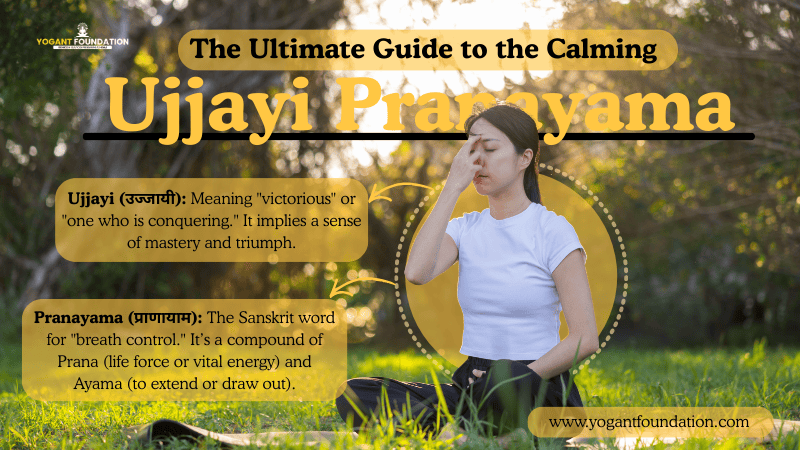
- Ujjayi (उज्जायी): Meaning “victorious” or “one who is conquering.” It implies a sense of mastery and triumph.
- Pranayama (प्राणायाम): The Sanskrit word for “breath control.” It’s a compound of Prana (life force or vital energy) and Ayama (to extend or draw out).
The victory here is much more personal and quiet. The victory of finding a steady breath when you’re stressed. It’s the victory of calming your racing mind before a big meeting. It’s the small, daily triumph of choosing to respond instead of react.
Your personal, internal soundtrack of calm.
Why the Sound is Your Best Friend
That ocean sound isn’t just for atmosphere in a yoga studio. It’s your built-in biofeedback machine. When your mind starts to wander to your grocery list or that awkward thing you said five years ago, the sound of your own breath calls you back home. It’s a gentle, constant whisper saying, “I’m right here. Just follow me.”
The Science and the Soul: Profound Ujjayi Pranayama Benefits
I used to think breathing was just, well, breathing. Something my body did on autopilot. But learning Ujjayi was like being handed the user manual for my own nervous system. The benefits are both immediate and deeply cumulative.
Physical Benefits of Ujjayi Breathing
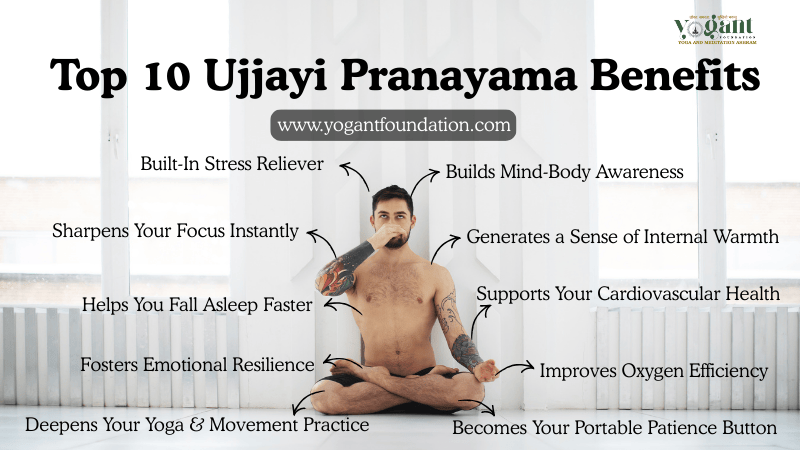
- It Hits the Brakes on Stress: This is the big one. That gentle throat constriction and slow breathing stimulates your vagus nerve, which is basically the boss of your “rest and digest” system. It tells your panicked “fight or flight” system to take a hike, slowing your heart rate and calming you down from the inside out.
- Makes Your Breath “Sticky”: By slowing the airflow, you actually give your lungs more time to do their job efficiently. It’s like letting a tea bag steep instead of just dunking it in and out. You get more out of every breath.
- It Builds a Warmth From Within: Yogis call it a “warming breath,” and it’s true. That slight resistance creates a gentle internal heat, like revving your body’s engine without moving a muscle. It’s perfect for warming up before a workout or for taking the chill off on a cold morning.
- It Turns Up Your Body Awareness: How often are you truly aware of your body until it aches? Ujjayi breath makes you the listener of your own physical self. You notice tension in your shoulders, the quality of your breath, and you can start to soften and release with awareness.
What It Does for Your Mind and Heart
- It’s a Meditation for Fidgety People: Like me. I struggle with sitting in silence. But giving my mind one simple job—”listen to the ocean sound”—makes meditation accessible. It’s a moving, breathing meditation that builds incredible focus.
- It’s Your Pause Button: When your kid spills the entire box of cereal, or you get a frustrating email, there’s a moment before you react. Ujjayi breath can live in that moment. Taking just one or two conscious, audible breaths creates a space where you can choose your response, instead of being hijacked by your emotions.
- Builds Resilience: This breath, when practiced on a mat in difficult poses, will teach you an important lesson. You can remain calm and focused, even if you are feeling uncomfortable. This is a skill that translates directly to life’s inevitable challenges.
Let’s Get Practical: Your No-Stress Guide to Ujjayi Pranayama
Okay, theory is great, but let’s get to the doing. Don’t worry about getting it “perfect.” This is about exploration, not performance. Find a comfortable seat, maybe in a cozy chair or propped up on a cushion.
1 Step: The “Foggy Glasses” Drill (This is the Key!)
- Sit comfortably and take a second to just breathe normally.
- Now, take a slow breath in through your mouth. As you breathe out, open your mouth wide and make that soft, fogging-a-mirror “HAAAA” sound. Do it a few times. Really feel where in your throat that engagement happens.
- This is the sensation we’re after. Not force, just a gentle, whispered sigh.
2 Step: Close Your Mouth, Keep the Vibe
- Inhale through your mouth. As you start to exhale with that “HAAAA” sound, gently close your lips about halfway through. Feel how the sound gets funneled through your nose? It should now sound like waves are rushing gently inside your head.
- For a few breaths, just focus on the exhale. Breathe in normally through your nose, and breathe out with that soft, Ujjayi sound. No pressure on the inhale yet.
3 Step: Putting It All Together
- Now for the final piece. See if you can create that same gentle throat engagement on your inhale. Breathe in slowly through your nose, imagining you’re sipping the air through a tiny straw at the back of your throat. You should hear a soft, ocean-like whisper on both the inhale and the exhale.
- Let it be smooth and continuous. Inhale (the sound of waves coming in)… Exhale (the sound of waves going out).
A Few Friendly Reminders from Someone Who’s Messed It Up:
- Relax Your Face: I used to scrunch up my whole face! The effort is only at the very back of your throat. Your jaw, lips, and eyebrows should be soft and relaxed.
- It’s a Whisper, Not a Roar: If you sound like Darth Vader, you’re trying too hard. Ease up. It is not the goal to be heard by everyone in space, but to create a soothing, soft sound.
- Be Kind to Yourself: It might feel awkward and artificial at first. That’s 100% normal. Every master was once a beginner who felt silly.
Leveling Up: Weaving Ujjayi Pranayama Into the Fabric of Your Life
Once the basic breath starts to feel more natural, you can play with it.
Finding Your Rhythm: Equal Breathing
Try counting the breaths. Try counting your breath. Keep the rhythm constant by using the Ujjayi Pranayama. Sama Vritti is the name of this technique, which has a grounding effect. Once you’re comfortable, slowly increase the count.
Ujjayi Pranayama as the Engine of Your Yoga Practice
This is where it truly shines. In a flow yoga class, your Ujjayi breath becomes the conductor of the entire orchestra.
- Breath Leads, Body Follows: You initiate every movement with a breath. Inhale to reach your arms up, exhale to fold forward. The breath isn’t just accompanying the movement; it’s driving it.
- Your Anchor in the Storm: When you’re in a challenging pose, like a deep hold or a balance, your mind will want to panic. Returning to the steady, audible sound of your Ujjayi breath gives your mind a job to do and reminds you that you are, in fact, okay.
“But I’m Doing It Wrong!” Common Hurdles and How to Leap Over Them
Let’s normalize the struggles. We all have them.
- “I feel dizzy.” You’re probably breathing too deeply or too forcefully. This is the most common mistake! Ease up. Shorten your breath. Remember, it’s about gentle control, not maximal force.
- “My throat hurts.” You’re squeezing too hard. Go back to the foggy glasses drill. It should feel like a soft engagement, not a chokehold. Relax your jaw completely.
- “I can’t hear anything.” The sound is often more subtle and internal than people expect. It might sound more like wind in a forest than the Pacific Ocean, and that’s perfect. Sometimes, gently placing your fingers over your ears can help you hear the internal sound more clearly.
- “This feels weird and unnatural.” Of course it does! You’re learning a new skill. It’s like the first time you rode a bike—awkward and wobbly. Consistency is key. Just two minutes a day is enough to build the muscle memory.
The Real Win: Using Ujjayi Pranayama When Life Gets Real
The ultimate goal isn’t to be a Ujjayi master only on your yoga mat. It’s to have this tool ready when you need it most.
- The Pre-Meeting Pulse-Checker: Sitting in your car before walking into a big meeting? Close your eyes and take ten Ujjayi breaths. You’ll walk in centered and clear-headed.
- The Traffic Jam Tranquilizer: Instead of stewing in frustration, use the red light as a reminder. Engage your ocean breath. It transforms wasted time into a mini-meditation.
- The Sleep Lullaby: Can’t turn your brain off at night? Lie on your back, place a hand on your belly, and practice Ujjayi Pranayama, focusing on making the exhale longer than the inhale. It’s a powerful signal to your body that it’s safe to shut down.
- The Patience Preserver: If your child has a tantrum, or you are having a difficult conversation with a co-worker, you can calm the situation by taking a couple of silent Ujjayi breathings.
The Final Inhale: This is Your Journey
Ujjayi Pranayama is much more than just a technique. This is a way to get back in touch with yourself. It’s a whisper of the ocean that resides within your own body, a constant, rhythmic reminder of your own capacity for peace and resilience.
You don’t need a special mat or a silent hour. You can start right now, wherever you are. Just take one conscious breath. Feel the air at the back of your throat. Listen for the quiet sound of your own aliveness.
This is your victory breath. Your anchor. Your portable sanctuary. And it’s been with you all along.
Your Ujjayi Pranayama Questions, Answered
Q: Is this safe for everyone?
A: For most people, absolutely. But if you have very low blood pressure or a serious heart condition, it’s always a good idea to chat with your doctor first. And listen to your body—it’s your best teacher.
Q: How long do I need to practice?
A: Start small! Even one minute of focused breathing is a win. I’d rather you do one minute feeling good than ten minutes feeling strained. You can build from there.
Q: What’s the difference between this and just “deep breathing”?
A: Great question! All Ujjayi breathing is deep, diaphragmatic breathing, but not all deep breathing is Ujjayi. Ujjayi adds that special ingredient—the gentle throat engagement and the sound—which acts as a powerful focal point and nervous system regulator.
Q: Can I do this lying down?
A: You absolutely can! It’s one of my favorite ways to unwind before sleep. Just make sure you’re comfortable, and maybe put a pillow under your knees if that feels better for your back.