
Vakrasana: Let’s be honest. How many of us are sitting right now, maybe a little slumped, shoulders creeping toward our ears, that familiar nag in the lower back? We live our lives leaning forward—into screens, over steering wheels, towards deadlines. Our poor spines become pillars of tension, quietly holding the stress of our days.
What if I told you there’s a simple, beautiful remedy that doesn’t require fancy equipment or an hour of sweating? A move you can do almost anywhere that feels like giving your insides a refreshing squeeze and your back a long-awaited “ahh.”
Introduction Vakrasana: More Than Just a Stretch
That’s Vakrasana. It’s not the most famous yoga pose, but in my book, it’s one of the most generous. It’s the foundational spinal twist, a welcoming gateway into the world of Vakrasana yoga. Think of it as a kind, accessible friend who says, “Come as you are. Just sit and turn a little. We’ll work with what you’ve got.”
Today, I want to walk you through everything about this wonderful pose—the Vakrasana steps that make it work, the incredible Vakrasana benefits that will have you coming back for more, and even its close cousin, Meru Vakrasana. This isn’t a sterile manual. It’s a conversation about reclaiming a little mobility and calm in a stiff, noisy world.
What is Vakrasana? The Foundation of Yogic Twists
The name gives it away. In Sanskrit, “Vakra” means twisted, bent, or curved. “Asana” means seat or posture. So, it’s quite literally your “seated twist.” It’s often the very first twist yoga students learn, and for good reason. It’s straightforward, safe when done mindfully, and teaches your body the unique language of rotating around its center axis.
I love introducing people to Vakrasana yoga because it’s humbling and empowering at once. You quickly learn where you’re tight (hello, right hip!). But you also learn that progress isn’t about touching your nose to your knee; it’s about feeling your ribs open with a deep breath while you’re turned. The real magic is in that internal awareness.
A Quick Word on Meru Vakrasana: The Sibling Pose
As you explore, you might hear about Meru Vakrasana. “Meru” refers to the spine, imagined as the sacred central mountain. Think of Meru Vakrasana as Vakrasana’s slightly more engaged sibling. The main difference is usually in the leg position—it often involves bending both legs, which can anchor you more deeply and intensify the twist along your “mountain,” your spine.
For now, don’t sweat the distinction too much. Mastering the friendly, classic Vakrasana is the perfect place to start. Once that feels like home, Meru Vakrasana will be there waiting for you.
Let’s Get Practical: Your Friendly Guide to Vakrasana Steps
Reading about Vakrasana benefits is one thing. Feeling them is another. Let’s break it down into simple, feel-based instructions. Forget perfection. Let’s aim for sensation.
First, Set the Scene:
Find a quiet corner. A yoga mat is great, but a carpet or even a folded blanket on the floor works perfectly. You’re just looking for a little cushion under your sit bones. Take a moment to just sit, legs out in front, and breathe. Notice how you feel. This is your “before.”
Now, Let’s Move Together (Right Side First):
Bend Your Right Knee:
Inhale, and draw your right knee up. Place your right foot flat on the floor on the outside of your left knee. If your left knee is at 12 o’clock, your right foot is at 11 o’clock. Let your right thigh be cozy.
Ground Your Foundation:
This is the secret! Press your left thigh and both sitting bones down into the earth. Feel rooted. As you inhale, imagine someone is gently pulling a string from the crown of your head toward the ceiling, making your spine wonderfully long. Don’t stiffen—just grow tall.
The Gentle Turn:
Now, exhale. Start to turn your belly button, then your ribs, then your chest toward the right. It’s a wave moving up from your core. Place your left hand on the outside of your right knee. This isn’t to yank yourself further; it’s just a light buddy, a point of connection.
Find Your Support:
Let your right hand rest softly on the floor behind you. It’s your backstop, your support beam. It keeps you from collapsing backward.
The Finishing Touch:
Finally, if it feels good for your neck, let your gaze follow the twist, looking over your right shoulder. If your neck says “no thanks,” just look straight ahead or to the right. Listen to it.
Breathe and Be Here:
Hold here. For 5, maybe 8 breaths. This is where the good stuff happens. Inhale: Lengthen through the spine. Exhale: See if you can turn a millimeter more, from deep in your abdomen. Feel the delicious stretch along your left side waist, the awakening along your spine.
The Graceful Release:
On an exhale, gently unwind. Lead with your heart, turning back to center, then release the arm, then straighten the leg. Ahhh. Come back to sitting with legs straight and just notice. Feel the echo of the pose in your body.
Repeat on the Other Side:
Of course, we have to visit the left side! Follow the same Vakrasana steps, bending the left knee this time. You’ll likely find the two sides feel completely different. That’s normal. Meet each side with the same kindness.
What It Should Not Feel Like: A pulling or sharp pain in the knee, lower back, or neck. If you feel that, ease up! This isn’t a wrestle. It’s a conversation.
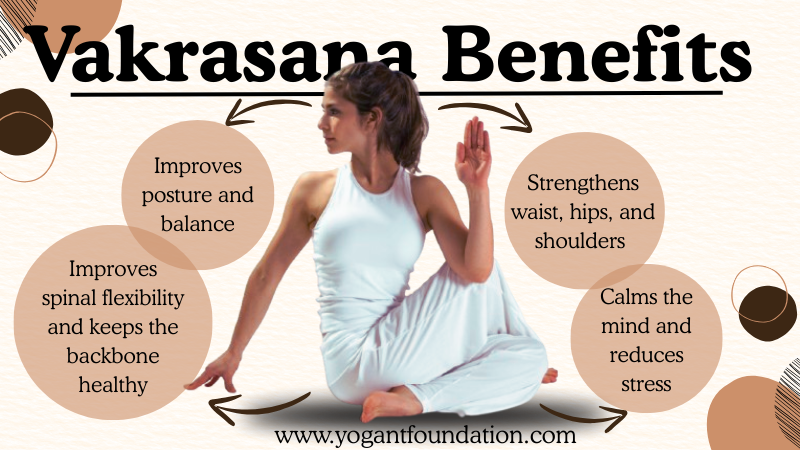
Why You’ll Fall in Love With It: The Real-World Vakrasana Benefits
Okay, so it feels good. But what’s actually happening inside? The benefits of Vakrasana are like a multi-layered gift.
1. It’s a Spa Day for Your Spine (And Posture)
Our spines are meant to move in all directions, but we mostly just flex forward (slumping) or extend slightly (standing). Rotation gets neglected. Vakrasana lovingly reminds each little vertebra how to twist. It hydrates the discs, like wringing out and re-soaking a sponge, and eases out stiffness in the muscles that hug your spine. Over time, this translates to standing taller and moving more freely. You literally carry yourself with less effort.
2. It Kickstarts Your Inner Plumbing
This is a big one. That gentle squeezing action? It’s like hand-washing your internal organs. Your digestive organs—stomach, liver, intestines—get a loving massage. This can fire up a sluggish digestion, help ease bloating, and encourage, ahem, regular movement. Many people practice twists specifically for this “detox” effect. It’s a natural reset button for your gut.
3. It Creates Space to Breathe
Notice how, in the twist, the side of your rib cage that’s behind you gets a beautiful stretch? That’s opening up intercostal muscles we rarely use. When you release the twist and come back to center, you might find you can take a deeper, fuller breath instantly. It clears out the stale air and makes room for the new.
4. It Soothes Your Nervous System
There’s something inherently calming about the contained, focused nature of a twist. You’re literally turning your senses inward, away from external distractions. The combination of deep breathing and mindful holding activates the “rest and digest” part of your nervous system. It’s a moving Meditation that can dissolve a surprising amount of mental clutter and anxiety.
5. It Taps into Your Energetic Core
Yoga philosophy says that twists ignite the Manipura Chakra, which is at the center of your personal power and transformation. They also help balance the subtle energy channels (nadis) along the spine. Whether you vibe with the energetic anatomy or not, you can’t deny the feeling of being “sorted out” and re-energized after a good twist session.
Making Vakrasana Your Own: Weaving It Into Your Life
You don’t need a 90-minute flow to get the benefits of Vakrasana. Here’s how to make it a natural part of your world:
- The Morning Wake-Up: Do it right after you get out of bed (or after your coffee!) to wring out sleep stiffness and ignite your digestion for the day.
- The Desk De-compressor: Slide to the front of your chair. Sit tall, feet flat. Do a seated version: exhale to twist right, holding the back of the chair. Instant relief for a cramped back and shoulders.
- The Pre-Workout Prep: Use it in your warm-up to mobilize your spine before a run, gym session, or more vigorous yoga.
- The Evening Unwind: Pair it with some gentle forward folds before bed to signal to your body and mind that it’s time to slow down.
A Few Loving Cautions: Practicing with Smarts
With all these wonderful Vakrasana benefits, it’s important to play safe.
- Listen to Pain: Sharp or shooting pain is a “stop” sign. Dull, stretching sensation is a “go” sign.
- Special Considerations: If you have a serious spinal injury (like a herniated disc), are pregnant (especially second/third trimester), or have severe osteoporosis, check with a doctor or experienced yoga therapist before twisting deeply.
- The Golden Rule: Always twist on the exhale. The breath creates the space; you’re just following it in.
The Twist as a Metaphor for Life
This is what stays with me long after I’ve released the pose. Vakrasana yoga is a beautiful physical metaphor. It teaches us to be stable in our foundation (our sitting bones, our sense of self) while being open and mobile in our perspective (our heart, our gaze). We look back, but we don’t get stuck there. We turn, take in a new view, and then return to center, integrating that new awareness.
In a life that constantly pulls us forward, Vakrasana is a conscious, graceful pause to turn inward, wring out what we don’t need, and return to our day feeling clearer, taller, and more centered.
Conclusion: Your Journey with the Twist Begins Now
There you go. This is not a simple pose but rather a daily practice. This simple tool promotes spinal health and inner calm. It also helps with daily resilience. The beginning of the journey with Vakrasana and Meru Vakrasana as well as all twists begins with one breath.
Why not try it now? Find your seat, take a deep breath in, and as you let it out, see what it feels like to turn, just a little. Your body has been waiting for this conversation.