
Introduction: More Than Just a Backbend
Let’s be honest. Most of our days are spent curled forward—over phones, steering wheels, and laptops. Our shoulders round, our chests cave, and we practically breathe in sighs. That’s where Matsyasana, the Fish Pose, swims in like a breath of fresh air. It’s the glorious, chest-to-the-sky antidote to our modern slouch.
I like to think of it as the yoga pose that teaches you how to float. Not in water, but in your own sense of vitality. The first time I tried it, I was less concerned with its famed matsyasana benefits and more worried about the funny gulp my throat made. But as I learned the proper matsyasana steps and respected the crucial matsyasana contraindications, it became a moment of sweet relief in my practice—a chance to literally open up.
This isn’t a rigid manual. It’s a friendly guide through the matsyasana yoga pose, designed to help you explore it safely and feel its magic, whether you’re a seasoned yogi or just yoga-curious. Let’s dive in.
What is Matsyasana? Understanding the Pose
So, what’s in a name? In Sanskrit, “Matsya” means fish. The pose mimics one—imagine a fish arcing gracefully out of the water, supported by the surface, heart exposed to the sun. In the grand tapestry of yoga asanas matsyasana holds a special place as a “destroyer of diseases” in old texts.
There’s a beautiful myth here. It’s said Lord Vishnu took the form of a giant fish (Matsya) to guide a ship and save sacred knowledge during a great flood. When I’m in the pose, I remember that: it’s about support, guidance, and rising above the “floods” of our daily stress. It’s not about forcing a backbend; it’s about learning to be buoyant.
Step-by-Step Guide: Mastering the Matsyasana Steps
Practicing matsyasana steps correctly is essential to reap its rewards without strain. Follow this detailed, safe progression.
Preparation and Precautions
- Warm-Up is Non-Negotiable: Please don’t start here. Wake up your spine with some gentle Cat-Cows, a few rounds of Sun Salutations, and some easy twists. Think of it as coaxing your back to bend, not commanding it.
- Gather Your Friends (Props): Have a yoga mat, and maybe a folded blanket or a firm pillow. A yoga block can be a game-changer. There’s no trophy for using fewer props—only for being smarter and safer.
Classic Matsyasana (with Lotus Legs)
- Find Your Seat (Lotus): Start seated in Padmasana (Lotus Pose). If your knees protest, skip right to the simple version below. No forcing.
- Lean Back with Care: Slowly lower yourself onto your elbows and forearms. Take a breath here.
- Lift Your Heart: Pressing into your forearms, inhale and lift your chest high, letting your head drop back gently. The arch starts in your upper back.
- The Crown Touch: On an exhale, lower the very crown (top-back) of your head to the floor. Your weight is on your sitting bones and head, not your neck.
- What to Do With Your Hands: Release your arms. Options: rest your hands on your knees, fold them over your heart, or reach them overhead to hold your feet if you can.
- Breathe and Be: Hold for 3-5 easy breaths. Feel your rib cage expand like gills with each inhale.
- Coming Out: This is key. Press into your elbows again, lift your head first, then gently sit up. Unravel your legs with kindness.
Simple and Supported Variations (For Beginners or Stiff Bodies)
This is the one I do most often. It’s accessible and just as effective.
- Lie Down: Start flat on your back, knees bent, feet flat on the floor hip-width apart.
- Slide the Shoulder Blades: Place your hands, palms down, under your hips. The slight lift of your pelvis will bring your shoulderblades closer to each other, creating an upper-back shelf.
- Press and Lift: Inhale, press into your elbows and forearms (not your head!), and lift your chest. Your head stays off the floor.
- Find Your Height: Only lower your head to the floor if it feels comfortable on your neck. Otherwise, just gaze up. The goal is the chest lift, not the head drop.
- Hold and Float: Imagine that your sternum, or breastbone is floating to the ceiling.
- Release Gently: Lift your head, slowly lower your torso, slide your hands out from under you, and hug your knees into your chest for a lovely counter-stretch.
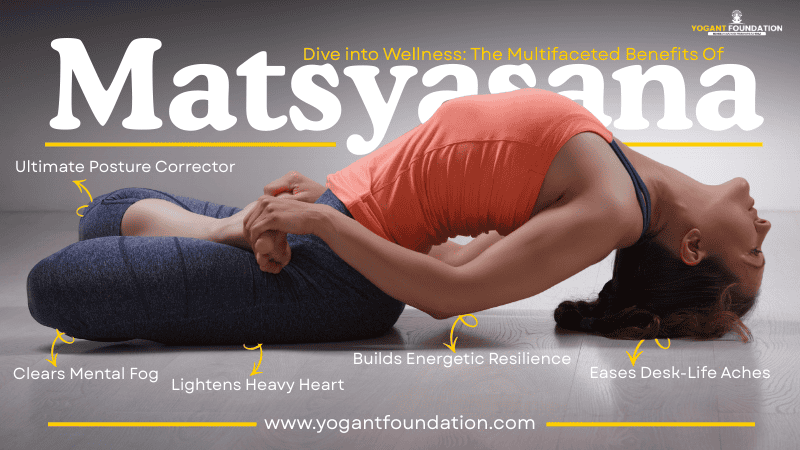
Dive into Wellness: The Multifaceted Matsyasana Benefits
Beyond the anatomy charts, here’s what matsyasana pose truly offers in the life you’re living right now:
Physical and Physiological Benefits
- The Ultimate Posture Corrector: It directly fights the “tech neck” and rounded shoulders from all that screen time. You’ll stand taller almost instantly.
- A Deep Breath Feels Easier: That expansive stretch across your chest and between your ribs literally makes more room for your lungs. If you often feel like you can’t take a full breath, this helps.
- Wakes Up Your Metabolism: When you gently compress your throat, it stimulates your thyroid gland. The body thermostat is very similar. This can be used to regulate energy.
- Eases Desk-Life Aches: It gives a fantastic stretch to those tight hip flexors from sitting all day and can soothe an achy upper back.
Mental and Energetic Benefits
- Lightens a Heavy Heart: We physically store emotion in our chests. Opening this area can feel incredibly cathartic—like releasing a breath you didn’t know you were holding. It’s known for mood-lifter.
- Clears the Mental Fog: By increasing blood flow and opening the throat area (linked to communication), it can make you feel more clear-headed and articulate.
- Builds Energetic Resilience: It activates your heart center (Anahata Chakra), fostering feelings of compassion—for yourself and others. It’s not a sleepy pose; it’s gently energizing, perfect for a midday slump.
Safety First: Essential Matsyasana Contraindications
This is the most important conversation we’ll have. Yoga is about ahimsa—non-harming—starting with yourself. Respect these matsyasana contraindications:
- A Sensitive or Injured Neck: You should avoid doing the entire pose, with your head down, if you suffer from whiplash or cervical disc problems. Keep the chest-lift only version.
- High or Low Blood Pressure: The head-below-heart position can affect blood pressure. If yours is uncontrolled, skip it or consult your doctor.
- A Migraine in Progress: This can make the pounding worse.
- Pregnancy: Generally not advised, especially later on, due to the deep abdominal stretch.
- Serious Back Issues: Include it after preparatory backbends like Bhujangasana (Cobra) and before deeper ones like Ustrasana (Camel) or Urdhva Dhanurasana (Wheel).
Your body whispers before it screams. A pinch, sharp pain, or dizziness means “come out now.” Tingling or numbness in the neck or arms is a hard stop.
Integrating Matsyasana into Your Yoga Practice
You don’t need a 90-minute practice to benefit. Here’s how to make it yours:
- The Perfect Counterpose: It’s legendary when done right after Shoulderstand (Sarvangasana) to release the neck. Try it!
- In a Short Sequence: Need a quick reset? Do Cat-Cow, a few Cobras, then Fish Pose, and finish with a seated forward fold. In 5 minutes, you’ve moved your spine in all directions.
- As a Morning Opener: Do it in bed (the simple version) before you even get up. Place a pillow under your upper back, open your arms wide, and breathe for a minute. It sets a totally different tone for the day.
Pro Tips for a Deeper, Safer Practice
- The secret is in the legs. Press your thighs down firmly (or feet in the simple version). This stabilizes you and prevents dumping into your lower back.
- Think “heart forward,” not “head back.” Lead with the chest. The head is just along for the ride.
- Breathe into the tight spots. On each inhale, imagine sending breath right into the front of your chest, creating more space.
- Use the darn blanket. Placing a folded blanket under your head and upper back is a sign of wisdom, not weakness. It makes all the difference.
Conclusion: Embrace the Flow of Matsyasana
Remember, the matsyasana yoga pose you do today is perfect for today. It might be a gentle lift with knees bent. It might be a deeper float. The point isn’t the shape; it’s the feeling of opening, of creating space where you felt tight, of breathing a little easier.
So, the next time you feel the world hunching your shoulders, roll out your mat. Do not worry about learning all matsyasana steps at once. You can explore the matsyasana benefits for yourself. Just remember to respect the matsyasana contraindications. Your practice should be an exploration of your own personal interests, and not just a show.
Like the fish, be open, supported, and guided to receive whatever you are presented with.