

Know that feeling you get when a tune gets stuck in the head? The song plays in a loop. Imagine that instead of listening to a song it were a sound or a phrase, which made you feel calmer, more focused… more… like you. That’s the magic of a chant. It’s not just a repetition of words; it’s an experience. But if you’ve ever sat in a yoga class and wondered what “Om” really means, or scrolled past a video of people singing in Sanskrit and felt a pull, you’re asking the right question. You’re looking for the real chant meaning in Hindi.
Let me tell you, this isn’t a simple word swap. Looking up “chant” in a dictionary and getting “जाप” is like calling the Grand Canyon a “big hole.” It’s technically correct but misses the entire majesty of the thing. To truly get the chant meaning in Hindi, we need to dive into the words मंत्र (Mantra) and जाप (Jaap). These words are gateways to an ancient understanding of how sound shapes our very being.
Move beyond simple dictionary definitions and discover the true essence, power, and purpose of chanting. All through the rich Hindi language. You will see this ancient ritual in a totally new light.
Beyond the Dictionary: What is the Core Chant Meaning in Hindi?
If we’re going to be proper about it, yes, the direct translation of “chant” is जाप (Jaap). But language, especially when it comes to matters of the spirit, is about feeling. In a syllable, you can pack a lot of wisdom and stories.
The Direct Translation: A Starting Point
So, let’s start with जाप (Jaap). Think of Jaap as the action. It’s the soft, rhythmic, almost hypnotic repetition of something sacred. It’s the gentle murmur you hear in a temple, the silent movement of lips on a prayer bead. Jaap is the doing.
The star, or the heart, of the chant meaning in hindi is the Mantra (मंत्र). This word has a lot of power. Let’s break it down, because the ancients were brilliant at packing meaning into sounds:
- मन (Man) means “mind.”
- त्र (Tra) means “tool” or “instrument.”
A mantra, then, is literally a “tool for the mind.” How incredible is that? It’s not just a phrase; it’s an instrument, like a sculptor’s chisel, designed specifically to shape, focus, and free your mind.
What is Chant Meaning in Hindi?
Chant Meaning in Hindi: अगर आप सोच रहे हैं कि ‘चांट’ का हिंदी में सीधा मतलब क्या है, तो वो है ‘जाप’ – यानी किसी पवित्र शब्द या नाम को बार-बार दोहराने की क्रिया। पर असली बात तो इससे आगे है।
दरअसल, ‘चांट’ की असली गहराई समझनी है तो हमें ‘मंत्र’ शब्द को समझना होगा। मंत्र सिर्फ शब्द नहीं, बल्कि दिमाग का एक टूल है। जैसे ‘ॐ’ – ये कोई ordinary word नहीं, बल्कि एक vibration है जो सीधे आपके मन को शांत करती है।
तो सीधे शब्दों में कहूं तो:
- मंत्र वो पावरफुल शब्द या धुन है
- जाप उसे दोहराने की प्रक्रिया है
ये कोई सिर्फ धार्मिक रस्म नहीं, बल्कि एक प्रैक्टिकल तरीका है अपनी भागती हुई सोच को एक जगह केन्द्रित करने का। जब आप मंत्र का जाप करते हैं, तो ये आपकी daily chaos से एक healthy break जैसा होता है।
The Fundamental Difference: Mantra vs. Jaap
This is the key that unlocks everything. I used to get these confused all the time, so don’t worry if you do too.
- मंत्र (Mantra) is the what. It’s the sacred formula, the powerful sound itself. A seed can grow into an entire forest, full of tranquility and clarity. “Om” is a mantra. “Om Namah Shivaya” is a mantra.
- जाप (Jaap) is the how. It’s the process of planting that seed and watering it regularly. It’s the act of repeating the mantra.
The mantra, then, is medicine. Jaap, on the other hand, is the daily prescription that will help you grow and heal.
The Anatomy of a Mantra: More Than Just Words
Okay, so a mantra is a tool for the mind. But why these specific sounds? Why does “Om” feel so powerful? It’s not arbitrary; it’s a science.
The Sacred Syllable: Om (ॐ) – The Primordial Sound
You can’t talk about the chant meaning in Hindi without spending some time with Om. It’s the big one. The original vibration. It’s not so much a word as it is a feeling you can hear.
- The Sound of Creation: Imagine everything—you, me, the stars, your phone—started as a single, cosmic vibration. That vibration, according to ancient wisdom, was Om. Chant meaning in Hindi it is like tuning your personal radio to the frequency of the universe.
- The Three Parts (A-U-M): This is my favorite part. Om is a three-part journey:
- A (अ): The sound starts in the belly. It’s the beginning, the waking state. It’s creation.
- U (उ): The sound rolls forward, filling the chest. The journey is the state of dreaming. It’s preservation.
- M (म): The sound ends at the lips, a gentle hum that fades into silence. It’s the end, the state of deep sleep. It’s dissolution.
- The silence that follows… that’s the fourth state, the pure consciousness that underlies all the others. That silence is where the real magic happens.
The Components of a Powerful Mantra
The traditional mantras were not just randomly thrown together. It’s more of a spiritual recipe. They have a lot of:
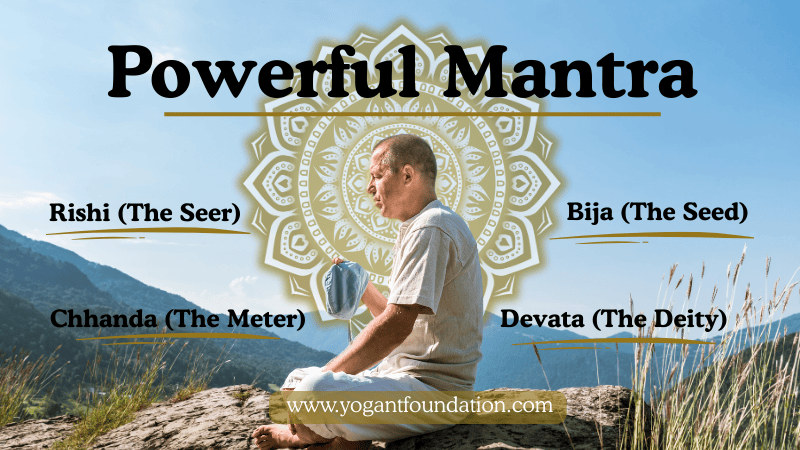
- Rishi (The Seer): The sage who first “heard” or perceived the mantra in deep meditation. Think of them as the original discoverer.
- Chhanda (The Meter): The rhythm. A mantra has the same rhythm as a heartbeat. The vibrational nature of a mantra is determined by its rhythm.
- Devata (The Deity): The specific divine energy or consciousness that the mantra invites in.
- Bija (The Seed):It is the most powerful syllable in the mantra. It is for this reason that “Kreem or Shreem” is used as the bija to invoke Divine Maternity.
This intricate structure is why the simple chant meaning in Hindi goes far beyond “repeating a phrase.” It’s a sophisticated technology for consciousness.
The Science and Spirituality of Sound: Why Chanting Works
Now, you might be thinking, “This is beautiful, but is it real?” This is where it gets really exciting. The ancient understanding of sound is now finding its voice in modern science.
The Vibrational Foundation: Nada Yoga
Long before we had speakers and subwoofers, India had Nada Yoga—the yoga of sound. “Nada” means sound or flow. This science says everything in the universe is vibrating, including you. Your body, your thoughts, everything has a frequency.
Chanting a mantra is like giving your internal system a tuning fork. The specific vibration of the mantra resonates through your energy centers (chakras), helping to smooth out stuck energy and get your life force, or prana, flowing freely. It’s sonic acupuncture.
The Neurological Impact: What Happens in Your Brain?
When you sit down to do your jaap, here’s what’s actually happening inside your head:
- It Hits the Brakes on Stress: The repetitive nature of chanting tells your nervous system, “Hey, it’s okay, you can relax now.” It switches you from fight-or-flight mode into rest-and-digest mode. Your heart rate slows, your breath deepens.
- It Gives Your Busy Brain a Job: Our minds are like browsers with 50 tabs open. Chanting helps you focus by closing other tabs. Your wandering thoughts are given a straightforward task to follow: the sound. This is the practical magic of a mantra being a “tool for the mind.”
- It Rewires You for Peace: Through neuroplasticity, your brain strengthens what it practices. If you practice anxiety, you get better at being anxious. If you practice focused, peaceful chanting, you build neural pathways for calm and clarity.
Chanting doesn’t allow you to escape the reality. The brain gets a good workout, becoming stronger, healthier and resilient.
A Practical Guide: How to Start Your Chanting Practice
Enough theory! Let’s get practical. How can you, today, start to experience this for yourself? It’s much simpler than you might think.
Step 1: Choosing Your Mantra
Don’t get overwhelmed. You don’t need a secret, complicated mantra. Start with one that feels right.
- Om (ॐ): The universal classic. Always a good choice.
- So Ham (सो ऽहम्): This is the sound of your breath! “So” on the inhale, “Ham” on the exhale. It means “I am That,” connecting you to the whole.
- Om Namah Shivaya (ॐ नमः शिवाय): A beautiful mantra that means “I bow to the divinity within myself.” It’s a reminder of your own inner light.
- Choose What Calls You: Sometimes, you’ll hear a mantra and it just feels good. Trust that feeling.
Step 2: Setting the Scene
You don’t need a Himalayan cave.
- Time: Mornings are great, but any quiet 5-10 minutes you can steal from your day is perfect.
- Place: A corner of your bedroom, a quiet spot on the floor. Make it your own.
- Posture: Sit comfortably. Back straight, but not stiff. You can sit in a chair, no problem.
Step 3: The Technique of Jaap
- Get Grounded: Close your eyes. Just feel the air moving in by taking three deep breathes.
- Whisper Your Why: Silently set an intention. “I’m doing this for peace,” or “Just to see what happens.” This makes it personal.
- Start Simple: Begin chanting your mantra. Out loud is powerful at first. Feel the vibration in your chest. Don’t worry about sounding perfect.
- Use a Mala (If You Like): A mala (prayer beads) is a wonderful tool. It gives your hands something to do and helps you stay focused. 108 beads, one mantra per bead. It’s a moving meditation.
- Sit in the Silence: When you’re done, just sit for a minute. Don’t jump up. Linger in the quiet you’ve created. Thank yourself for taking this time.
Chant Meaning in Hindi: Different Types of Jaap
The beautiful thing about the chant meaning in Hindi is that it has many expressions. There’s a style for every soul.
1. Vedic Chanting: The Precision of the Ancients
This is the original, scholarly form. It’s incredibly precise, with specific tones and rhythms, designed to preserve the sacred Vedas perfectly. Less about personal feeling and more about the sacredness of the sound itself. It’s the foundation.
2. Kirtan: The Joy of Communal Singing
This is my personal favorite. If Vedic chanting is a library, Kirtan is a joyful campfire. It’s call-and-response singing, often with harmoniums and drums. You don’t have to know the words; you just follow along. It’s a celebration. You laugh, you might even dance, and you leave feeling lighter. This is जाप as a community experience.
3. Personal Jaap: The Inner Journey
This is the practice we just went through. It’s your private, one-on-one conversation with the universe, or with yourself. It’s the quiet, steady work of using your मंत्र to explore your own inner landscape.
Chanting in Daily Life: Beyond the Meditation Cushion
The real goal is to weave this practice into the fabric of your life. You don’t always have your mala or a quiet room.
- In Traffic: Instead of road rage, try a silent “Om Shanti (Peace)” with each red light.
- Waiting in Line: Instead of reaching for your mobile phone, mentally repeat the mantra.
- While Walking: Sync your steps with your breath and a simple “So Ham.”
Chanting becomes your lifeline and a sanctuary that you can carry everywhere.
Common Misconceptions and FAQs About Chant Meaning in Hindi
Let’s tackle the questions that usually pop up. I know I had them.
1. “Do I need to be Hindu or Buddhist to chant?”
No, and this is so important. Mantras are tools for humanity, not just for one religion. The goal is inner peace and self-awareness. The sound “Om” belongs to anyone who finds comfort in it. Your sincere intention is what matters.
2. “What if I pronounce the mantra wrong?”
I worried about this for so long! A teacher once told me, “A mantra spoken with a pure heart is never wrong.” Your intention is the most powerful part of the vibration. Do your best, but don’t let perfection be the enemy of peace.
3. “My mind wanders constantly during jaap. Am I doing it wrong?”
You are doing it right! This is the entire practice. The mantra is your anchor. The moment you notice your mind has wandered off to your grocery list is a moment of awareness—that’s a win! Gently, without scolding yourself, guide it back to the sound. That act of returning is the repetition that builds your mental muscle.
Conclusion: The Timeless Resonance of the Chant Meaning in Hindi
So, what did we find when we went looking for the chant meaning in Hindi? We found that it’s a living, breathing practice. मंत्र—a precise, powerful tool for the mind. जाप—the loving, repetitive use of that tool.
It’s the cosmic hum of Om that reminds us we are part of something vast. It’s the joyful, tear-inducing sing-along of Kirtan that reminds us we are part of a community. And it’s the quiet, steady rhythm in the morning that reminds us who we are beneath all the noise.
The chant is a bridge. It connects the ancient with the modern, the spiritual with the scientific, and the individual soul with the universal hum.
You don’t need to understand all of it to feel it. You just have to try. So, why not now? Wherever you are, just take one deep breath and let a single “Om” vibrate through you. Feel it. That feeling, right there, is the true meaning.